


Refrigerator Pickles
My dad’s refrigerator pickles are the kind of recipe you’ll make once and then never buy store-bought pickles again. They are so easy to make and have enough heat to pair with burgers and sandwiches, or to eat straight from the jar.
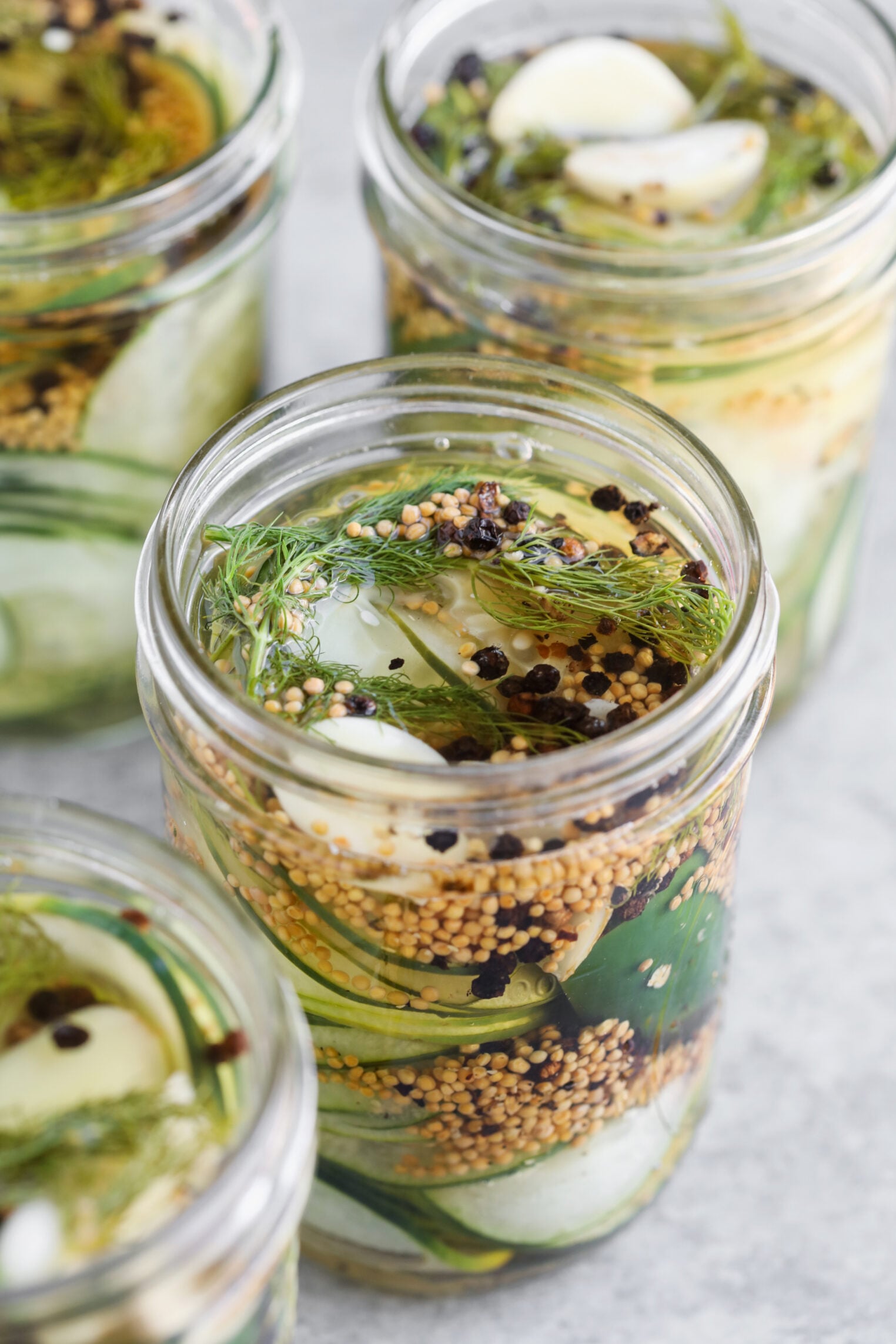
If you love pickles, you’ll love these quick, easy refrigerator pickles. Perfect on top of your favorite sandwiches, burgers, BBQ sandwiches, sloppy joes, and more. Or, pull out a cold jar from the fridge and snack straight from the jar!
This is my dad’s infamous refrigerator pickle recipe, and one that my entire family has made for years and years. I know the idea of canning your own pickles seems intimidating, but this is the easiest place to start.
You don’t need any fancy equipment, just pint jars and a stock pot, and you can adapt them to be as spicy as you want! The flavor profile is somewhere between a classic deli pickle and what you’d find at a stand at the farmer’s market, a little more bold, clean-tasting pickle.
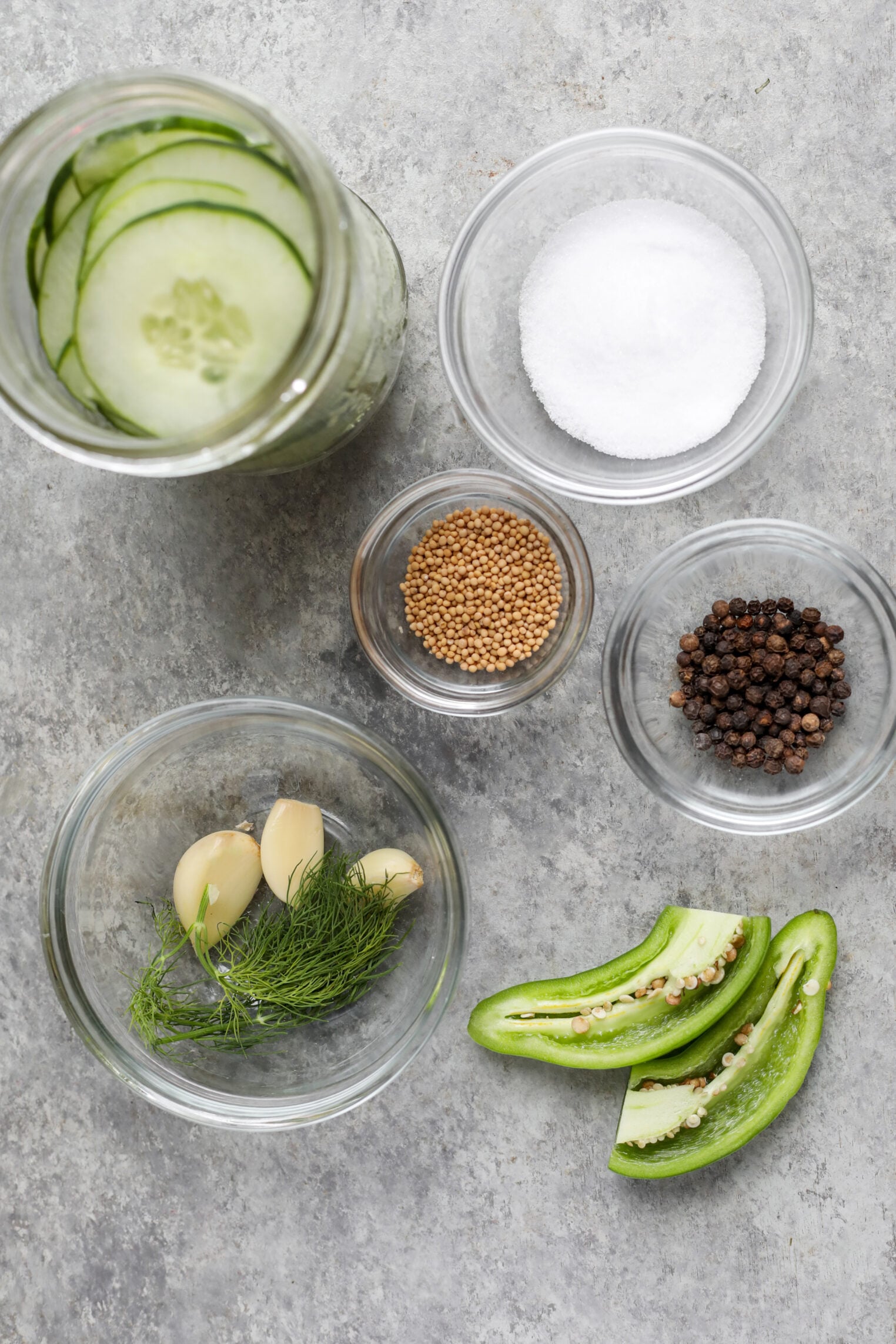
Ingredient Notes
- Cucumbers: I use one large cucumber per jar, sliced about 1/4 inch thin. I prefer thin, even slices because then the cucumbers absorb the brine better and I like piling pickles on my sandwiches and smash burgers, but you can use any size slice you want. A mandoline makes this fast and more consistent, but a sharp knife works too.
- Jalapenos: Halve them and place them in the jar. If you want milder pickles, remove the seeds from the jalapeno peppers, as this is where most of the heat is. Scraping them out makes for a milder refrigerator pickle, and leaving them in makes for spicy ones!
- Garlic: Three whole cloves per jar. Keep them whole so the garlic flavor infuses the brine without browning. You can use ready-peeled garlic to keep things easy!
- Fresh Dill: Put about two sprigs of fresh dill per jar. You really need fresh here, as dried dill won’t give you the same bright, grassy flavor (use any leftover dill in my dill dip!)
- Whole Peppercorns: These add a nice subtle heat without being overpowering.
- Mustard Seeds: Like the whole peppercorns, the mustard seeds add a mild bite that tastes very pickle-like and shouldn’t be skipped!
- Pickling Salt: Pickling salt is different than kosher or table salt. Pickling salt is finer-grained and additive-free, which keeps your pickle juice clear. Table salt will work if you don’t have pickling salt; you just may have a little more cloudy liquid.
How to Make Refrigerator Pickles
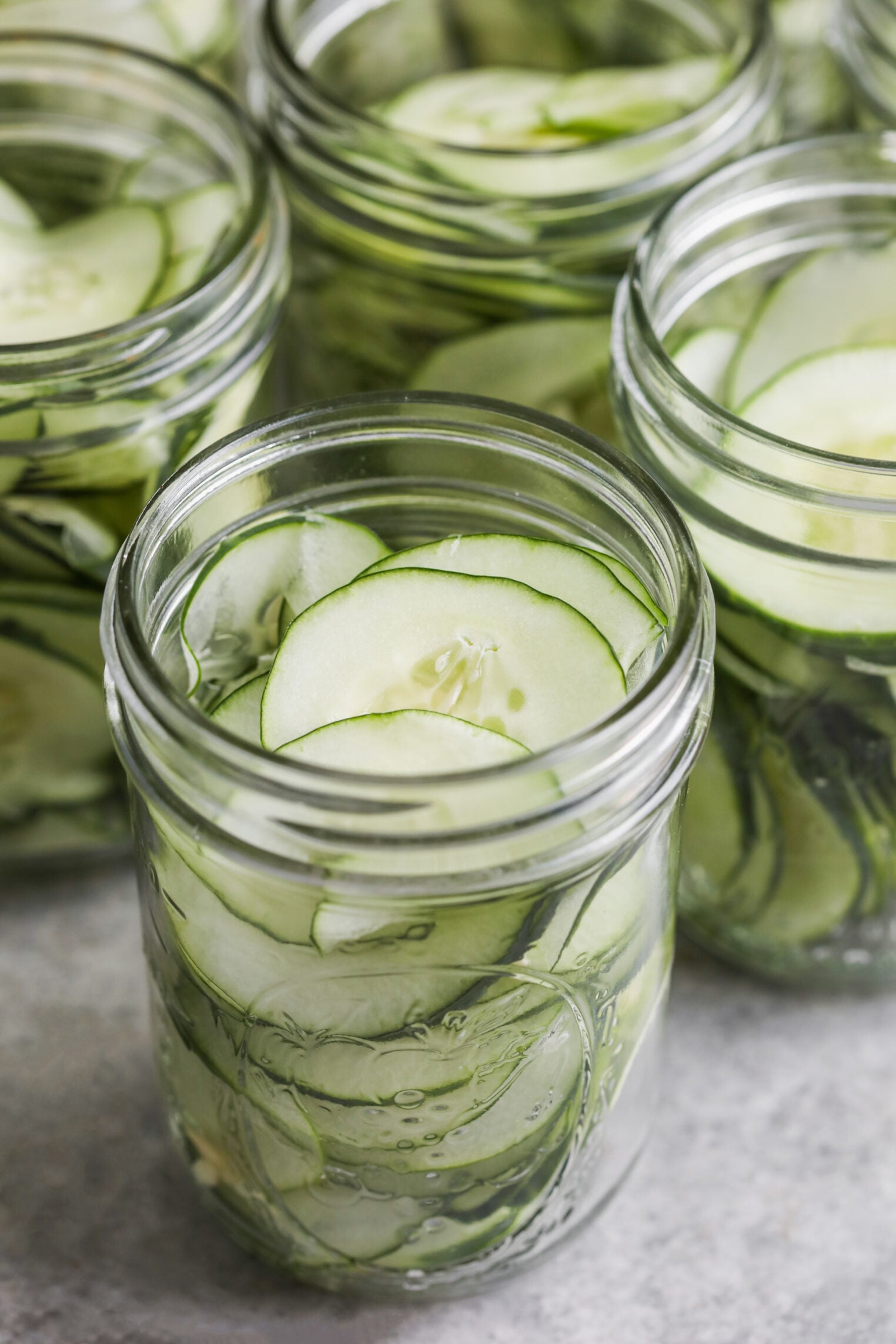
Really, making your own refrigerator pickles is so much easier than you may think! Unlike other canning recipes, you don’t have to water-bath can or pressure-can these. Just add everything to jars, make a brine and that’s it. See below for step-by-step photos.
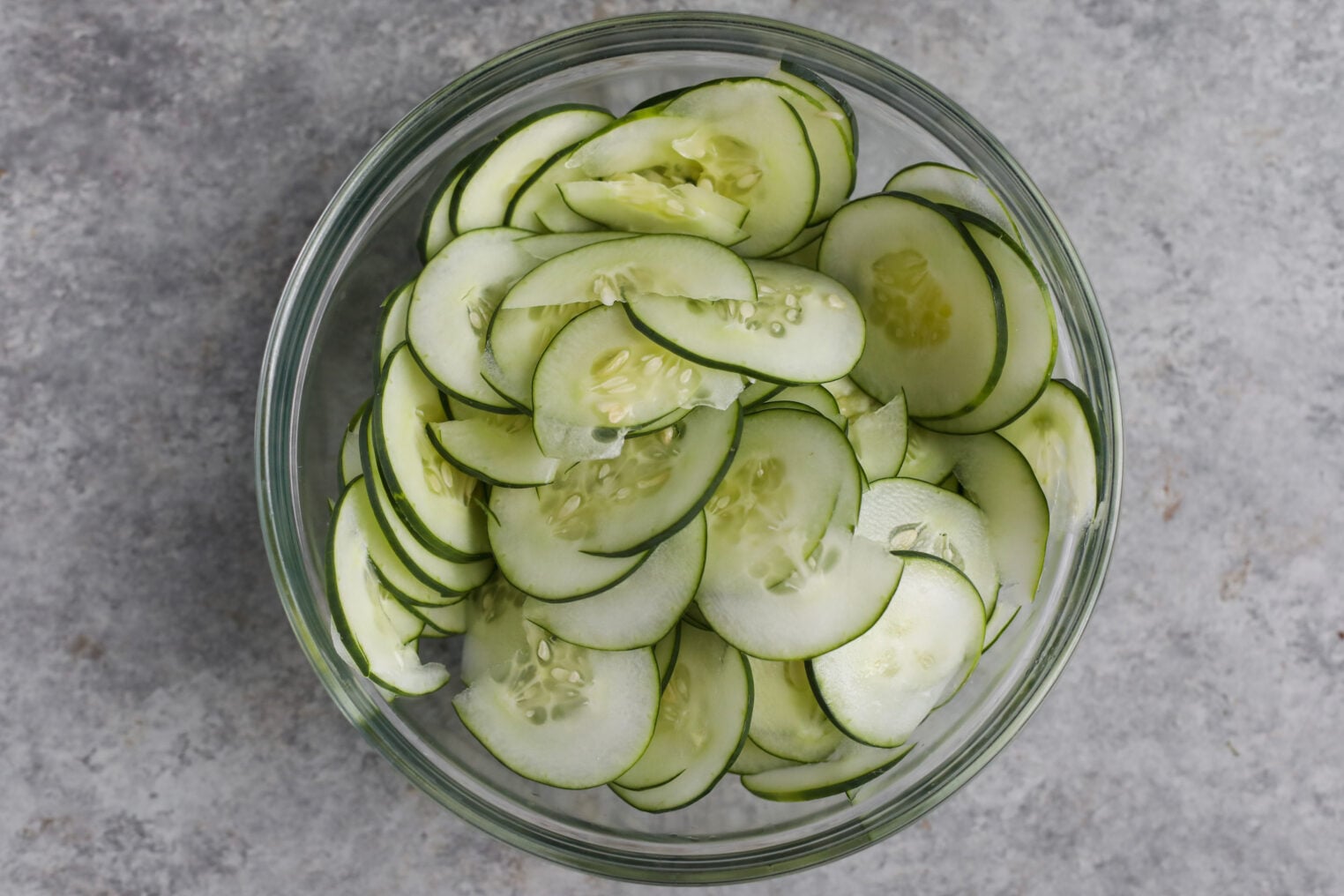
Step 1: Slice the Cucumbers
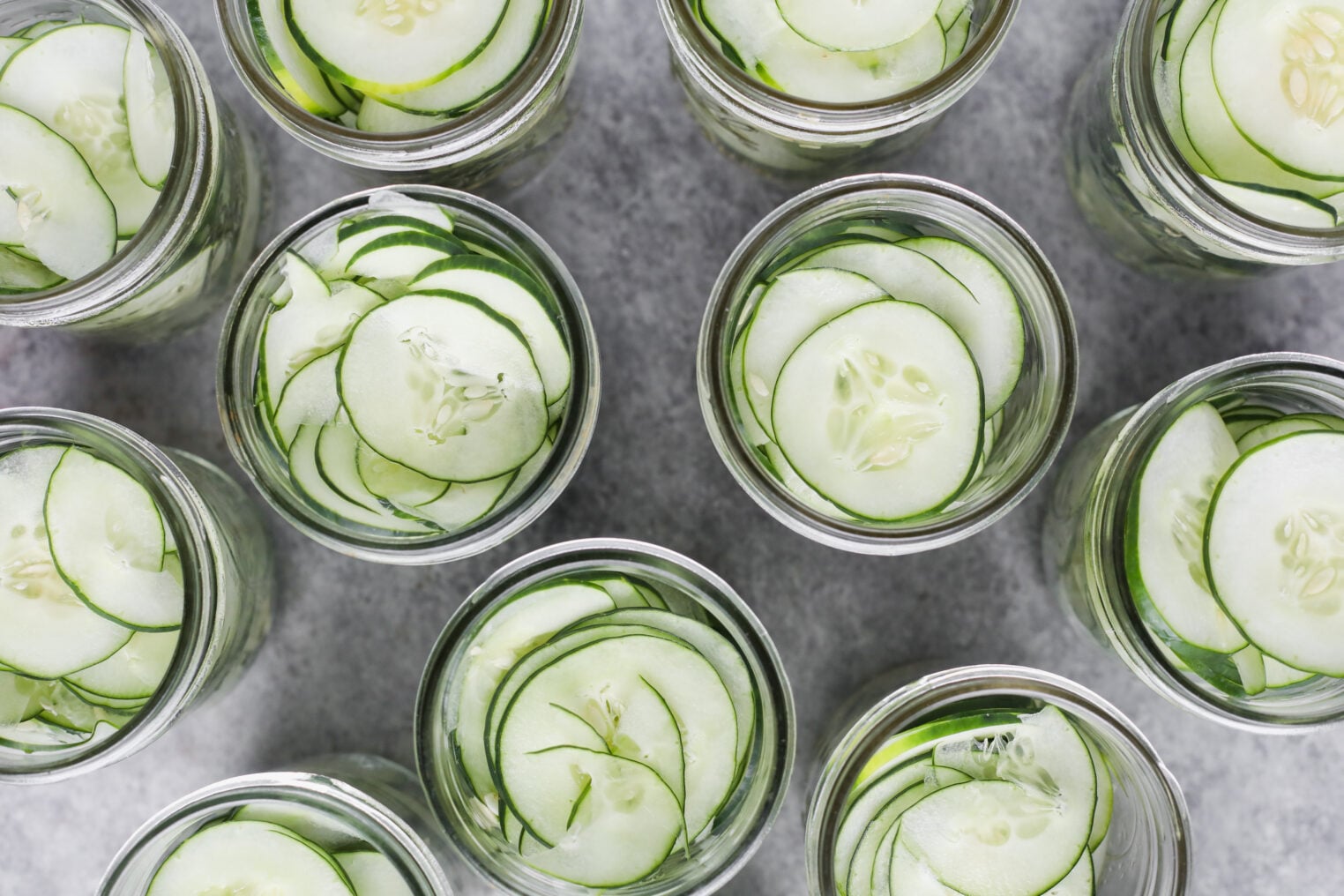
Wash and slice all the cucumbers into rounds about 1/4 inch thick. Thin, even slices are the goal here as they are easier to pack into jars. I use a mandoline for consistency, but a sharp knife works well too.
Step 2: Prep the Jalapenos and Garlic
Halve each jalapeno lengthwise, leaving the seeds in for full heat if you want. Peel the garlic cloves and leave them whole.
Step 3: Make the Brine
In a medium saucepan, combine the water, vinegar, and salt and bring the mixture to a boil over medium-high heat, stirring until the salt is dissolved. The ratio here is important as too much vinegar and the pickles are too sour and too little and they won’t preserve right or have that classic pickle tang. If for any reason you need more brine, then you can make more using this ratio: 2:1 parts water to vinegar.
Step 4: Pack the Cucumbers
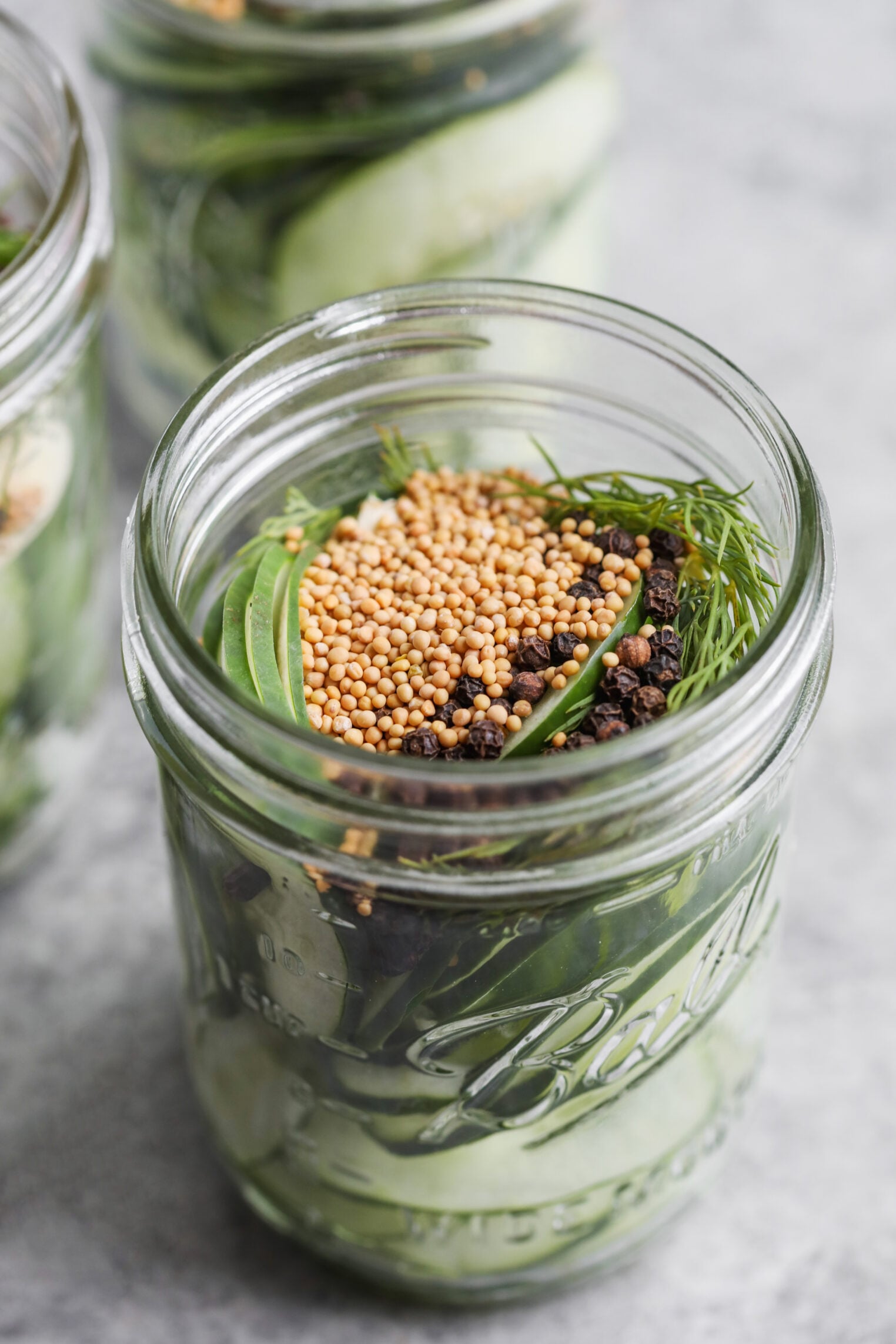
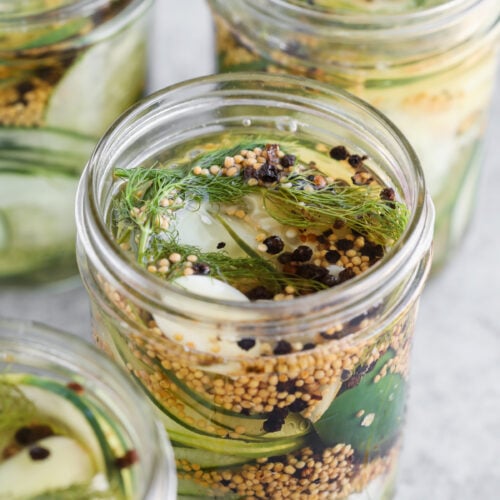
Into each clean jar, add 2 fresh dill sprigs, 3 garlic cloves, 2 teaspoons of peppercorns and 2 teaspoons of mustard seeds. Then, pack in the sliced cucumbers, fitting them in tightly but without crushing them, and tuck in the jalapeno halves along the sides of the jar.
Step 5: Fill with Brine
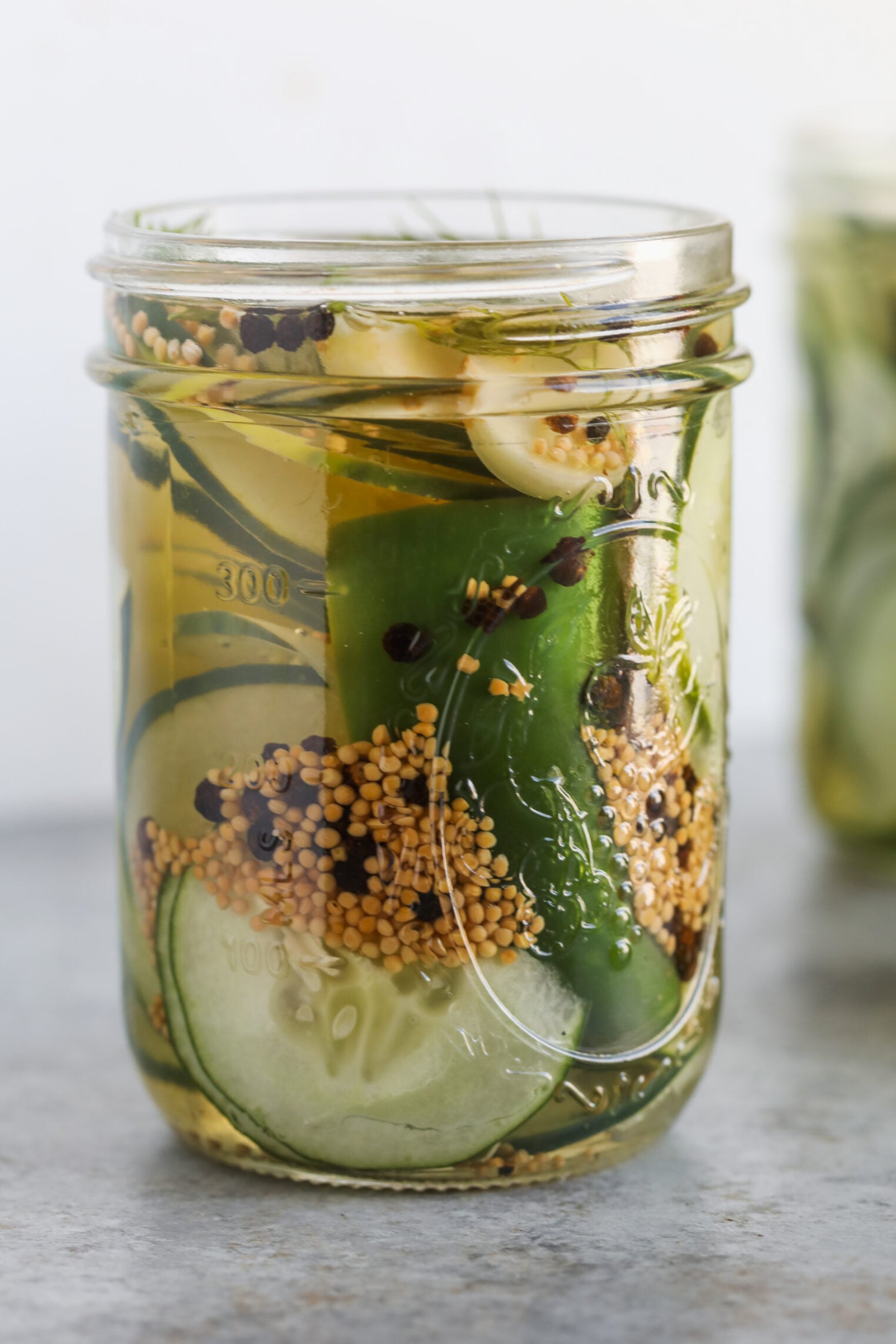
Carefully pour or ladle the hot brine into each packed jar, filling all the way to the top. Tap the jars firmly on the counter a few times to release any trapped air bubbles. Top off more brine if needed to fully submerge the cucumbers.
Step 6: Seal
Place the lids on top of each jar and let them cool to room temperature on the counter, which should take about 2 hours. Once they are fully cooled, transfer all jars to the fridge. You must let the cucumber jars cool first, as placing the hot jars into the cold fridge can crack glass jars and force the brine to cool unevenly.
I always let mine sit on the counter for at least two hours before moving them to the fridge!
Chef Expert Tips for Success
- Thin Slices: Thicker rounds tend to stay firm and don’t absorb as much brine. I like to keep the slices about 1/4 inch thick for the best results.
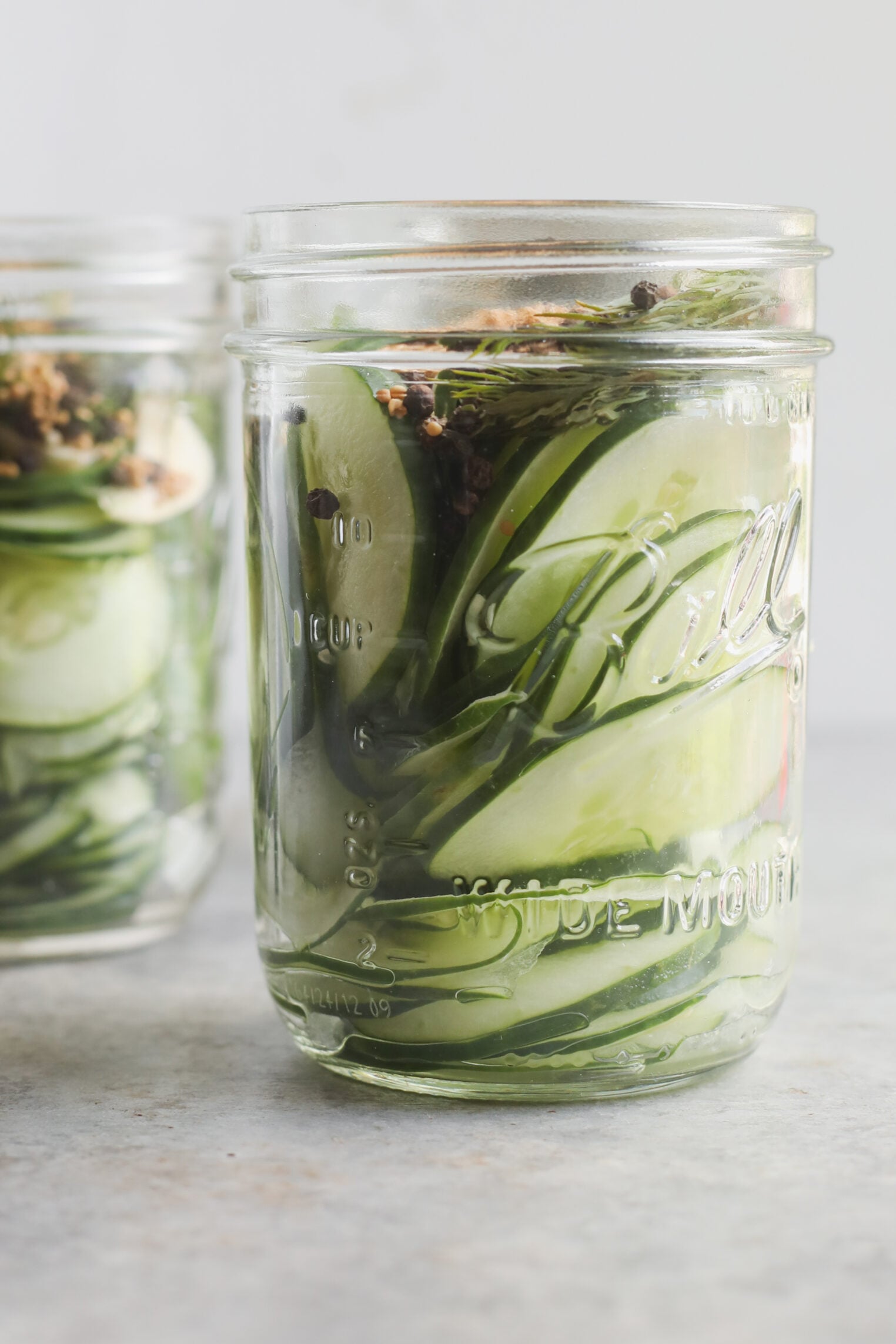
- Pack the Jars: Pack the jars as tightly as possible, since cucumbers float and shift as the brine settles. A tightly packed jar keeps everything submerged and evenly pickled!
- Better in 48 Hours: While these refrigerator pickles are technically ready in 24 hours, they are better if you wait at least 48 hours. The longer they sit, the more the flavor deepens. Since they are so easy to make, I do them in batches of 7 jars at a time to enjoy within a month or so, then make new batches as needed.
- Make sure everything is submerged: This is so important! Any cucumbers sliced and floating above the brine line won’t pickle properly, so make sure to press everything down before sealing.
Frequently Asked Questions
Do I need to Sterilize My Jars?
Because they are fridge pickles and not canned pickles, you don’t need sterilized jars. A wash with hot soapy water or run through the dishwasher is all you need, but make sure the jars are dry before packing to avoid diluting your brine.
Why are my pickles soft?
Soft pickles are almost always caused by one of two things: cucumber slices that are too thick or jars that were placed in the fridge before the brine has completely cooled.
Can I use a different type of cucumber?
Pickling cucumbers, garden cucumbers, or English cucumbers work well when sliced thin. Waxed supermarket cucumbers aren’t my favorite, as the wax coating prevents the brine from absorbing properly. Smaller Persian cucumbers are also great!
How to Store
These pickles must be refrigerated. If you are looking for canning pickles, check my recipe for dill canning pickles. Kept cold and sealed, they will stay fresh and crunchy for 4 to 6 weeks in the fridge. You’ll always want to make sure to use a clean utensil when reaching into the jar to keep the brine uncontaminated.
I do not recommend freezing these pickles, as frozen pickles become mushy after thawing.
If you try these Quick and Easy Refrigerator Pickles, make sure to come back to leave a comment and a review. Your feedback helps other readers, and seeing you make my recipes makes my day!

Quick and Easy Refrigerator Pickles
Ingredients
- 7 large cucumbers (about 2 pounds) , thinly sliced
- 7 sprigs fresh dill
- 7 jalapeno peppers, halved
- 21 garlic cloves
- 14 fresh dill sprigs
- 14 teaspoons whole peppercorns
- 14 teaspoons mustard seeds
- 6 cups water
- 3 cups distilled white vinegar
- 12 teaspoons pickling salt
Instructions
Prep the Cucumbers
- Wash and slice the cucumbers. I do mine about 1/4 inch thick; thin, even slices give the best texture and absorb the brine more effectively, but you can make them as large as you want. You want enough cucumbers to pack the jars, so you may need more/less cucumbers to fill depending on size. Since you aren't water bath canning these refrigerator pickles, it's OK to add more/less cucumbers.
Prep the Jalapenos and Garlic:
- Halve 7 large jalapenos. If you want spicier pickles, leave the seeds in. If you want more mild pickles, remove the seeds. Peel 21 garlic cloves, but leave them whole.
Make the Brine
- Combine the water, vinegar and salt in a large saucepan and bring to a boil over medium-high heat, stirring to fully dissolve the salt. Remove from heat.
Pack the Jars
- Into each clean pint jar, add 2 sprigs of fresh dill, 3 garlic cloves, 2 teaspoons peppercorns, 2 teaspoon mustard seeds. Then, add in the cucumbers and jalapeno half tightly, taking care not to crush them. Caref
- Carefully ladle of pour the hot brine into each packed jar, filling all the way to the top. Tap the jars gently on the counter to release any air bubbles. You can add more brine if needed to reach the rim. The amount here should be enough, but if you need more, then you'll just want a 2:1 water-to-vinegar ratio with 4 teaspoons of salt per 3 cups of liquid.
Seal and Cool
- Seal the jars with lids and let them cool to room temperature on the counter.
Refigerate
- Once fully cooled, move all jars to the refigerator. Note that these are NOT shelf-stable and must stay cold in the fridge. They'll be ready to eat in 24 to 48 hours and will keep for 4 to 6 weeks. (see notes)
I was nervous to can so I wanted to try these. So flavorful and love the spice! Ended up using a full jalapeno per jar and we all loved them. Great recipe