


Butternut Squash Farro Risotto (Farrotto)
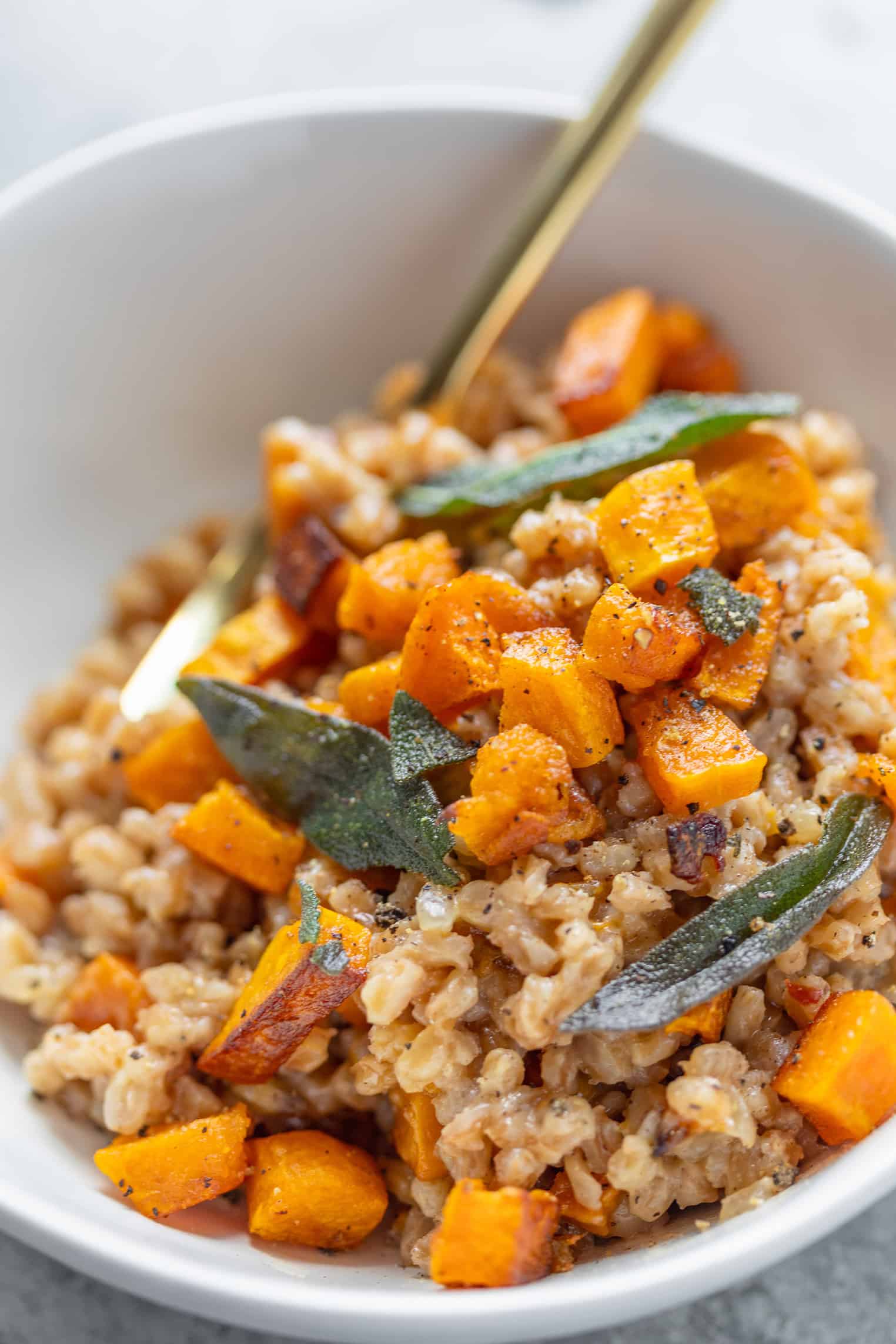
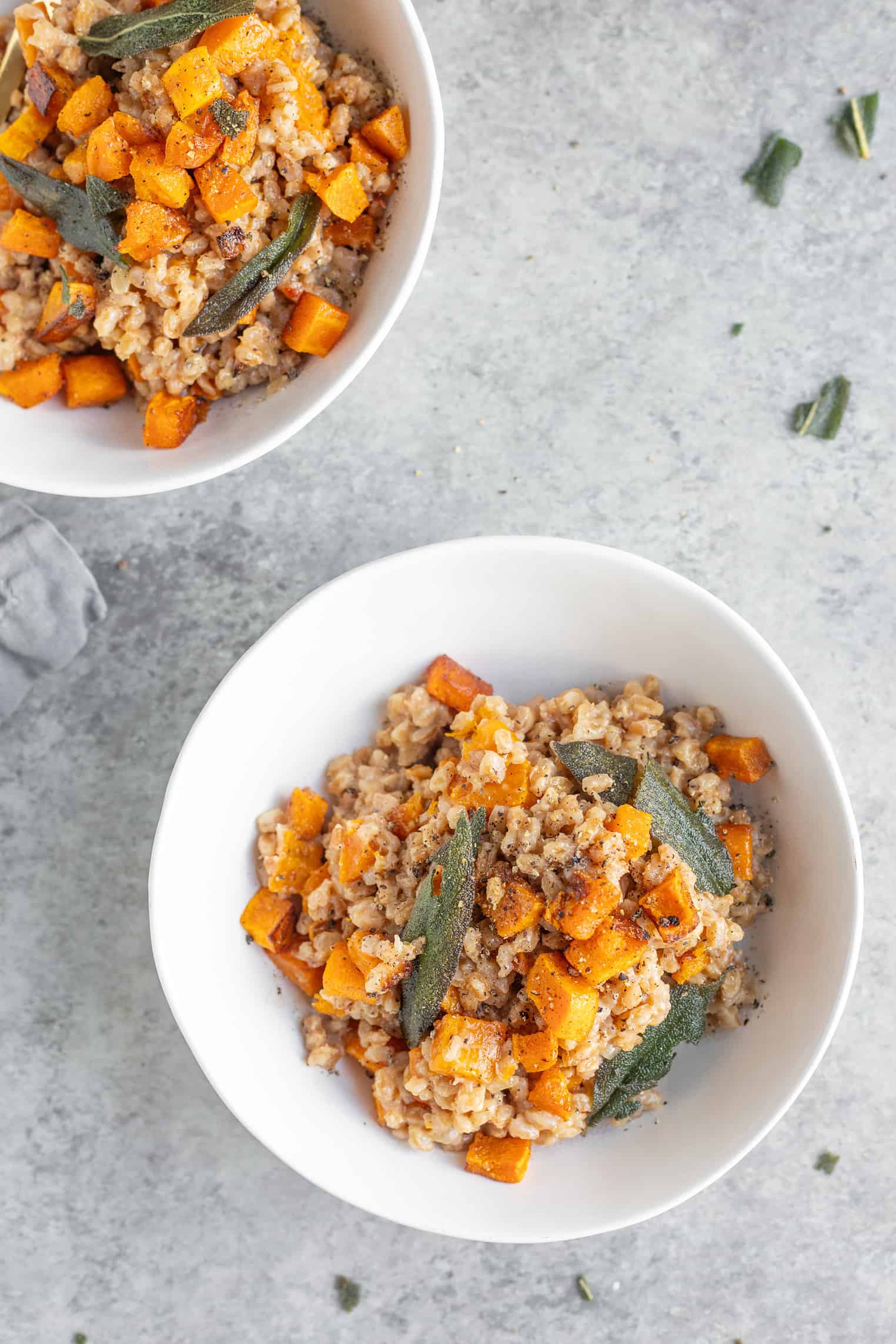
Risotto, but make it with farro! If you love butternut squash risotto, then you’ll love this butternut squash farro risotto, also known as farrotto. It’s a hearty, nutty Italian dish that uses farro instead of arborio rice. With roasted squash and fried sage leaves for a show-stopping main dish that’s a must on your Fall table.
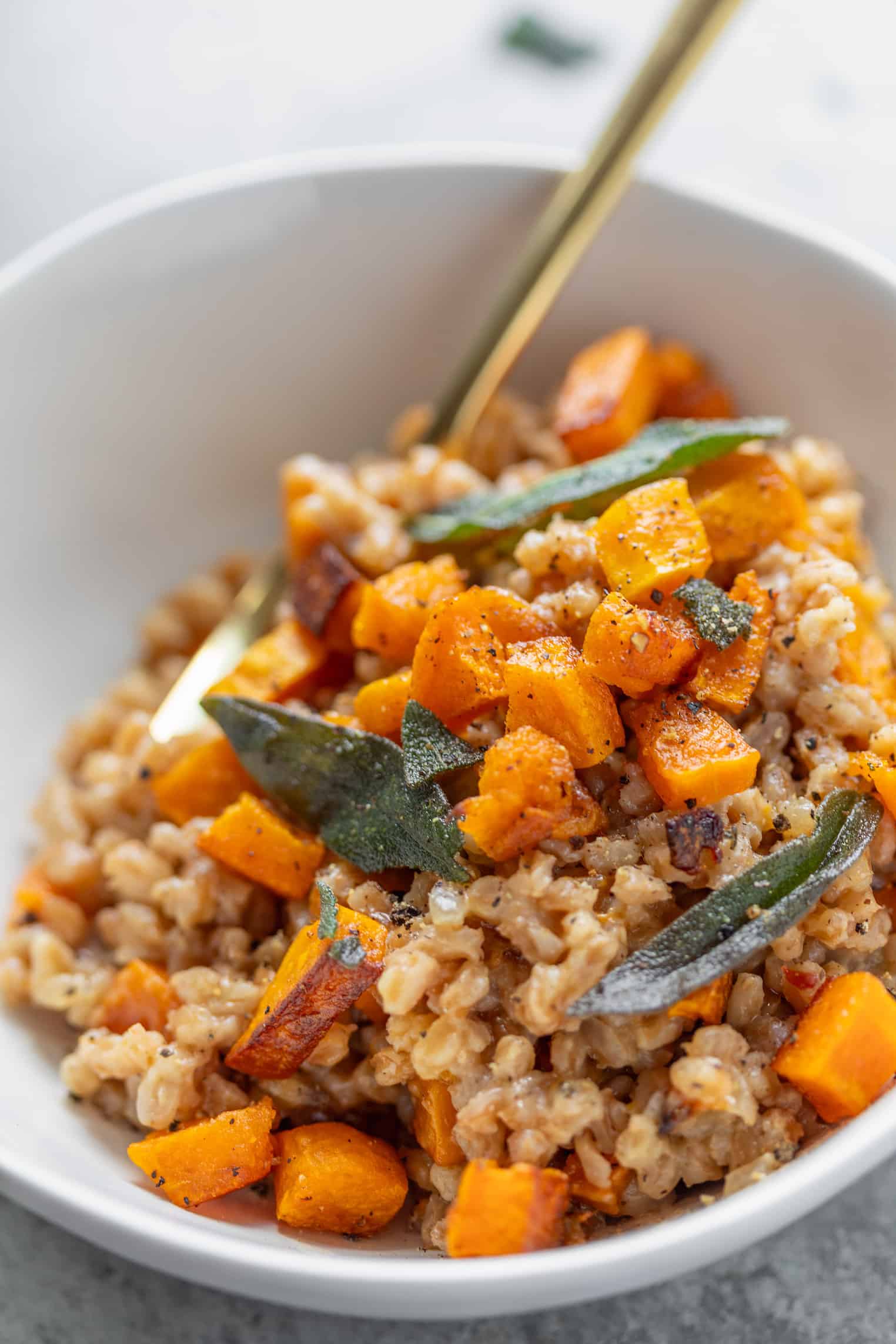
This butternut squash farro risotto is one of my favorite ways to enjoy risotto in the fall. Farro stands in for arborio rice, so you get the same cozy taste of risotto, but with a nuttier, chewier, more filling result.
One bite of this farrotto and I’m immediately transported to a holiday table– complete with plenty of my favorite side dishes, pumpkin pie, and this gorgeous main. It’s so beautiful and bursting with Fall flavors; it’s a must-make this time of year.
When I think of risotto, I think of the classic pairings for fall and winter– like my pumpkin pesto risotto, wild mushroom risotto, and mushroom farrotto. I love the chewy texture of farro so much and knew I wanted to make a version using roasted squash.
This farro risotto with butternut squash is so creamy and delicious. If you love risotto, then you’ll love this hearty farro version. See below for tips and details, or scroll all the way to the bottom for the full recipe card.
Everything You Need to Make this Recipe:
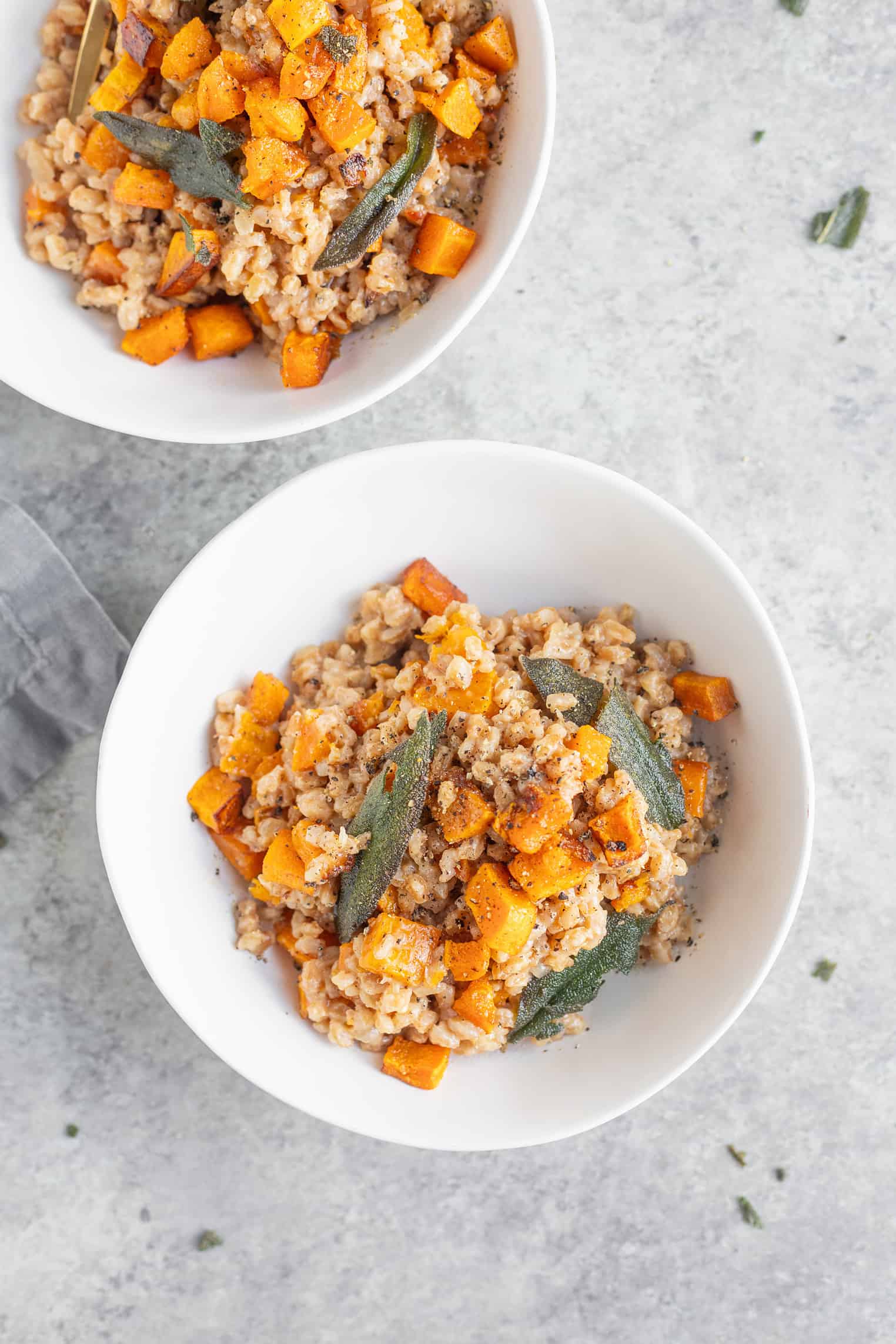
Why This Recipe Works
There’s a reason why butternut squash is a favorite pairing with risotto. And that’s especially true with this farrotto. For one, their textures complement each other. The hearty, chewy texture of farro balances nicely with the smooth, creamy squash in each bite.
They are also nutritionally balanced. Farro provides fiber, protein, and complex carbs, while butternut squash delivers vitamins A and C, potassium, and beta-carotene. Together, they make for a filling main or side dish.
Farro has an earthy, nutty flavor that complements the sweetness of roasted butternut squash. If you can get your hands on a honeynut squash, I highly recommend doing so for this recipe.
Honeynut squash are much smaller, averaging 3-5 inches in diameter, compared to butternut, which are typically 8-10 inches long. While butternut squash will work in this recipe, honeynut squash has a sweet, almost candied flavor profile that pairs great with the farro in this recipe.
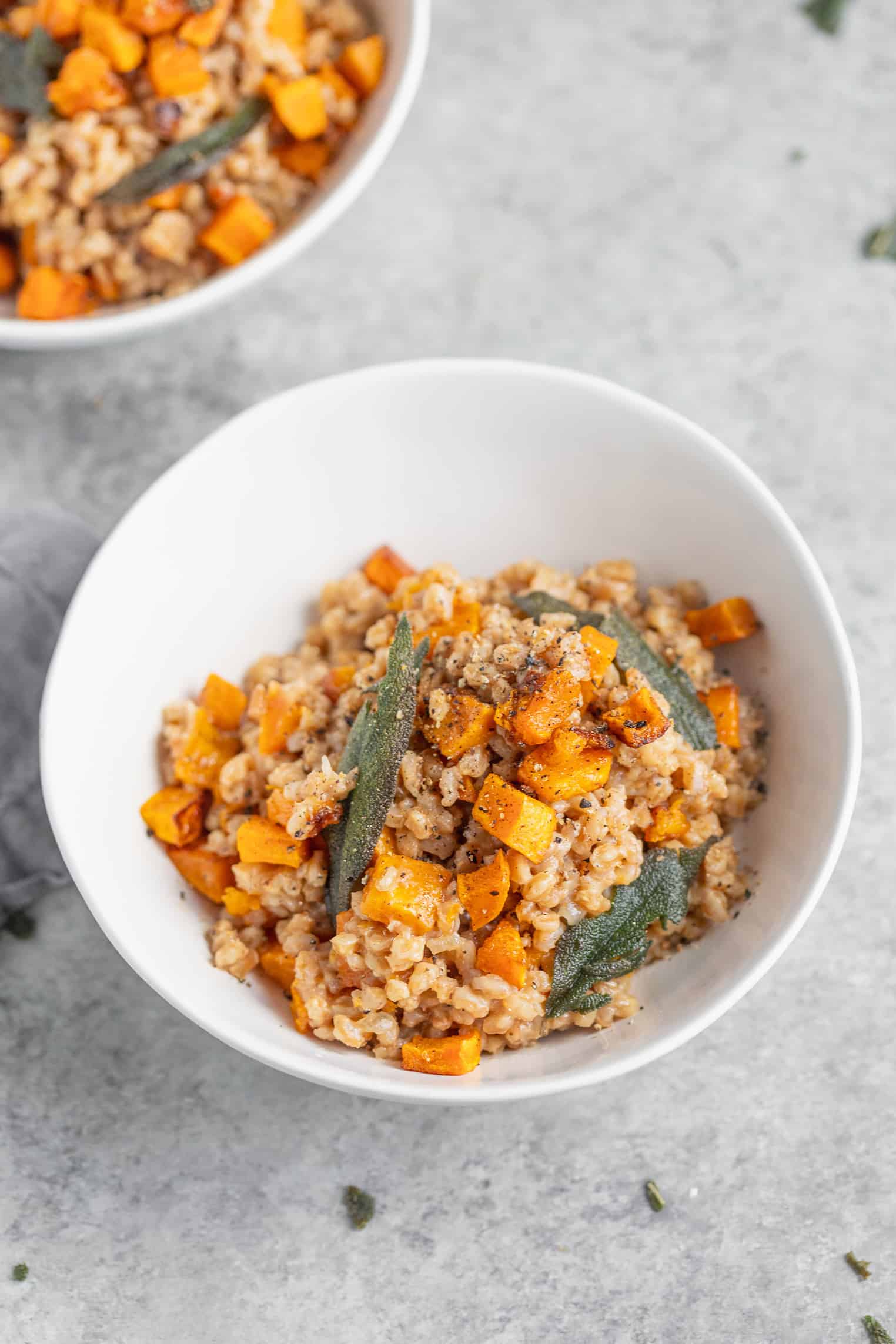
Ingredient Notes
- Farro: Use pearled farro, which cooks faster and more evenly than semi-pearled or whole farro, which take longer and will need more liquid.
- Squash: Honeynut squash is my first choice if you can find it! It’s smaller, sweeter and more concentrated than butternut, but butternut works well too. Pre-cut butternut squash is a great shortcut.
- Shallot and onion: If you’re out of shallot, a couple of cloves of garlic work in its place.
- Dry white wine: Any white wine works; I just use whatever one I want to drink afterward, usually Sauvignon Blanc!
- Vegetable broth: Broth comes in 4-cup cartons, so I stretch it with 2 cups of water. Keep it warm in a small pot while you cook. Most of the sodium in this recipe comes from the broth, so you can use a low-sodium broth if needed.
- Fresh sage: Fried until crisp for the topping; it’s a gorgeous garnish and also adds a little flavor. Dried sage won’t work!
- Butter and parmesan: Stirred in at the end for richness. If you want to make this butternut squash farro risotto dairy-free, then use vegan versions of both.
Swaps and Substitutions
- Vegan: Use vegan butter, and swap the parmesan for 1 to 2 tablespoons of nutritional yeast.
- No wine: Use more warm broth, then finish with a squeeze of lemon for the acidity the wine would have added.
- Gluten-free: Farro is a type of wheat, so it does contain gluten. For a gluten-free version, use arborio rice.
- Other squash: Kabocha or sugar pie pumpkin all roast and fold in the same way.
- Lower sodium: Use low-sodium vegetable broth and salt to taste at the end. Parmesan adds salt too, so just keep in mind as you add it in.
How to Make Farro Risotto
Step 1: Roast the squash
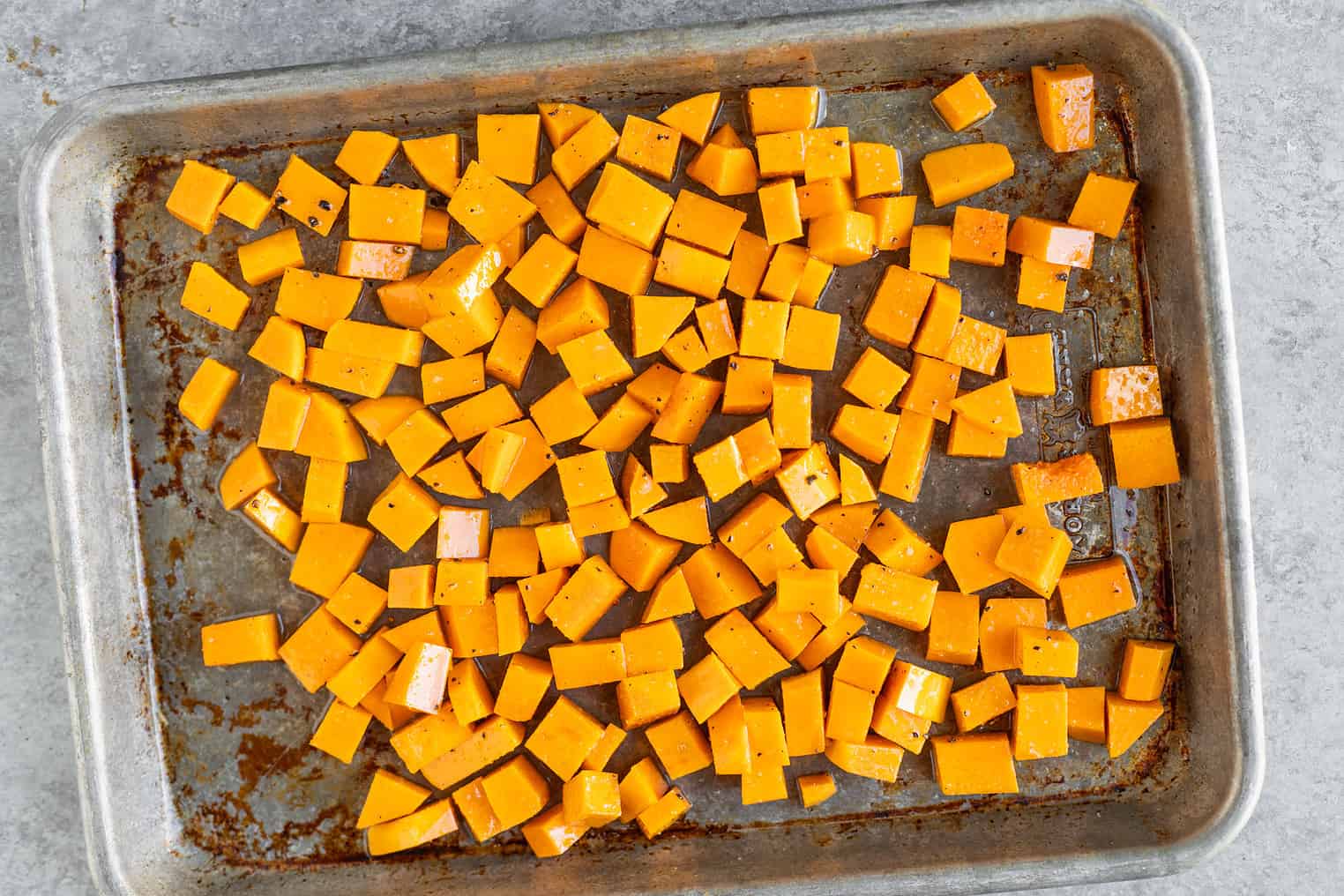
Toss the cubed squash with olive oil, salt, and pepper and roast until tender and slightly caramelized on the outside.
Step 2: Sauté the onions and shallots
Heat olive oil and butter in a stockpot or Dutch oven, then add the onions and shallots. Saute until tender, about 10 minutes.
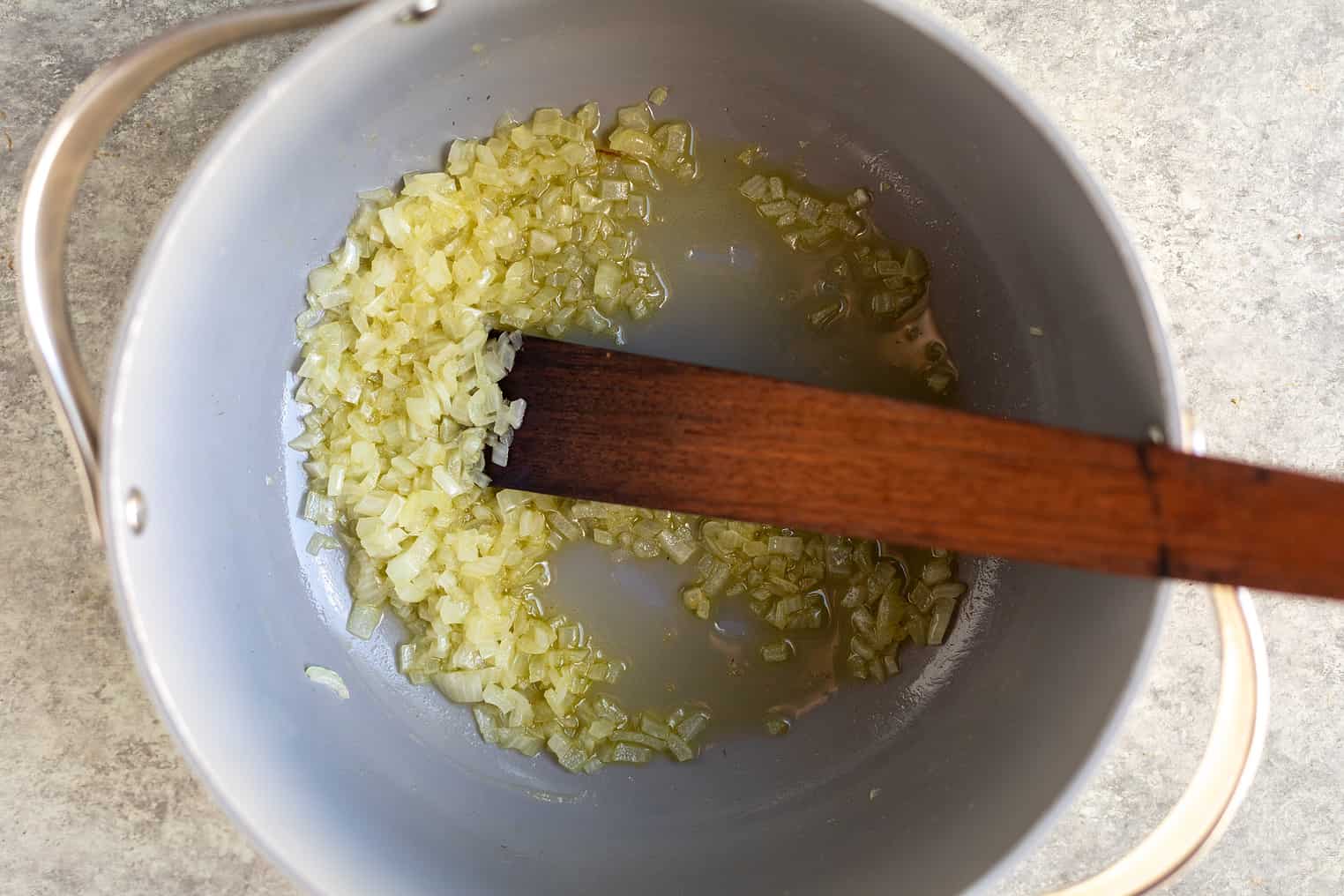
Step 3: Add the Farro
Add the farro along with the wine and cook until absorbed, stirring often. Add in a laddle of the warmed vegetable broth and stir until mostly absorbed. Continue to add in a laddle of vegetable broth at a time until the farro is tender and chewy. This will take about 25 minutes.
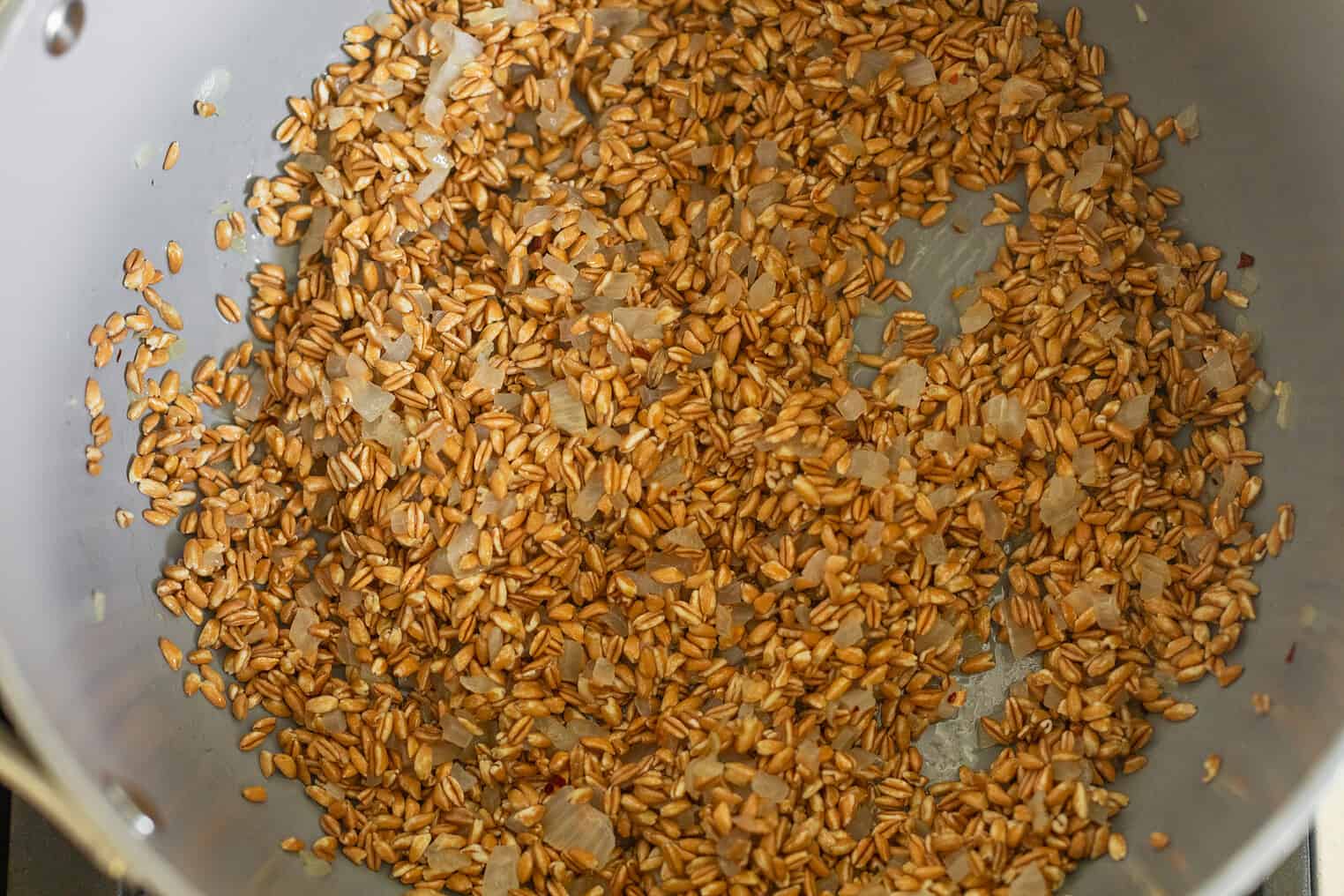
Step 4: Fold in the squash and cheese
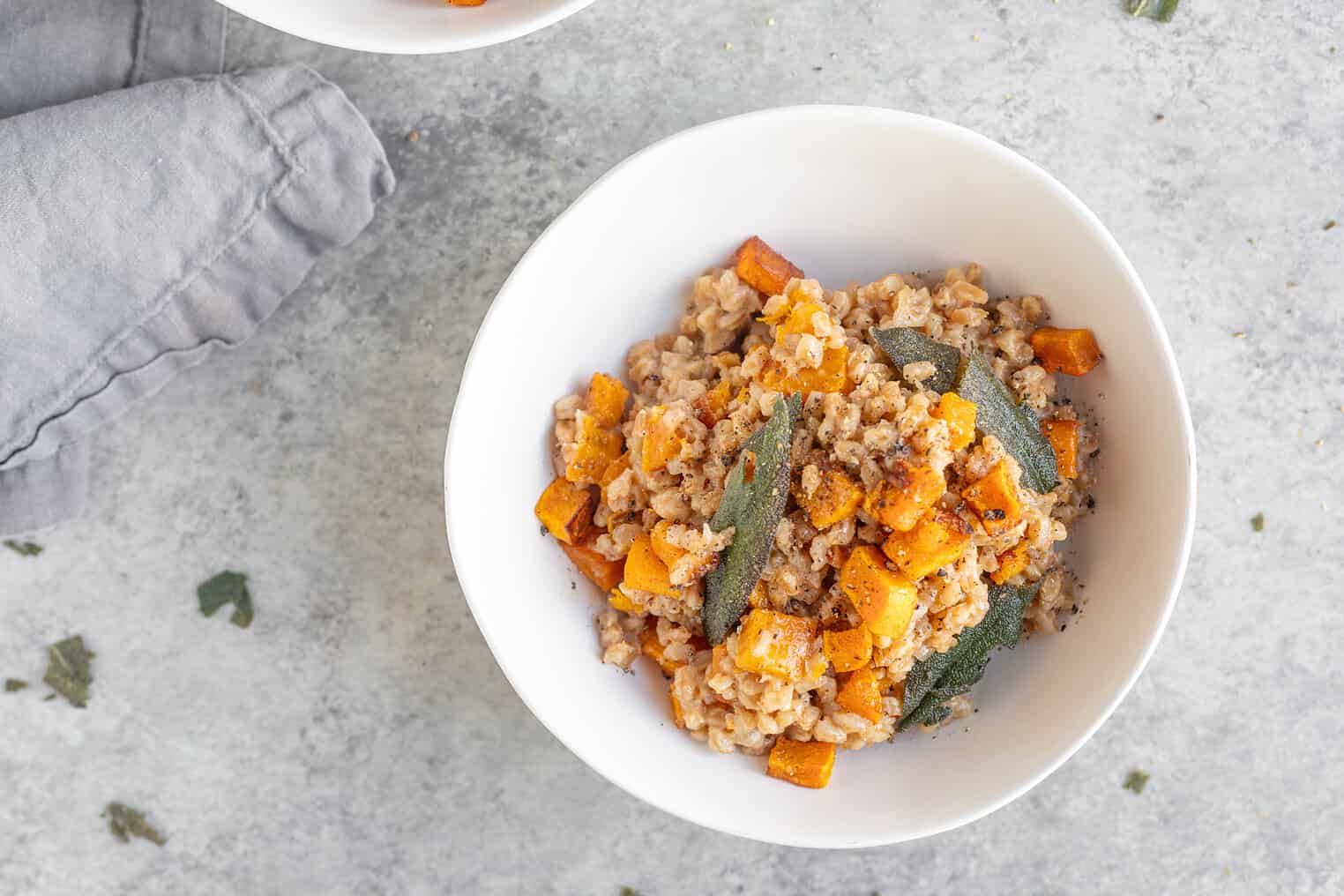
Stir in the roasted squash and cheese. Season to taste, adding more salt and pepper as needed. Serve topped with fried sage leaves.
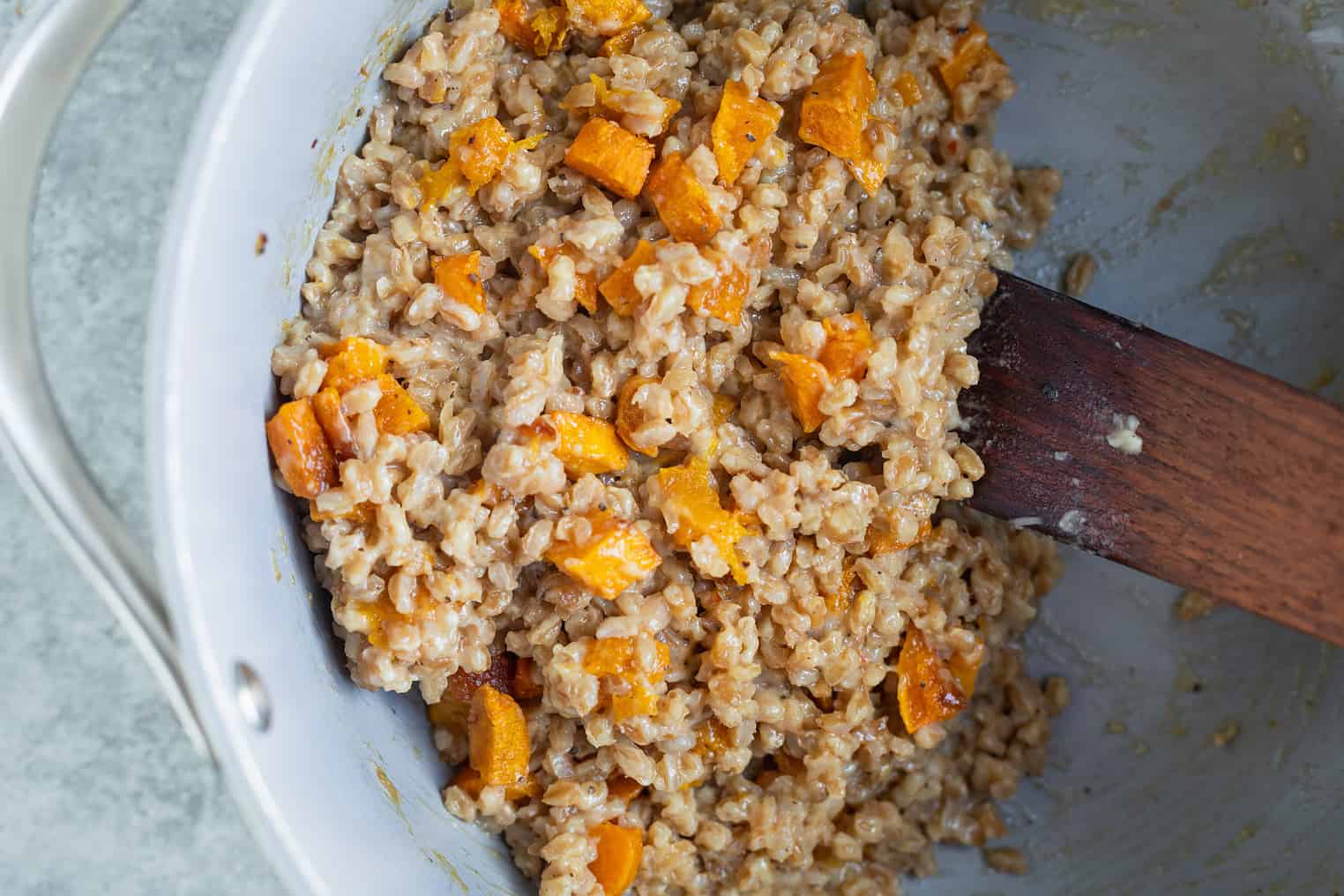
Chef Tips for Success
- Keep the broth warm. Cold broth will stall the farro’s cooking every time you add it, so use warm broth. I keep a small pot of broth on the back burner as I make this farro risotto.
- Stir often: Farro is more forgiving than arborio rice, but you’ll still need to stir frequently to keep it from sticking and build creaminess.
- Mash a few cubes of squash. Farro releases less starch than rice, so stirring in a few roasted cubes of squash until they break down will make this butternut squash farro risotto extra creamy.
- Taste for doneness. Pearled farro should be tender with a slight chew. If you’re using semi-pearled farro, use more broth and plan on more time.
- Dry the sage well. Pat the leaves completely dry before frying so the oil doesn’t splatter and the sage crisps more evenly.
- Make it loose. Risotto will keep thickening off the heat. I like to stop cooking this risotto when it’s a little looser than I want so it’ll be perfect by the time I serve it.
How to Make it Ahead for Thanksgiving
I love serving this butternut squash farro risotto for a fancy holiday meal, especially Thanksgiving! Risotto has a reputation for needing to be made right before serving, but you can do some advance prep using the same trick that restaurants use.
- Up to 3 days ahead: Roast the butternut squash, then refrigerate in an airtight container.
- Up to 2 days ahead: Cook the farro through Step 5 until it’s about two-thirds done; it should still be firm in the center with most of the broth absorbed. Spread it on a baking sheet to cool quickly, then refrigerate.
- Earlier that day: Fry the sage and keep it in an airtight container at room temperature so it stays crisp.
- Before serving: Warm the par-cooked farro in a wide pan and finish it with hot broth, a ladle at a time, until tender and creamy, about 10 minutes. Fold in the warmed squash and parmesan, then top with the sage.
- If you plan on cooking for a crowd: If you want to serve this for a crowd, then double the recipe and use your widest pot or Dutch oven so the broth evaporates evenly.
How to Store and Reheat
Freeze: Freeze in an airtight container for up to 3 months. The texture will be a little softer, but still good. Thaw the butternut squash farro risotto overnight in the fridge and reheat with extra broth.
Fridge: Store any leftovers in an airtight container for 3 to 4 days. Keep the crispy sage separate so it doesn’t go soft.
Reheat: Warm on the stove over medium-low heat with a splash of broth or water, stirring until creamy again. Farro holds its texture much better than rice, so leftovers reheat well.
Frequently Asked Questions
Is farro gluten-free?
Farro is not gluten-free. Farro is a type of wheat, which means it contains gluten. Specifically, farro is a grain from the spelt family. Like other wheat varieties such as durum and einkorn, farro contains gluten proteins which can trigger reactions in those with celiac disease or gluten sensitivity.
What if I need to add more liquid?
If you are using a semi-pearled farro, then you will likely need to add more liquid to this farrotto recipe. You can either add more broth, or you can use water. The key is that the broth is warmed before adding to cook the farro faster.
How to make vegan farrotto?
If you want to make this vegan, then omit the parmesan cheese or add in a tablespoon or two of nutritional yeast instead of the parmesan cheese. You can use vegan butter for the butter.
What’s the difference between farrotto and risotto?
Risotto is made with short-grain rice, usually arborio. Farrotto uses the same method, adding warm broth a little at a time, but swaps in farro. The result is nuttier and chewier, with more fiber and protein than rice risotto.
Can I make it ahead?
Yes. See the make-ahead steps above: roast the squash and par-cook the farro up to 2 days ahead, then finish with hot broth just before serving.
More Italian Recipes to Try
- Pasta Fagioli
- Pasta alla Norma
- Tuscan Kale Soup
- One-Pot Pasta Puttanesca
- Instant Pot Tortellini Soup
- Tuscan White Bean Soup
More Farro Recipes to Make
- Farro Bean Soup
- Mediterranean Farro Salad
- Warm Farro and Kale Salad
- Farro and Citrus Salad
- Sweet Cherry and Farro Salad
If you make this Butternut Squash Farro Risotto recipe, make sure to come back to leave a rating and a comment. Seeing you make my recipes makes my day, and your feedback helps other readers!

Butternut Squash Farro Risotto (Farrotto)
Equipment
Ingredients
- 3 cups cubed honeynut or butternut squash
- 4 tablespoons olive oil, divided
- 8 whole sage leaves
- 1 tablespoon butter or vegan butter
- 1/2 cup finely chopped white or yellow onion
- 1 large shallot, minced
- 1/8 teaspoon crushed red pepper flakes
- 1 1/2 cups pearled farro
- 1/2 cup dry white wine
- 4 cups low-sodium vegetable broth + 2 cups water, warmed
- 1/2 teaspoon salt
- 1/4 teaspoon freshly ground black pepper
- 1/2 cup grated parmesan cheese, optional
Instructions
- Preheat oven to 425 degrees F. Toss the cubed squash with 2 tablespoons of olive oil, 1/4 teaspoon of salt and 1/8 teaspoon of black pepper. Place on a lined baking sheet and roast for 20-25 minutes, until tender.
- Heat a tablespoon of olive oil in a small skillet over medium heat. Add the sage leaves and a sprinkle of salt and fry until just crisped, about 30 seconds or so on each side. Remove and set aside.
- In a large stockpot or Dutch oven, heat the remaining one tablespoon of olive oil and the butter over medium heat. Add the onions and shallot along with the remaining salt and crushed red pepper flakes and cook until onions are just tender, about 10 minutes.
- Add in the farro and toast another minute, then add in the white wine. Cook for 5 minutes, stirring often to prevent sticking, until the wine is mostly absorbed.
- Add the broth, a laddle at a time, stirring as it cooks, until mostly absorbed. Continue to add the broth, a laddle at a time, stirring each time until broth is mostly absorbed. You may not need all of the broth, depending on how quickly the farro cooks. When the farro is tender and creamy, remove from heat and stir in the parmesan cheese and roasted squash. Taste, adding more salt or pepper as desired to taste.
- Divide into 4 serving bowls and top with fried sage leaves, either whole or crushed on top.
I used delicata squash instead of butternut because that’s what I had. It worked really well and saved me the trouble of peeling the squash!
I made this with half vegetable stock and half water because I ran short on stock. Still came out really flavorful, especially with the Parmesan.
I used roasted garlic instead of regular garlic and it gave the whole thing such a mellow, slightly sweet flavor. We loved it.
I added sautéed mushrooms because I had some that needed to be used. They were a great addition with the earthy flavors.
I swapped the Parmesan for goat cheese and absolutely loved it. It made the risotto extra creamy and the tang went so well with the squash.
I added double the grated Parmesan at the end and finished it with lemon juice.
I roasted the squash a little longer than the recipe suggested so the edges got really caramelized. Definitely worth the extra few minutes!
I didn’t have fresh sage, so I used thyme instead. The combination with the butternut squash was really good.
Great! I did use chicken bone broth instead of vegetable broth for a little more protein and it was great.
The recipe calls for sage leaves, but none are included in the ingredients list (unless I missed them somewhere). Help, please?
Yes, so sorry– updated that now
Thank you!