


Homemade Salsa for Canning
With hundreds of 5-star reviews, this really is the BEST homemade salsa for canning.
If you have fresh tomatoes, then you’ll want to make this salsa, either hot or mild. Enjoy it now or can it for later. It’s so delicious and inexpensive to make!
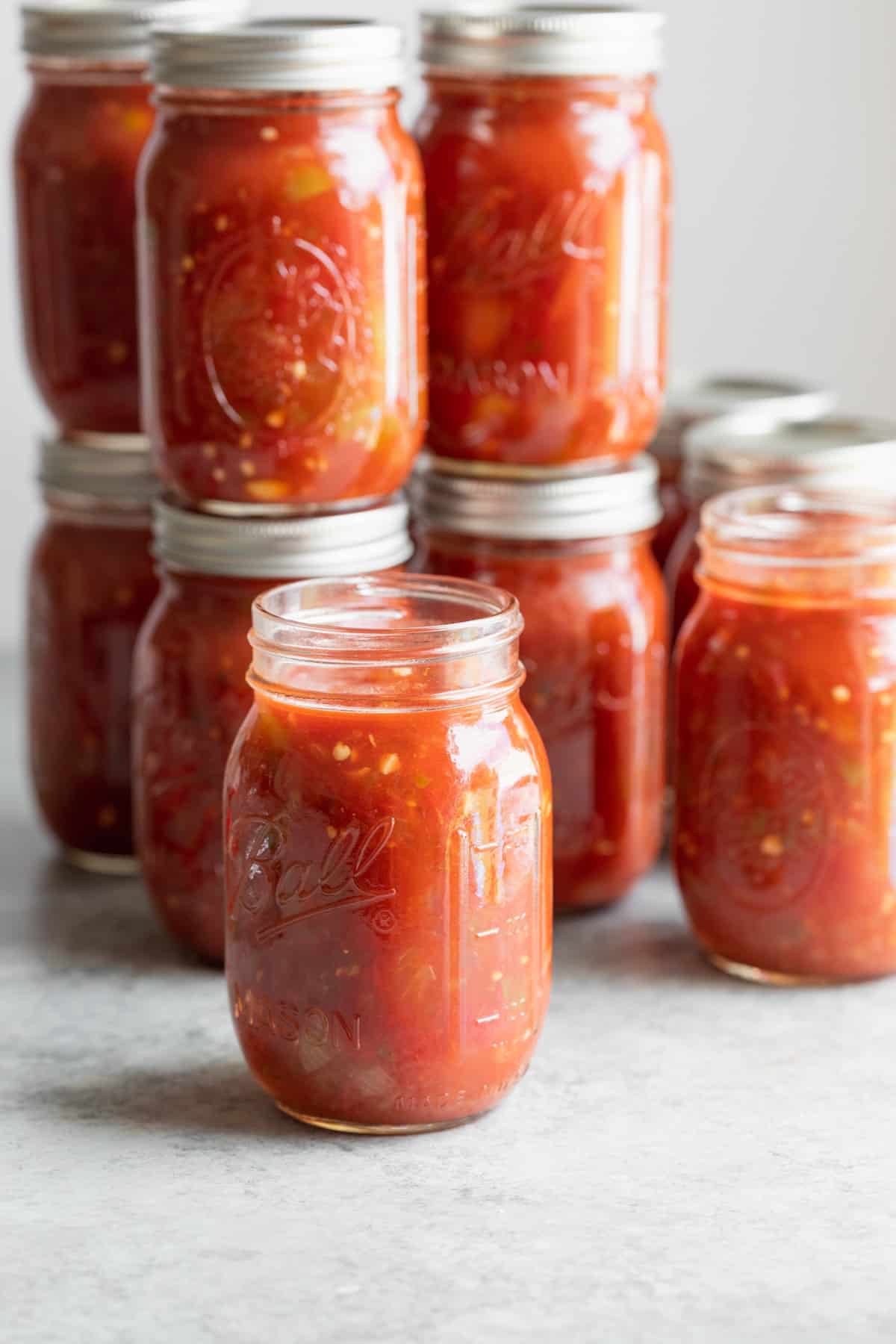
This homemade salsa for canning is one of the best things that’s ever come out of my kitchen.
I can 75 pounds of tomatoes each year, which usually means 2 days of non-stop homemade salsa making.
The hours are worth it. My entire family love this salsa, and my husband and kids usually go through a jar or two a week. Yes, this salsa really is drinkable.
This recipe is written to be canned, but you don’t need to. It will make a lot of salsa but you could also pour it into jars and gift it to friends without canning.
However– don’t be intimidated by the canning process. It couldn’t be simpler, and you don’t need any fancy equipment to do it. I walk you through how to can this salsa with step by step directions in the post below.
The hundreds of 5-star reviews speak for themselves!
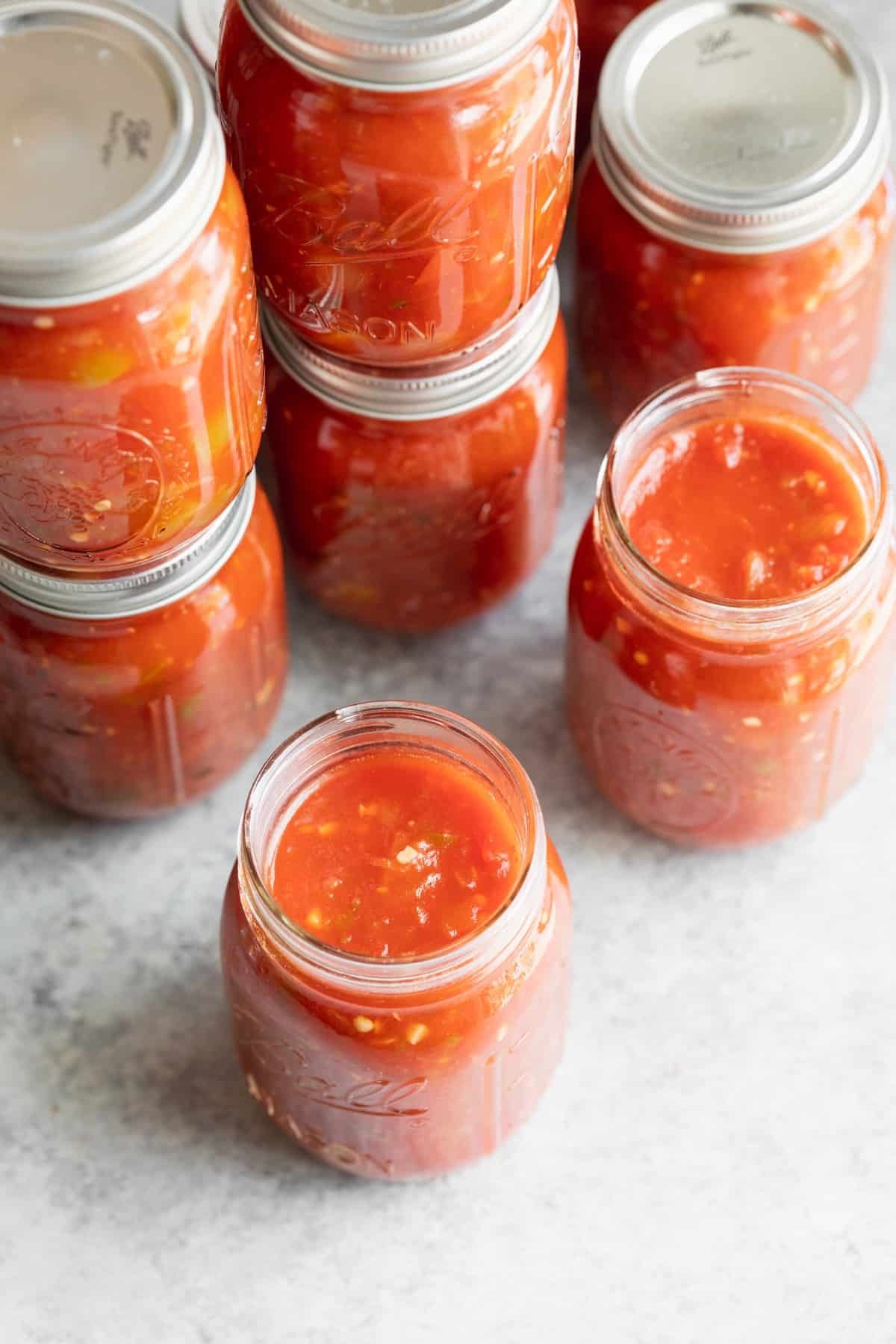
Salsa Ingredients
For this salsa canning recipe, you’ll need the following:
- Peeled and chopped tomatoes: Peeling the tomatoes is necessary for a better salsa texture and safety in canning. I use the boiling water method to peel the tomatoes, and I have a tutorial on how to do that or see below.
- Green bell peppers: You can use other colors, but I like the color of the green bell peppers with the tomatoes.
- Chopped white onion: Make sure to use white onion and not red onion as it will color the salsa, especially when it’s canned.
- Jalapeños: You can increase the amount of jalapenos or decrease the amount, depending on spice preference. I share how to do this safely below.
- Garlic: If you plan on making several batches at one time, like I do, then I recommend grabbing the already peeled cloves of garlic for ease.
- Canning salt: Canning salt is fine and dissolves into the salsa better; iodized salt can be substituted. However, as salt doesn’t affect the pH level when canning, you can use as much or as little salt as you’d like to taste.
- White vinegar: This homemade salsa doesn’t taste like vinegar! Some readers have used bottled lime juice (see the comments) but I use vinegar and prefer it. If you do want to use another acid, it must be 5% acidity or higher.
- Tomato paste: This is necessary for both thickening the salsa and for adding additional acid as commercial tomato paste contains citric acid.
You can make slight adjustments to this recipe, but as this recipe has been verified and tested for safety, I do not recommend making any other adjustments other than what is listed below. If you are making this recipe as homemade salsa and not for canning, then you can make any adjustments to taste.
What substitutions are safe to make?
How to make a spicier salsa
Depending on the heat of your jalapenos, this recipe is mild to medium, as written. If you would like it hotter, note that you cannot add more peppers, but you can substitute the type. This salsa recipe for canning uses 2 1/2 cups of chopped bell peppers along with 3-4 medium jalapeños.
If you want more heat, then I recommend subbing in some of the chopped bell peppers for spicier peppers. When I make this hot, I usually add 2 cups of chopped bell peppers and 1/2 cup of chopped jalapeños with the seeds. If you want a very mild salsa, make sure to remove the seeds and ribs from your jalapenos before adding them, or you can omit them altogether.
Using other acids instead of vinegar
You can use bottled lemon juice instead of vinegar for this recipe in the same amount, though I highly recommend the vinegar option and note by the hundreds of reviews that this salsa does not taste vinegary. Fresh lemon or fresh lime juice is not pH standardized to be used in this recipe, but bottled lemon is safe. However, as you can see from the comments, even if you dislike vinegar in your salsa, it doesn’t taste like vinegar! I love and recommend the original version posted here, but bottled lemon juice is also OK.
Adjusting the amount of salt
This recipe uses canning salt, the same consistency as table salt. As salt does not change the pH, you can use more or less salt. I find the amount of salt perfect, but if you are salt sensitive, I recommend adding as you go and tasting. It’s always easy to add more salt, but you cannot take away salt once it’s added.
Lastly, if you prefer fresh herbs in your salsa, I recommend adding them once you open a jar. This is for taste and appearance, as fresh herbs, like chopped cilantro, will turn very dark green once canned. You can use a small amount of dried herbs if you’d like.
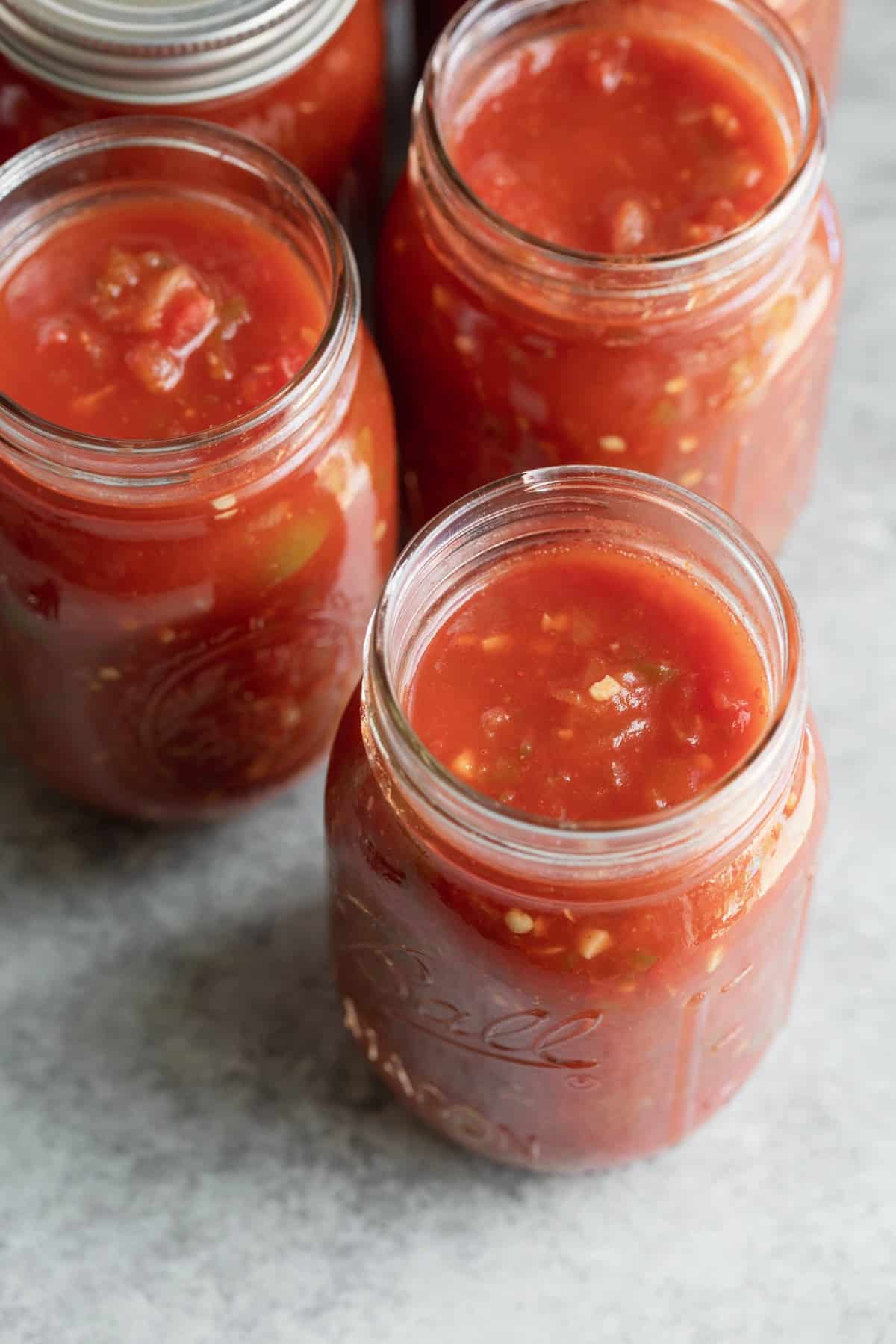
How to Can This Salsa
Prepping all of your ingredients first will make canning salsa much easier in the long-run.
The only difficult thing is removing the skins from the tomatoes ahead of time (this is how to peel tomatoes). If you are making a hot salsa, then I highly recommend using gloves when chopping the hot peppers.
Step 1: Make the Salsa
Put all of your ingredients into a large stock pan and simmer for at least 30 minutes until it thickens. I highly recommend grabbing a few spoonfuls and enjoying it with chips while it cooks.
Taste it, and know that the flavor will develop as it sits. You can adjust a few things here depending on taste — you can add more salt (if you are salt-sensitive, then I recommend starting with 3-4 teaspoons and adding from there.) You can always add more.
You can also add in spices, like cumin, cayenne, coriander, etc. I personally don’t think this salsa needs any additional spices, but some readers like to do this.
Step 2: Pour into clean jars
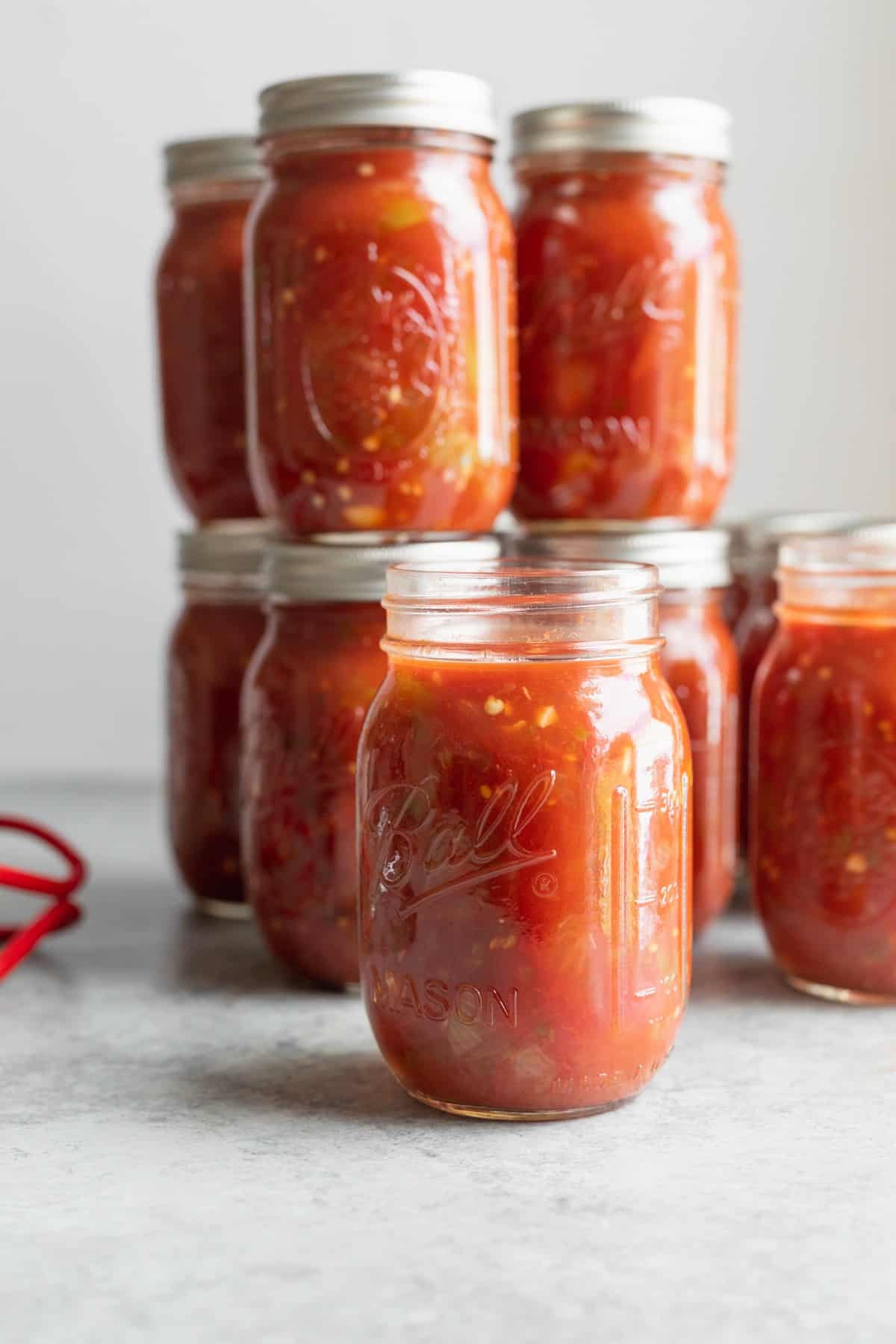
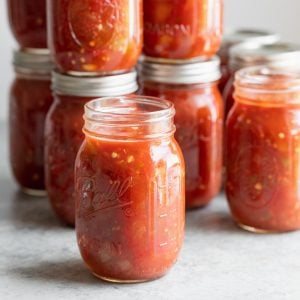
Pour salsa into clean jars. This recipe will make about 7-9 pints of salsa, depending on how thick your salsa is. As long as you followed the ingredients, then it’s OK if you get more or less. It will depend on how long your salsa simmers.
If you are new to canning, see my tips below for how to clean your jars before adding in the homemade salsa. I use a funnel to keep things clean, but ensure you wipe the top of the jar before putting the tops on. Place the tops on the jars and seal to close.
Step 3: Process in a water bath
Fill a large pot with water and bring to a boil. Place the filled jars into this hot water bath and process for 30 minutes, ensuring the jars are submerged in hot water the entire time.
I use a canning pot with a rack so the water gets around all sides of the jar. You can use a pasta pot if you don’t have a canning pot.
Step 4: Remove and let cool
Carefully remove the jars from the hot water bath canner and place on a rack or a kitchen towel until cool to the touch.
I use this jar lifter to remove the jars and then place them on a kitchen towel to cool. Let them sit for 24 hours before checking to see if they have sealed. Any that haven’t, you can reprocess!
It’s a little bit of work upfront, but the results for this homemade salsa are so worth it. Plus, good salsa is ridiculously expensive, and if you can make your own for just a dollar or two a jar, it’s worth it!
Store cooled homemade salsa in a dark place, like a pantry, for up to 18 months.
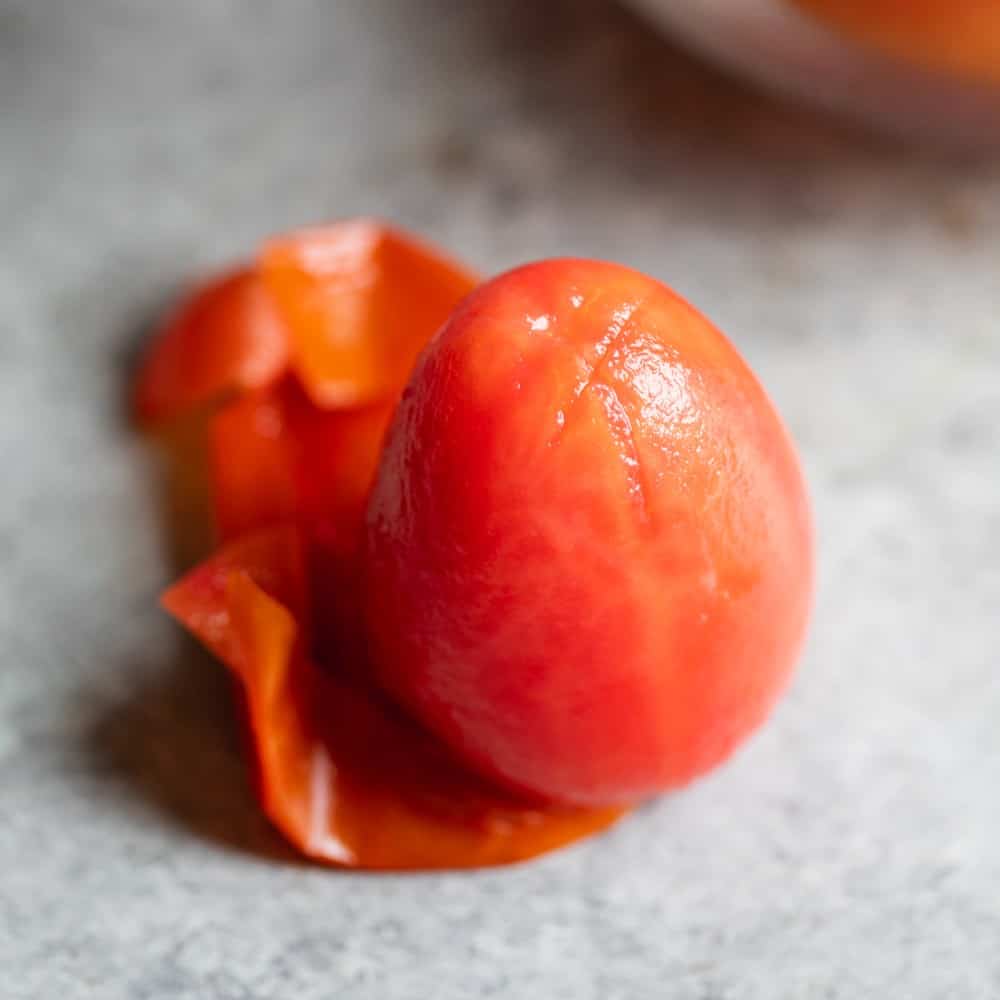
How to Peel Tomatoes for Salsa
You’ll need to first remove the tomato skin before you chop your tomatoes. This is essential to make this salsa recipe safe for canning.
To do this, make an “X” in the bottom of the tomatoes, then place in boiling water for 60 seconds. Then, remove the tomatoes from the water and place them directly into a bowl if iced water to shock. The skins should slip right off. (I use my spider to transfer the tomatoes from the boiling water to the ice water without getting splashed.)
If you are new to canning tomatoes, I have a step-by-step guide for how to peel tomatoes.
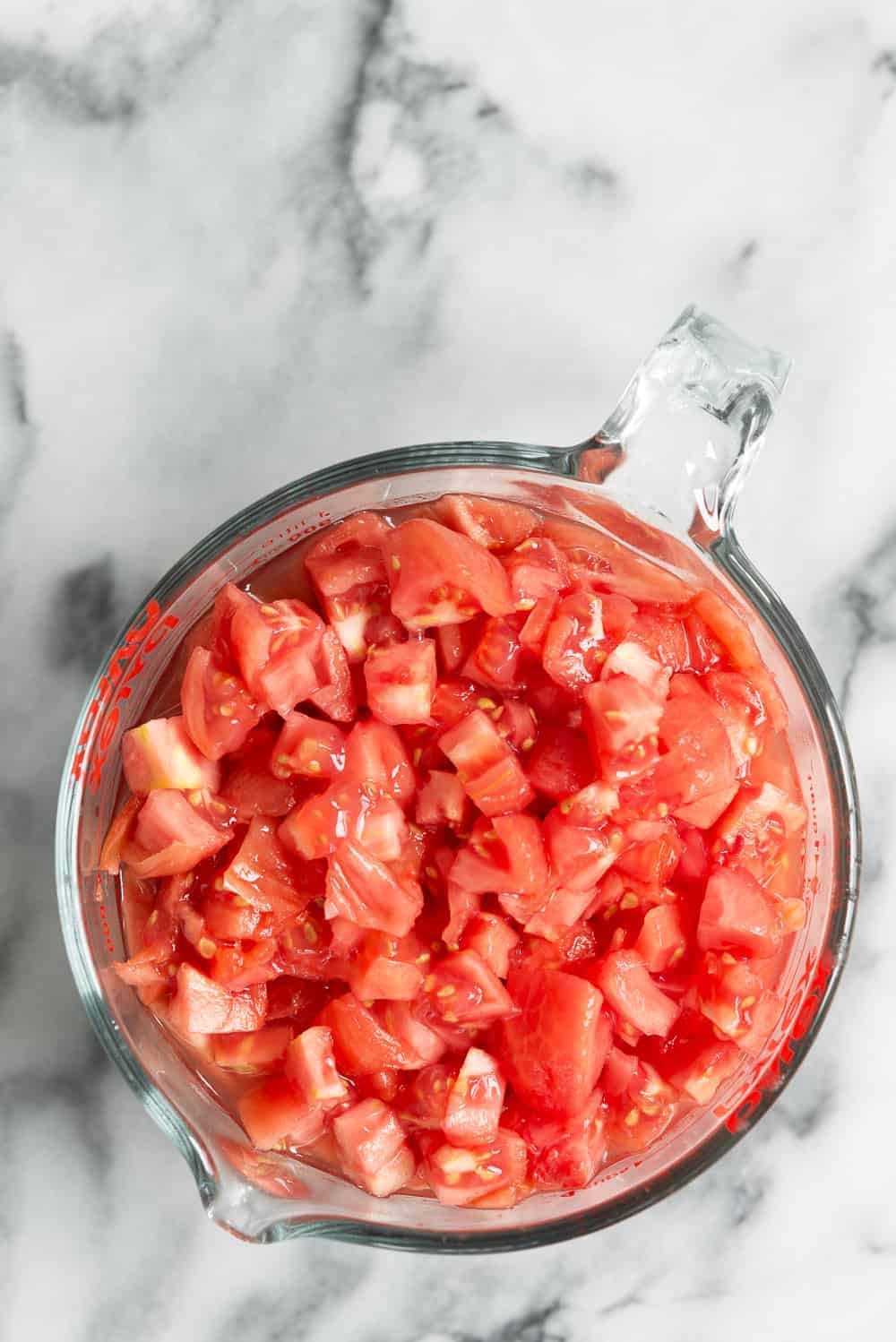
After you peel your tomatoes, it’s time to chop them. To make things easier, I use a food processor.
I did one batch of this salsa by chopping everything by hand and one by roughly chopping the vegetables in the food processor and found that the results were similar. If you want your salsa to have more texture, then I recommend chopping the tomatoes by hand and using the food processor for everything else.
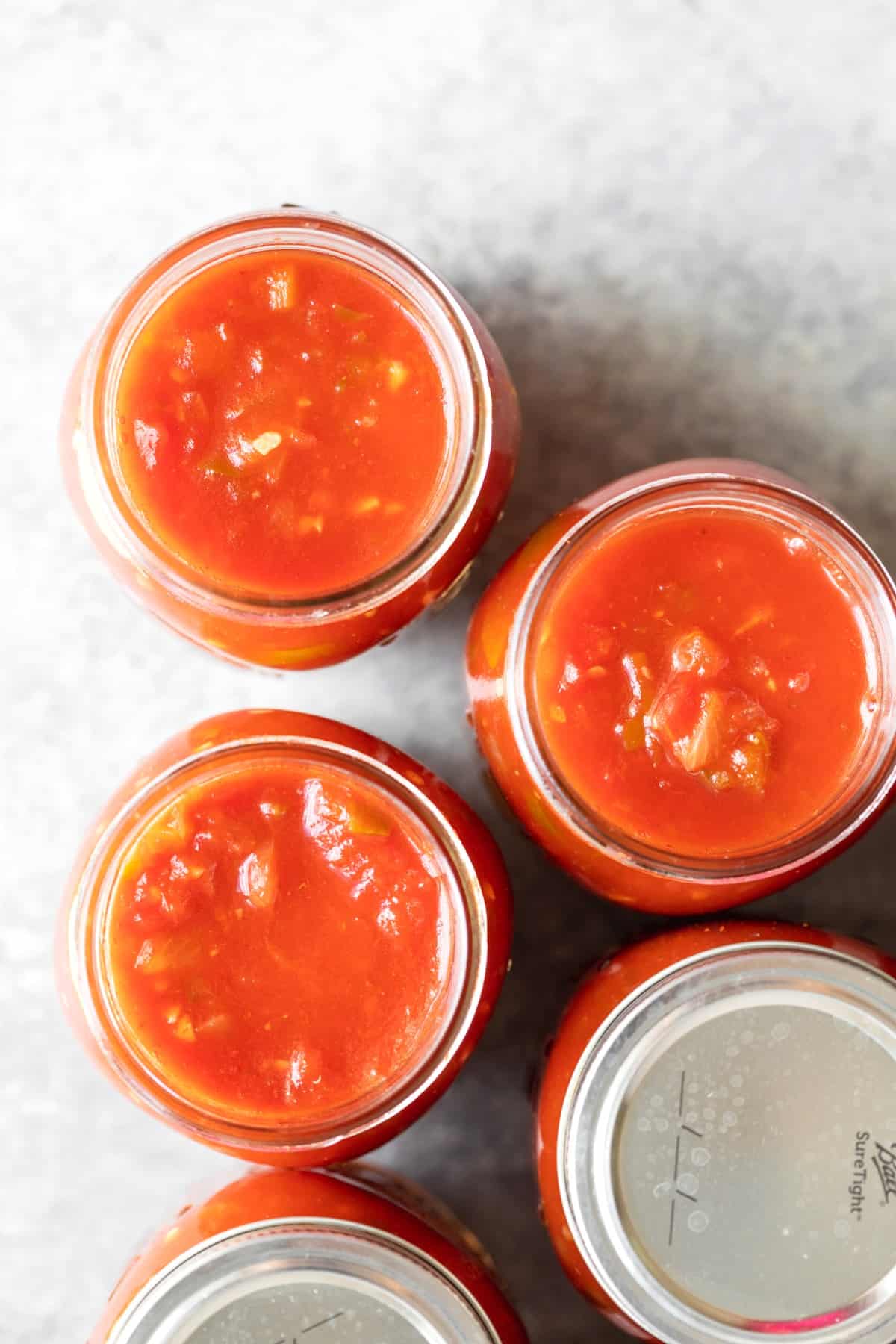
How to Clean and Sterilize Your Jars
You’ll need to ensure your jars are clean and sterile before canning. This is a safety recommendation to eliminate bacteria, dust, and microorganisms that may have been on your jars; this is even true for brand-new jars.
You can wash your jars in the dishwasher or by hand, but note that your dishwasher will not sterilize jars unless you use a sterilizing cycle.
What I do is wash my jars and lids in the dishwasher using a wash and sterilize cycle. Then, I leave them in the closed dishwasher after the cycle to keep the jars both clean and warm while my salsa is cooking. You want your jars to be warm before adding in the warm salsa before canning.
What Tomatoes are best for salsa?
When choosing tomatoes for canning salsa, you’ll ideally want to choose paste tomatoes. Paste tomatoes are more fleshy and therefore contain less juice and fewer seeds than other types of tomatoes, which makes them perfect for salsa.
Paste tomatoes are also ideal when making my homemade canned tomato sauce.
The most popular types of tomatoes for salsa:
- Roma tomatoes: Small, slender plum tomatoes are the most popular type of paste tomato, especially if you are purchasing tomatoes in the store.
- Little or Big Mama tomatoes: These are great varieties if you are planting a garden specifically for making salsa or tomato sauce. Both of these are types of paste tomatoes.
- Amish Paste tomatoes: Very similar to Roma tomatoes, with a slightly sweeter flavor. These are the type of tomatoes that my mother-in-law usually gifts me from her local farm.
All that said, the best type of tomatoes are whatever tomatoes you have on hand! Ask your local farmer’s market or local farm if they have canning tomatoes or uglies! The uglies are what most tomato farmers sell for dirt cheap- they are ugly, misshapen tomatoes that are perfect for salsa making.
If your tomatoes are very watery, it’s OK! Just remove some of the seeds before chopping for a less watery salsa.
Can I make this homemade salsa without canning?
Yes! This recipe is written as safe to can, but it’s also a fantastic homemade salsa recipe without canning! If you are going to make it as a homemade salsa recipe, then you are free to make more adjustments in the ratio of tomatoes to peppers and onions. Note that I don’t think you need to do this as the recipe is fantastic as is. However, there is more leeway based on taste preference as opposed to safe canning practice.
If you prefer a smaller batch of homemade salsa, you can halve or even quarter this recipe if you plan on enjoying it immediately. You can also freeze any leftovers without needing to follow the canning process.
Can I pressure can this recipe?
To pressure can (below 4000 ft) pressure can at 5 pounds pressure for 10 minutes.
What adjustments are needed for higher altitudes?
If you are above 4000 feet, then add 10 minutes to the processing time.
Frequently Asked Questions
Is this salsa recipe safe to can?
Yes. This recipe was developed by a Master Canner and has been in my husband’s family for 40 years. It has also been verified by the OSU Home Food Preservation center.
Can you add more peppers?
You cannot add in more peppers, but you can substitute the type of peppers. This salsa recipe for canning uses 2 1/2 cups of chopped bell peppers along with 3-4 medium jalapeños. If you want more heat, then I recommend subbing in some of the chopped bell peppers for spicier peppers. When I make this hot, I usually add 2 cups of chopped bell peppers and 1/2 cup of chopped jalapeños.
Can I use lemon juice instead of vinegar?
Yes, you can use bottled lemon juice instead of vinegar for this recipe in the same amount. Fresh lemon or fresh lime juice is not pH standardized and, therefore cannot be used in this recipe, but bottled lemon is safe. However, as you can see from the comments, even if you don’t think you like vinegar in your salsa, it really doesn’t taste like vinegar! I love the original version posted here and recommend it, but bottled lemon juice is also OK.
Can I use less salt?
Yes, salt does not affect pH levels so you are welcome to use less salt than written here.
Is cilantro OK to add?
You can add dried cilantro to this salsa canning recipe if you’d like. However, I’d recommend instead adding in fresh cilantro when you go to serve this salsa recipe instead. Cooking the cilantro will lessen its flavor and make it darker and softer and may not be appealing in the canned salsa.
How many jars does this recipe make?
As written, this recipe will make ~7-8 pint jars of salsa. As long as you followed the ingredients and didn’t make substitutions, it’s OK if you get a little less. This will depend on how long you let the salsa cook for, how large your tomato chunks are and how watery your tomatoes are.
Serving Suggestions
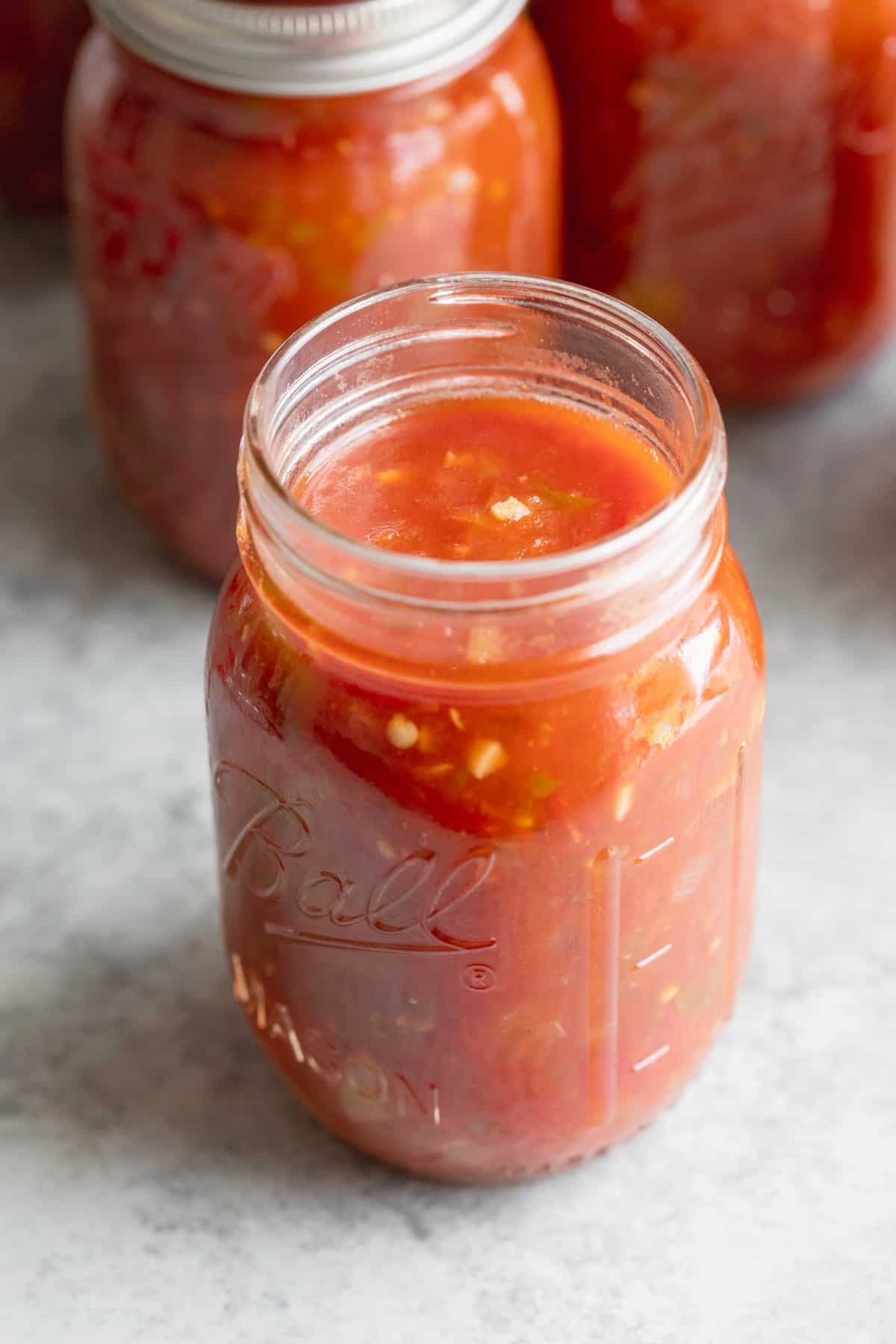
This homemade salsa is delicious with tortilla chips, and it’s fantastic in my vegan queso, vegetarian bean chili, enchiladas, and more.
It’s great wherever you like salsa! I like to make a few batches at a time and then gift a few jars. Who doesn’t like homemade salsa?
More Salsa Recipes
If you like this best salsa recipe for canning, then you will love my
- Creamy Jalapeno Salsa
- Salsa Verde
- Pico de Gallo
- Salsa Roja
- Peach Habanero Salsa
- Pineapple Salsa
- Fresh Mango Salsa
- Black Bean and Mango Salsa
More Canning Recipes
Looking for more things to can? I recommend:
- Candied Jalapenos
- Garlic Dill Pickles
- Low Sugar Strawberry Jam
- Spaghetti Sauce for Canning
- Low Sugar Blackberry Jam
- Hot Confetti Pepper Jelly
If you make this recipe, come back to rate it and leave a comment. Seeing you make my recipes makes my day and your feedback helps other readers.

Video
The Best Homemade Salsa for Canning
Equipment
Ingredients
- 9 cups peeled and chopped tomatoes, they must be peeled first, see directions below or tutorial here
- 2 1/2 cups chopped green bell peppers
- 2 1/2 cups chopped white onion
- 4 medium jalapeños, chopped (see notes)
- 8 large cloves garlic, chopped
- 6 teaspoons canning salt
- 1 cup white vinegar
- 1 12-ounce can tomato paste
Instructions
Remove the skins from the tomatoes
- To do this, make an "X" in the bottom of the tomatoes, then place in boiling water for 60 seconds. Then, remove the tomatoes from the water and place directly into a bowl if iced water to shock. The skins should slip right off. (I use my spider to transfer the tomatoes from the boiling water to the ice water without getting splashed.)
Make the salsa
- Place all of the ingredients in a large pot (you will need a 10qt. saucepan for this batch, or split the ingredients among 2 saucepans) and simmer for 20-30 minutes, until thickened and cooked.
Prepare cans to be sealed
- Ladle the cooked salsa into clean, sterile jars leaving 1/2 inch headspace. Wipe rims of jars with a damp, clean, paper towel, then place lids on top. To make filling easy, I highly recommend a funnel.
Process using a water bath
- To do this, bring a large saucepan filled with water to a boil. Your saucepan needs to be tall enough to have the water cover the jars by 2 inches- though the jars will displace some of the water as they are added.
Add the jars to the water bath and cover with a lid
- Process for 30 minutes, then remove. I use these canning tongs to make things easy.
Let the jars sit for 24 hours
- The salsa will remain good in the jar for up to 18 months… if you can keep yourself from eating it all before then!
Can I omit the tomato paste safely?
Hi Noelle, no I don’t recommend omitting the tomato paste for safety.
I’ve tried many salsa recipes and finally found THE one and this is by far the best tasting salsa I’ve ever made. I, like many others, had concerns about vinegar in this recipe but trust me when I tell you there is no taste of vinegar whatsoever. I did add
1 tablespoon of sugar to give it a slight sweetness that makes it taste much like a popular national brand of salsa. After canning two batches we look forward to having a pantry full of salsa to last us until next year when tomato season arrives.
Hi!
Made the salsa and it’s awesome
I did make one small change. I like thicker salsa so I added 1Tbsp of corn starch to thicken it up..worked out well and it didn’t change the taste. Will be making more.
Hello! I’m excited to try this recipe. A couple years back I made salsa and did not peel the tomatoes. I like the way it turned out and it’s a lot easier lol. Will it affect the pH level of this recipe if I don’t peel the tomatoes?
Hi Jenaya, the peeling is recommended to reduce bacteria on the tomatoes and because the peel will impart a slightly bitter flavor. However, I have searched the USDA and Ag websites trying to find any studies showing that the peels affect pH and I don’t see where it says you cannot.
Hi Alex, this recipe looks great, can’t wait to make this with all my tomatoes on the counter! Can I use some orange bell pepper in place of green, or does it need to be green bell pepper?
Other colors are ok! I just think green looks the best
I have been making this salsa for 4 yrs? I think? I wrote up a good review in the comments 2 or 3 yrs ago. Last year were used al, our multi color sweet peppers (bell) we had green let’s some mature to red. Orange and yellow. Our jalapeño were very flavorful heirloom that mature to a pleasant brown color much as green bel, peppers mature to red. It made the salsa look much more colorful. It might have added a touch more sweetness as all the varieties sugar content goes up with the maturity color change. We used the huge walla walla onions we grew along with the garlic dried from our gardens well. Here is a note for people wanting more heat and intestiy. You can choose spicer garlic variety. We grew Georgian Fire variety last year. Wow did it have a kick but also made some of tge best tasting roasted garlic I think we have ever had. For salsa you certainly do not need sweetness from the garlic but instead strong flavor and you can get more heat from it. But it’s a more complex heat than from the J pepper. Something people might want to try. We make over a 100 quarts now every year and give about half of it away as gifts. I actually have an entire 20 tomatoes plant (indeterminate heirloom varieties)row for hundreds of lbs of tomatoes each yr
This is by far the favorite salsa recipe for all our family and rriends. The only area it varies is how much heat people prefer. I end up doing batches based on the heat preferences for the various people.
It would be interesting if Google analytics coukd be used to see just how popular this recipe is vs others on the net. My guess is it has to be one of tge most popular for canning.
I am certainly no vegetarian. Not even close in fact, closer to a pure carnivore. With that said I sure do eat a ton of this salsa. I guess I am not a very good carnivore!?! Put it on my fish, eggs various sausage dishes etc use pork rind chips instead of corn. It’s become one of my main condiments lol
Thanks once again for such a fantastic recipe!!
Cheers,
Tim & Family.
Thanks for the tips and the feedback, Tim!
I’ll be making this recipe today and wanted to know if I can add some roasted tomatillos and jalapeños along with the tomatoes ?
Hi Kelli, you can roast your jalapenos first before adding but you cannot add tomatillos to this recipe.
I made this salsa today. All of my jars sealed and I had a little bit left to enjoy as a snack! Very tasty!
Just a question: Can I use store bought diced tomatoes in the can to make this salsa? Should I drain off the juice before measuring for this recipe. Will the pH be affected by commercially canned tomatoes?
Thanks!
OK to use store bought tomatoes for safety– though not sure on the taste and how texture will be affected; they may be too mushy when cooked down. However, story bought tomatoes contain citric acid and are therefore lower in pH than raw tomatoes.
First attempt at making and canning salsa and it tastes great. I was not sure how many plum tomatoes to buy and prepare to make the 9 cups. I used 32 medium/large ripe plum tomatoes. Worked out to be almost exactly 9 cups after prep. I mixed tomatoes, onions and green onions in a large bowl and divided into two pots. Then divided remaining ingredients into each pot. I wanted a medium spice level, so added one whole and one seeded jalapeños to each pot. Mine made exactly 7 jars. Spice level was light to medium, I’ll add a few drops of Tabasco for my spice loving friends. A lot of work, so glad it turned out great.
I tripled this recipe according to the recommended ingredients to do so. The taste is very vinegary. What can be done to improve the taste?
Hi Laurie, you can add a bit of sugar to help offset any vinegar taste– but also note that it will mellow as it sits.