


Basil Salt
This homemade basil salt takes just two ingredients and a few minutes to make. Use it to season tomatoes, pasta, eggs, roasted veggies, and fresh bread.
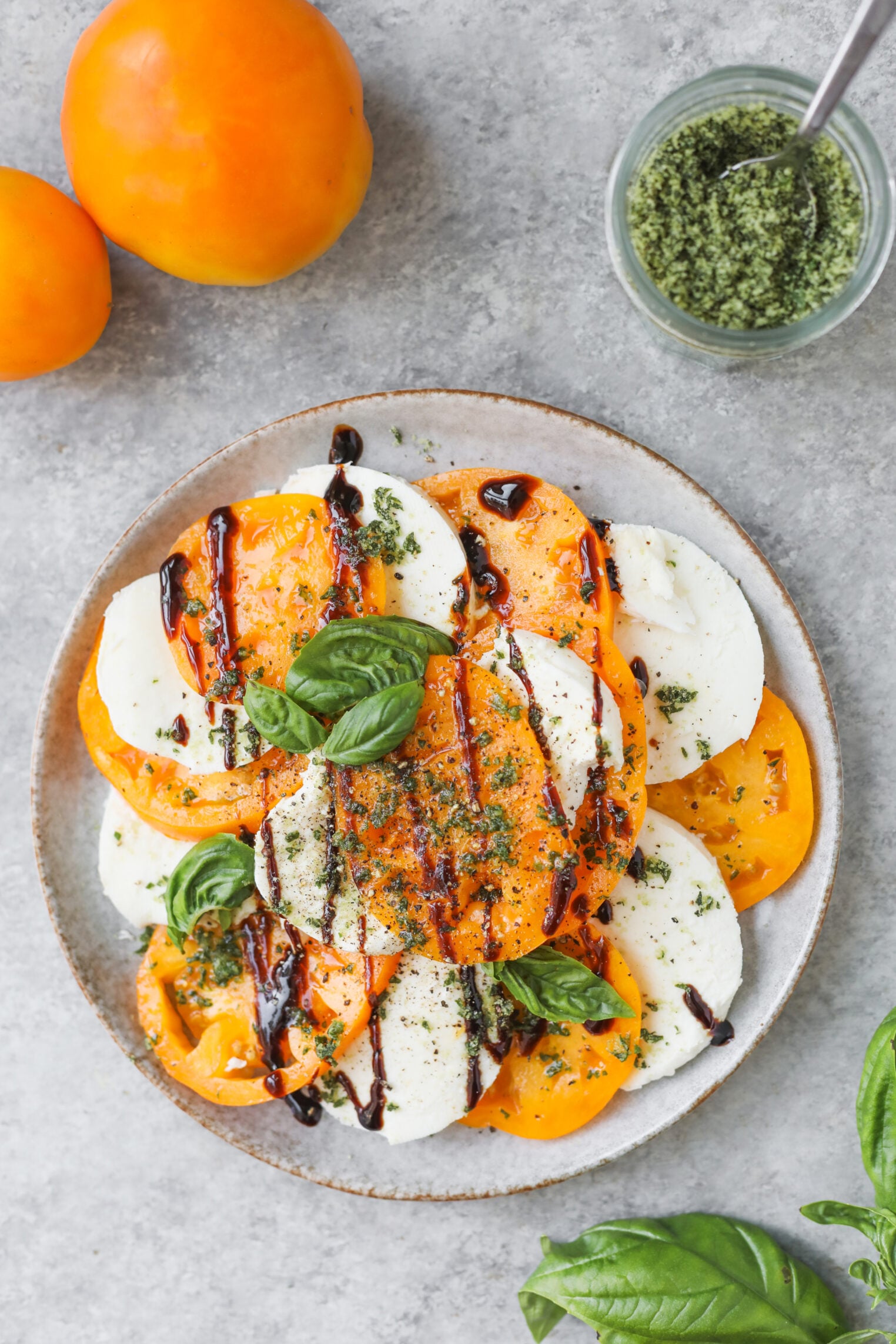
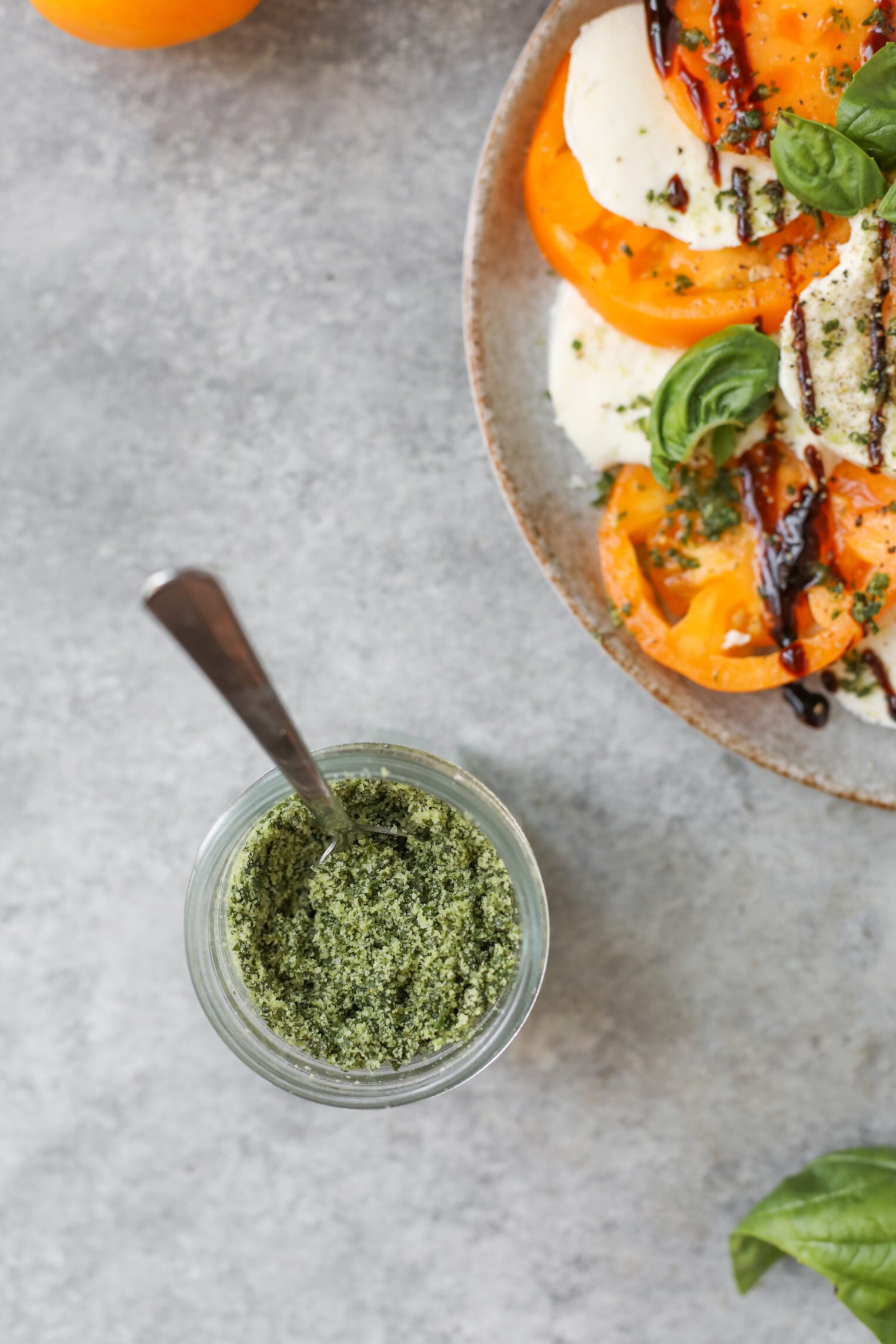
Get ready for your new favorite condiment- homemade basil salt! It’s salty, herby, and perfect for sprinkling on just about everything. I love it on caprese salad, on pasta, and on my grilled vegetable platter. It even makes a gorgeous rim for a summer cocktail or a sprinkle over fresh popcorn.
Basil salt is exactly what it sounds like: fresh basil blitzed with salt until it becomes a fragrant, herby seasoning. If you can run a food processor, you can make this.
This is the recipe I make when my garden basil is threatening to bolt, and I want to capture that summer flavor before it’s gone. It’s budget-friendly and makes a lovely homemade gift.
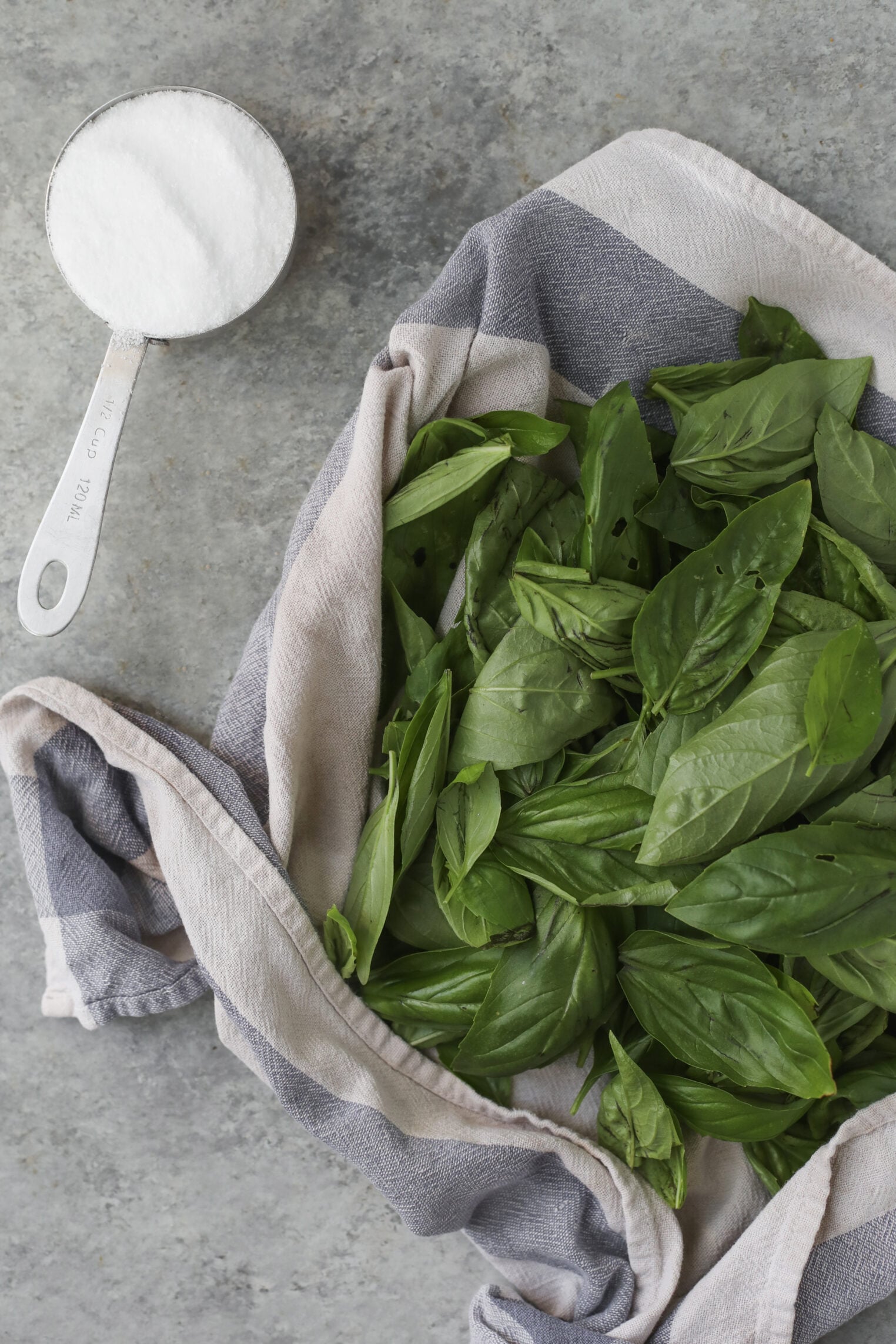
Ingredient Notes
Fresh basil: Use 2 cups of packed leaves; the fresher and more fragrant they are, the better your salt will taste. Pat them completely dry before you start.
Salt: Use 1/3-1/2 cup of salt depending on how you want to use this. I like flaky sea salt or kosher salt for their texture, but any coarse salt works well. If you want your basil salt to be saltier and more shelf-stable, then bump up the salt to 1/2 cup salt per 2 cups basil
You can also replace up to half the basil with parsley, oregano, or thyme, keeping 2 cups of leaves total, for a fresh herb salt.
How to Make Basil Salt
Step 1: Dry the Basil
Rinse the basil and pat it completely dry with a towel, or spin it in a salad spinner. Any water left clinging to the leaves will make the finished salt clump and shorten the shelf life, so take time to make sure it’s very dry.
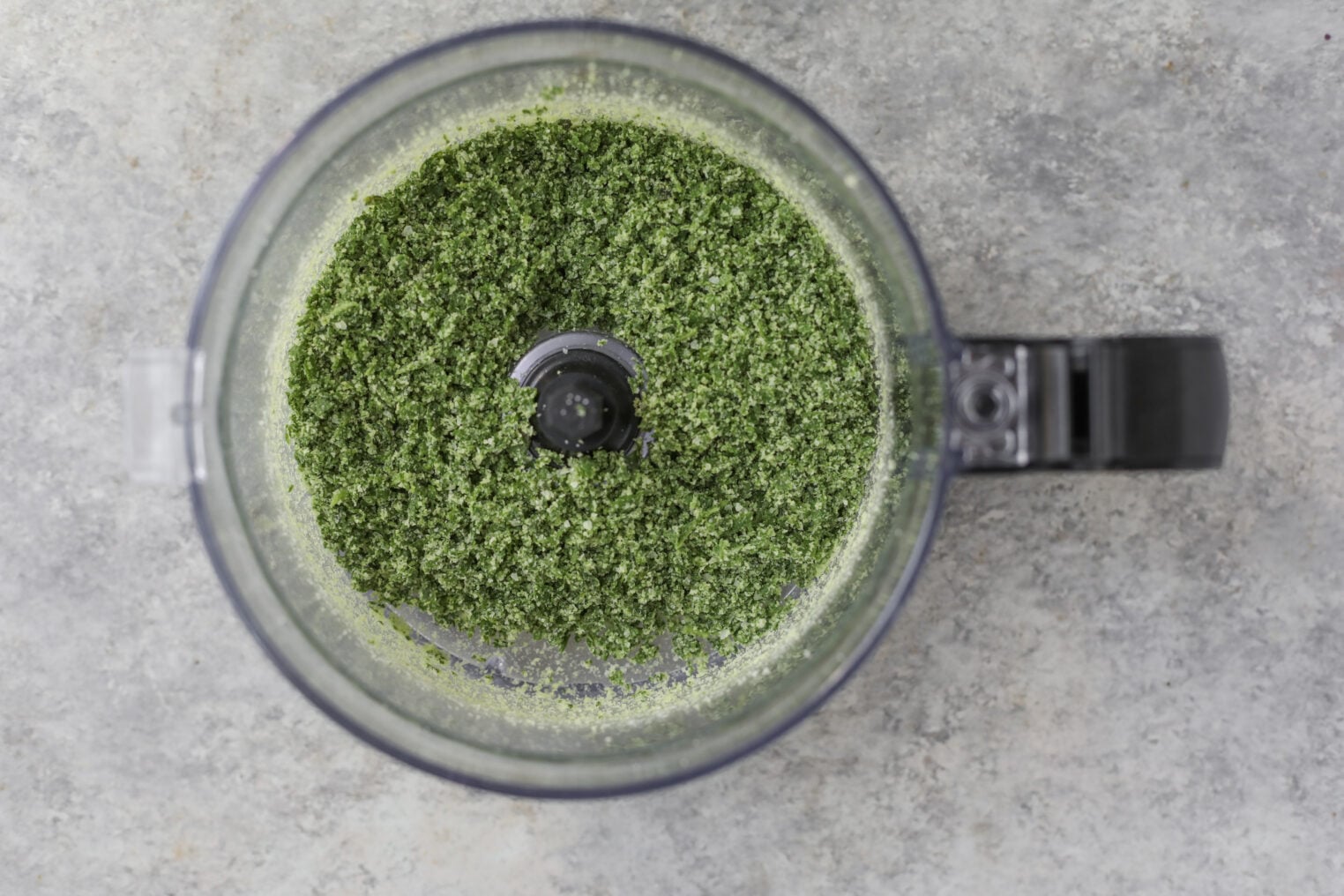
Step 2: Blend the Basil and Salt
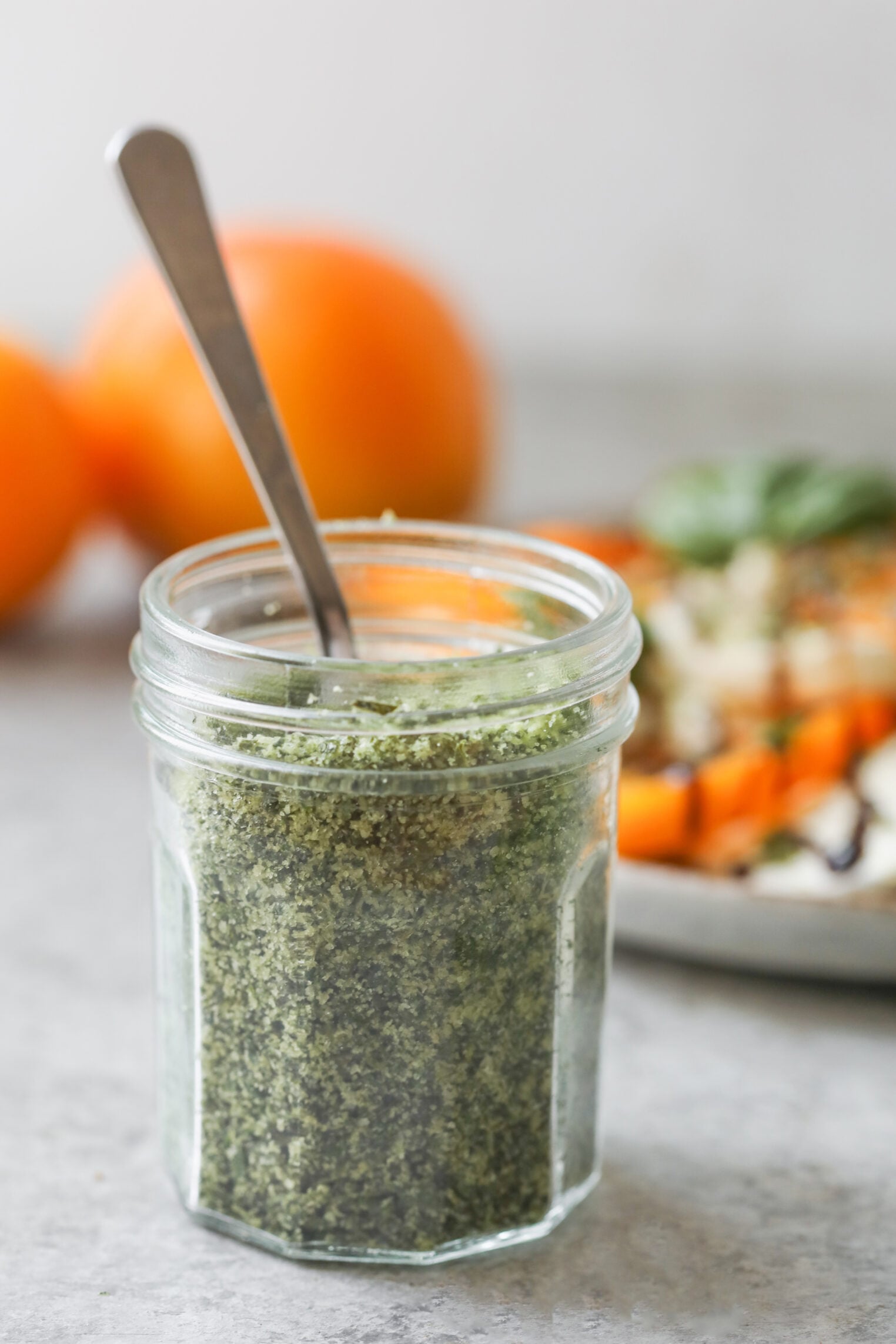
Add the basil and salt to a food processor and pulse until the mixture turns a bright green, sandy texture. Scrape down the sides once or twice so everything blends evenly, but stop before it becomes too fine.
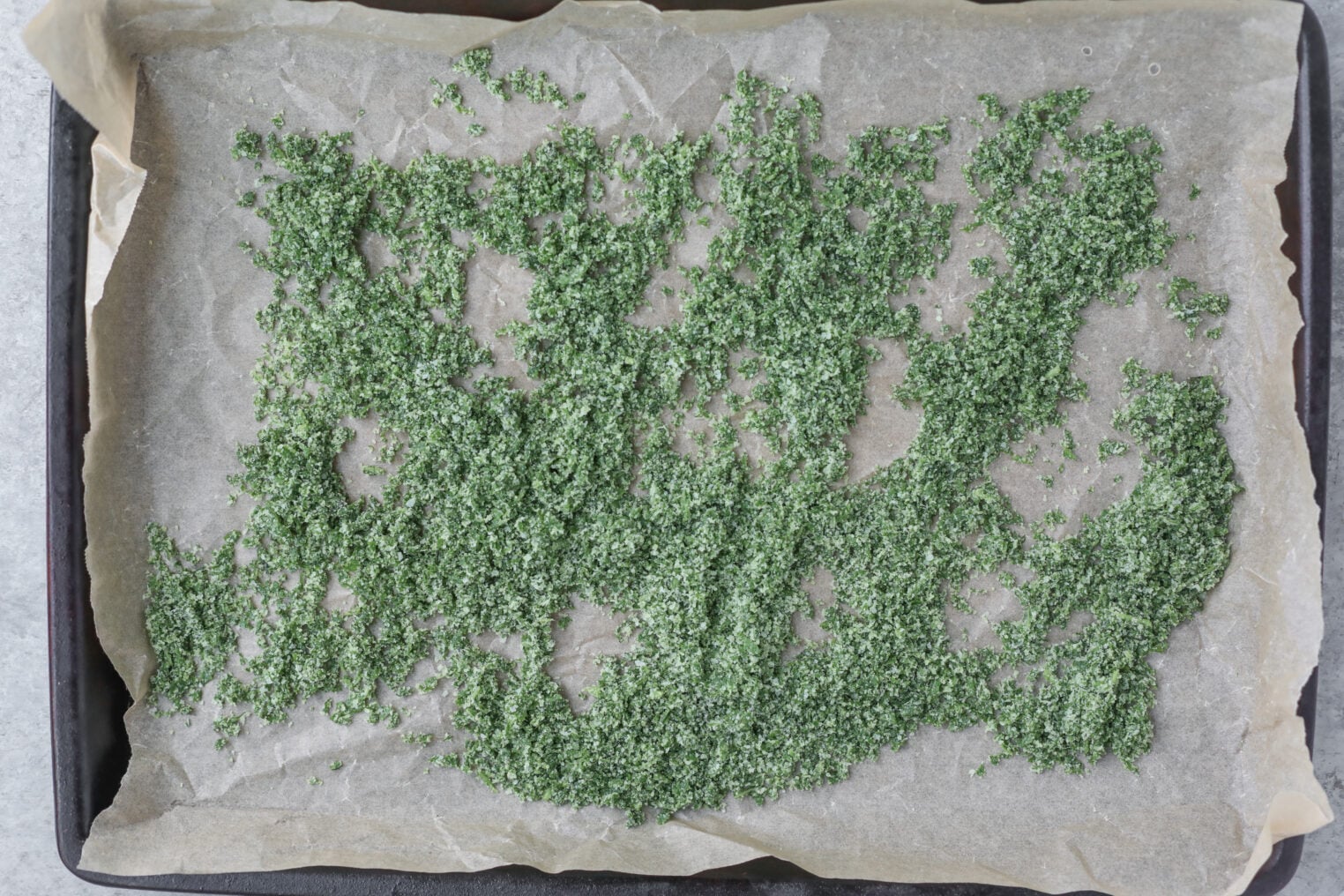
Step 3: Dry the Basil Salt
Spread the mixture in a thin, even layer on a parchment-lined baking sheet. Dry it in a 170 degrees F oven for 20 to 30 minutes, or leave it on the counter to air-dry for 1 to 2 days, stirring now and then, until the mixture is completely dry.
Step 4: Store
Once the salt is fully dry, break up any clumps with your fingers or give it one more quick pulse in the food processor. Transfer it to an airtight jar to store.
Expert Tips
- Dry the basil thoroughly before blending, as this is the biggest factor in making sure your salt keeps at room temperature
- Spread it thin on the sheet so it dries quickly and evenly.
- Don’t over-process. Make sure that you don’t over-process the salt; it should be a coarse, sandy texture rather than a fine powder.
- Make sure it’s fully dry before jarring. If you’d rather skip drying, store the fresh version in the fridge instead.
Variations
You can add in other dried herbs to make this salt! Swapping half the basil for a mix of oregano, thyme, and rosemary makes a nice Italian seasoning salt. If you do use other herbs, just make sure they are dried like the basil.
For a spicier salt, you can pulse in 1/2 teaspoon or so of dried red pepper flakes for a little heat!
Ways to Use Basil Salt
You can use this basil salt anywhere you need salt plus a little herby basil flavor. Here are some of my favorite ways to use it:
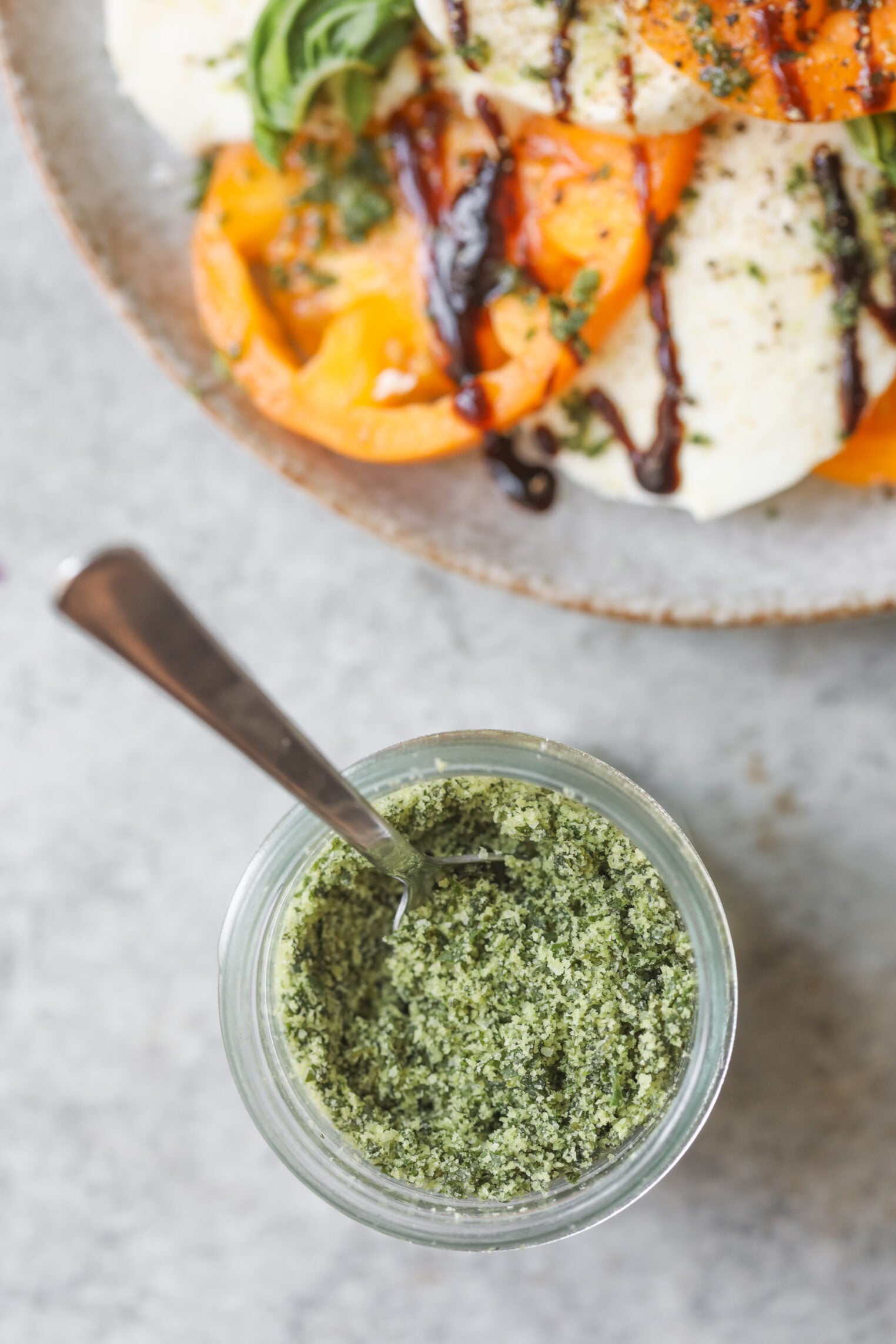
- On fresh produce: Sprinkle over sliced tomatoes, a caprese salad, or grilled vegetables
- Pasta: It’s great on pasta, like my pasta checca, pizza, avocado toast, or roasted potatoes
- Cocktails: It’s also great as a cocktail rim, like in my strawberry basil margaritas.
Frequently Asked Questions
How do I keep my basil salt from clumping?
If your basil salt is clumping, it’s almost always due to leftover moisture, so make sure to dry your basil completely before blending, and dry the finished salt thoroughly before storing. Spreading it thin on the baking sheet helps it dry evenly. If it firms up in the jar later, then break it up with a fork or a quick pulse.
Can I use dried basil over fresh?
This basil salt is best made with fresh basil, which gives the salt its bright color and aroma. I don’t recommend using dried basil.
Do I have to dry it in the oven?
No, the oven is the fastest method, but you can spread the salt on a tray and let it air-dry on the counter for about 2 days, stirring occasionally. The salt should feel completely dry before you store it.
Storing
Keep the fully dried basil salt in an airtight jar somewhere cool and dark, like a pantry or cupboard, where it will stay fresh for months. Always use a dry spoon to scoop out the salt, so no moisture sneaks back in.
If you’ve ever had more basil than you knew what to do with, this is the recipe for you. Just two ingredients for a delicious homemade finishing salt!

Basil Salt

Equipment
Ingredients
- 1/2 cup flaky sea salt
- 2 cups packed fresh basil leaves
Instructions
- Rinse the basil and pat it completely dry, or spin it in a salad spinner.
- Add the basil and salt to a food processor and pulse until the mixture is a bright green, sandy texture, scraping down the sides as needed.
- Spread the mixture in an even layer on a parchment-lined baking sheet.
- Dry in a 170 degrees F oven for 45-60 minutes, or air-dry on the counter for 1 to 2 days, until no longer damp.
- Break up any clumps with your fingers, or if the salt isn’t fine enough, place back into the food processor for a few quick pulses then transfer to an airtight jar.