


Simple Canning Recipe for Dill Pickles
Canning cucumbers is easier than you think! This simple canning recipe for dill pickles requires only a handful of ingredients and is the best recipe to use up all those garden cucumbers.
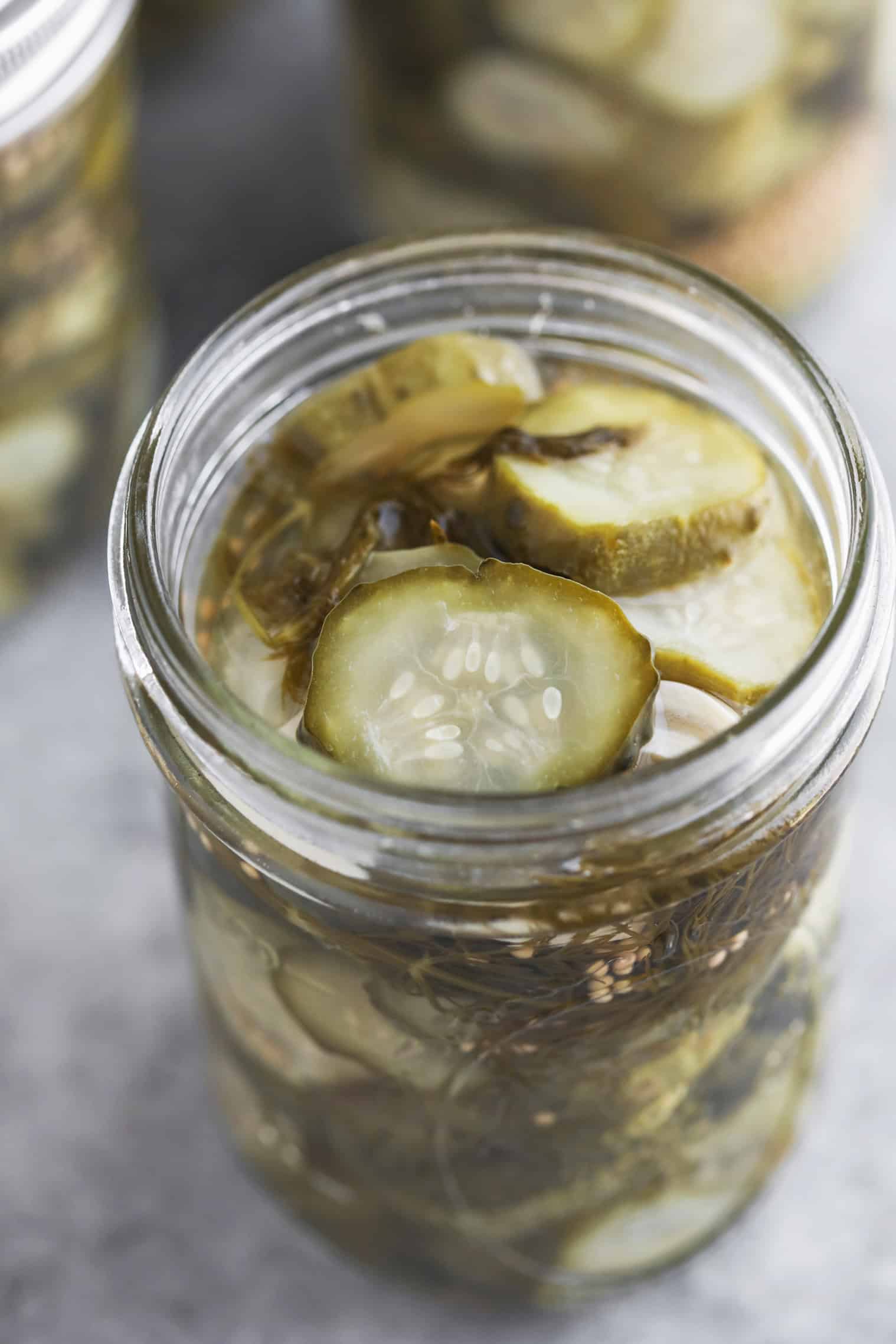
Make homemade pickles that taste better than most jarred varieties– and at a fraction of the cost. Summer is my canning season– I make a batch of my low-sugar strawberry jam every May (and my blackberry version in July), plus dozens and dozens of jars of my homemade salsa recipe for canning and canning spaghetti sauce.
To add to that list, I’ve got this quick dill pickle recipe with mustard seeds, fresh dill and garlic. They are delicious on sandwiches, burgers, chickpea salad— really, wherever you love dill pickles.
You can enjoy these pickles as is or can them to enjoy all year long. See below for more details and step-by-step photo directions, or scroll down to the bottom for the full recipe.
Why this Dill Pickle Recipe Works
I love this recipe because it doesn’t require any fermentation! These are quick-process dill pickles, which means you don’t have to ferment anything. Especially for beginners, this takes away any guesswork of a starter culture, burping the pickles, or needing a crock.
For this recipe, you’ll slice the cucumbers, soak them overnight in a salt water, then pack them into jars with dill, garlic, mustard seeds, and cover them with a boiling vinegar brine. Then you’ll water-bath can and done!
The overnight salt soak is the step that does the heavy lifting. It helps pull water out of the cucumbers before they go into the brine, which keeps them from going limp in the jar.
A few other things worth knowing before you get started:
- The ingredient list is short: Everything except for the cucumbers is likely already in your pantry; the rest is just cucumbers, vinegar, water, salt, sugar, pickling spice, dill, garlic, and mustard seeds.
- This recipe is tested: This dill pickle recipe has been pH-tested and is safe for water-bath canning in pint jars.
- You can scale it! As a gardener, I know that some years I have so many cucumbers I don’t know what to do with them all, and other years, well, I don’t. This recipe scales to your harvest, so you can double or triple a batch if needed.
- You don’t have to can them if you don’t want to: as you are making a brine, you don’t have to water-bath can them. Just pour the brine over the packed jars, let them cool, then stick them in the fridge.
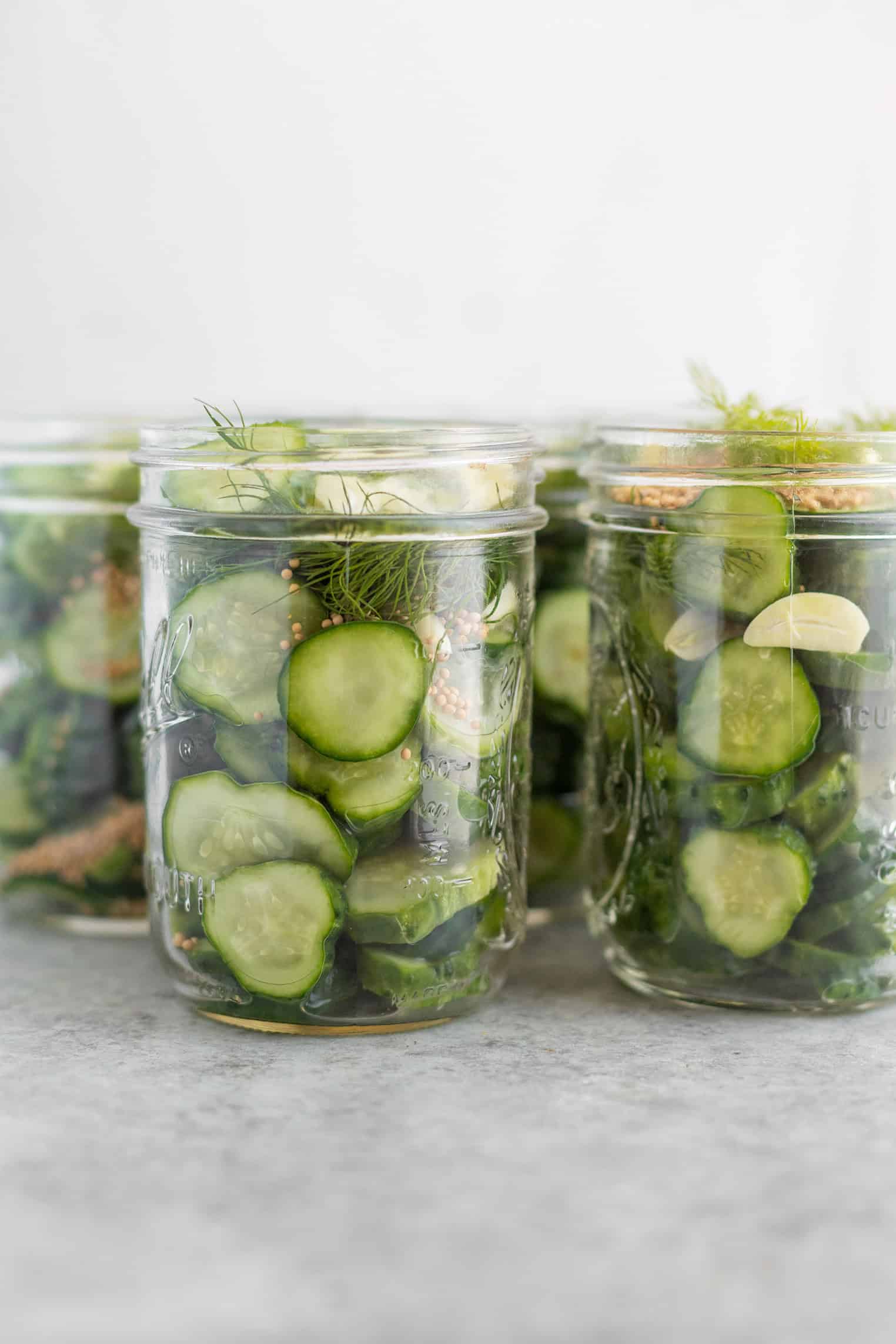
Ingredients Needed for Homemade Dill Pickles
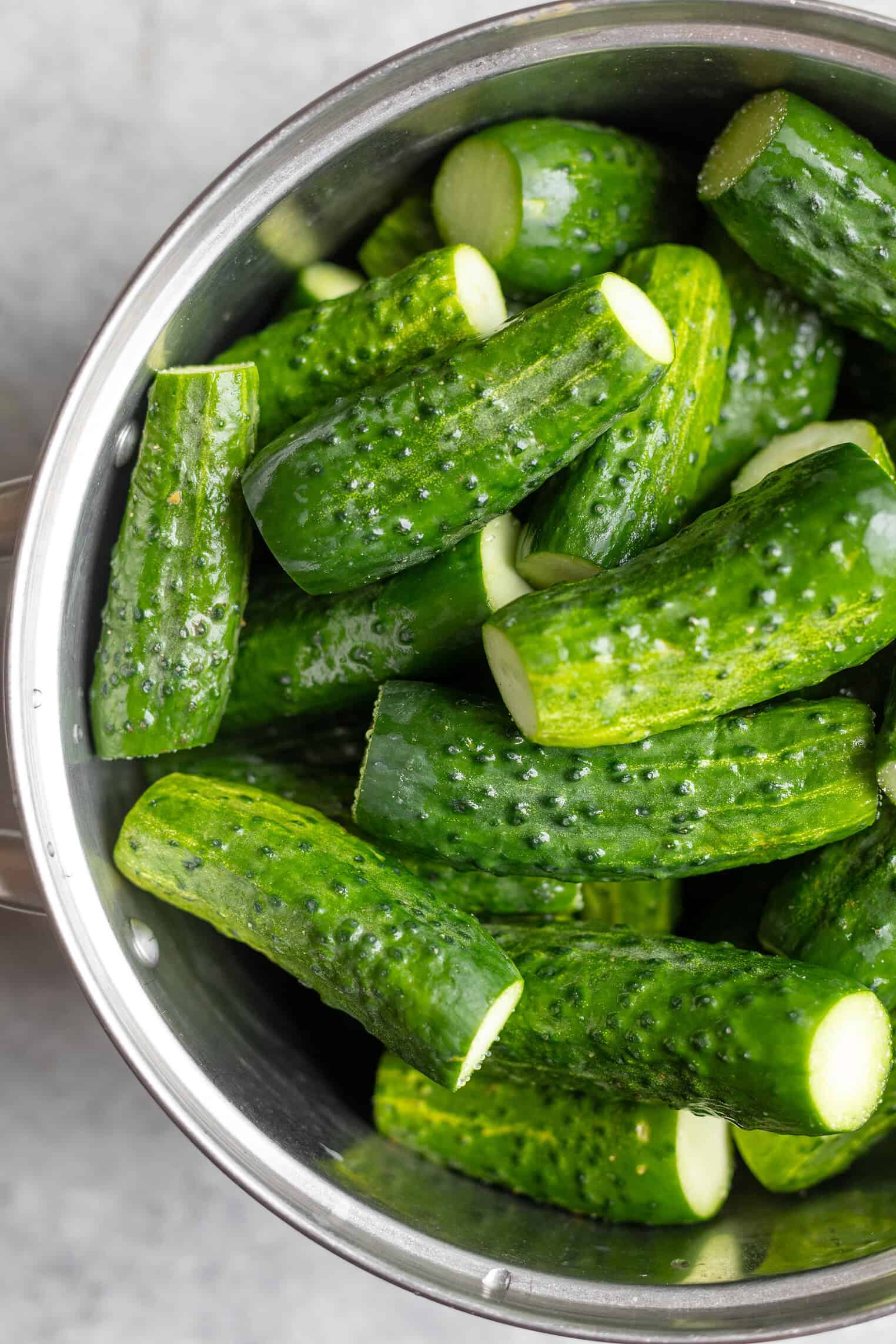
- Pickling Cucumbers: For best results, you’ll want pickling cucumbers, like Kirby cucumbers. English cucumbers or Persian cucumbers will be too soft in this recipe. Pickling cucumbers have a thicker skin, which makes them better for pickling.
- 5% Vinegar: White vinegar with an acidity of at least 5%
- Cane Sugar: You technically don’t need the sugar in this recipe, but it helps to balance the cucumbers
- Whole Pickling Spice: You can find this in the spice section of most well-stocked grocery stores, or online. You’ll need to wrap it in cheesecloth (or you can use a tea infuser)
- Fresh Dill: You’ll need fresh dill for these canning dill pickles. I do about 1-2 sprigs per jar. I don’t recommend substituting dried dill or dill seed
- Garlic: Freshly sliced garlic adds nice flavor for these dill pickles. I do 1 large clove per jar.
- Mustard Seeds: Don’t skip these! They also add nice flavor for the dill pickles. You’ll add a teaspoon per jar
Can I make a spicy version?
It’s generally not recommended to alter a tested canning recipe, but adding dried spices in small amounts won’t meaningfully alter the pH. A few red pepper flakes or several black peppercorns per jar is a safe addition.
What I would not do is add fresh peppers, fresh onion, or any other low-acid fresh ingredient to the jar, since that does change the acidity of the finished product. If you want spicier pickles, say with fresh jalapeños, then make my refrigerator pickles instead, where you have much more flexibility.
How to Make This Canning Recipe for Dill Pickles
Prep Cucumbers
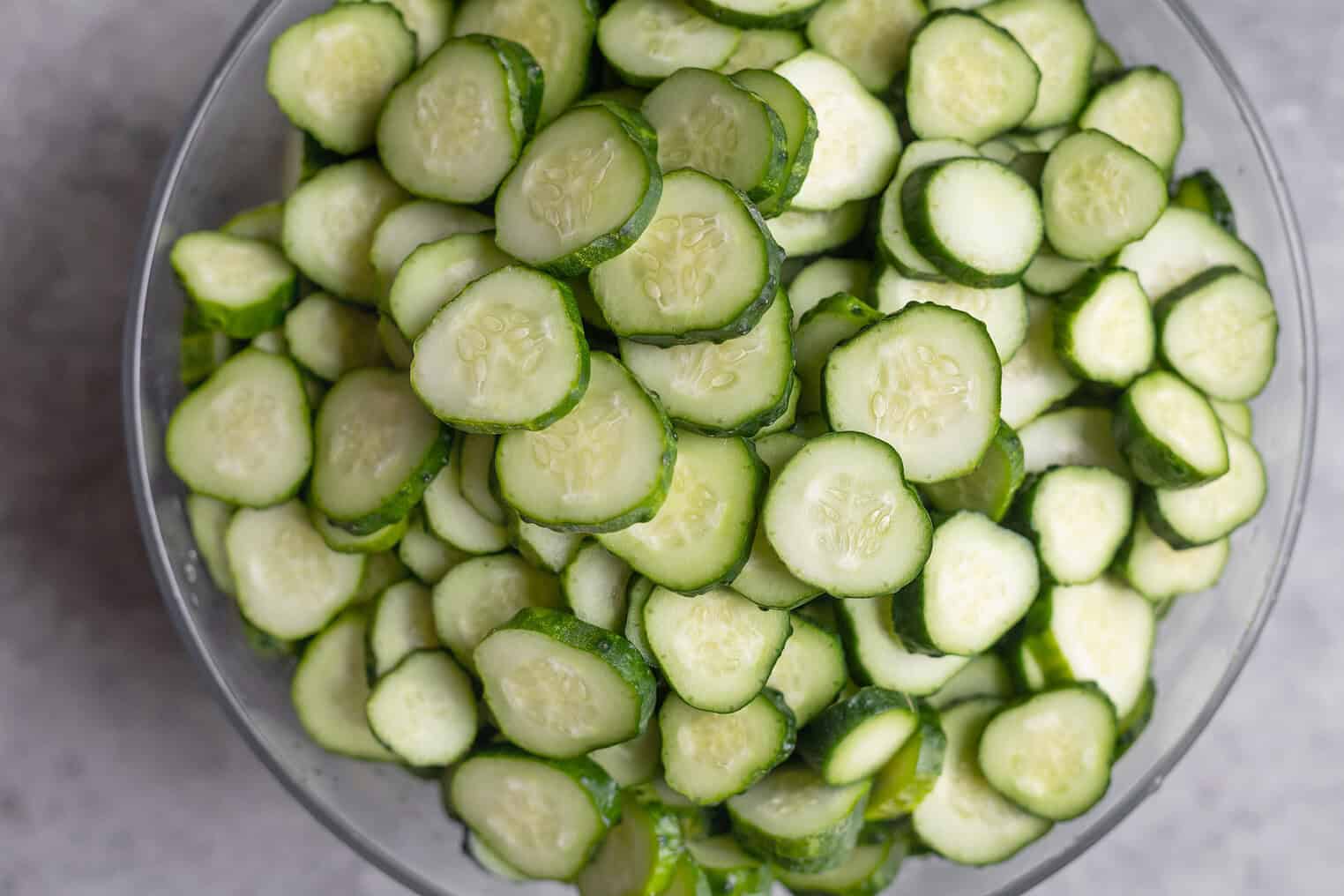
Wash cucumbers and trim off the blossom end. Slice into chips (or spears)
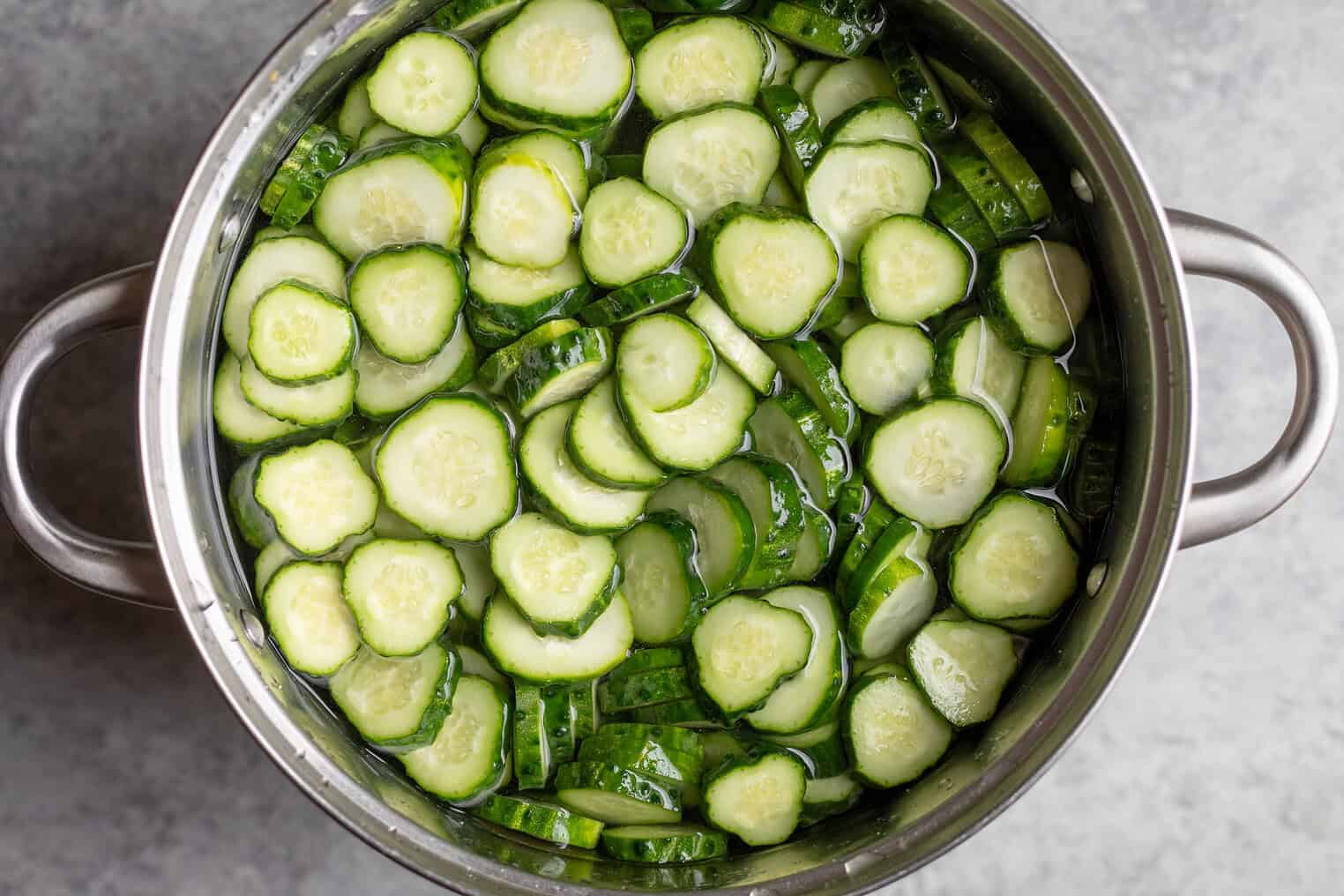
Cover with Salt Water
Dissolve the salt in water and cover the pickles. Let sit for 12 hours, then drain but do not rinse.
Make the Brine
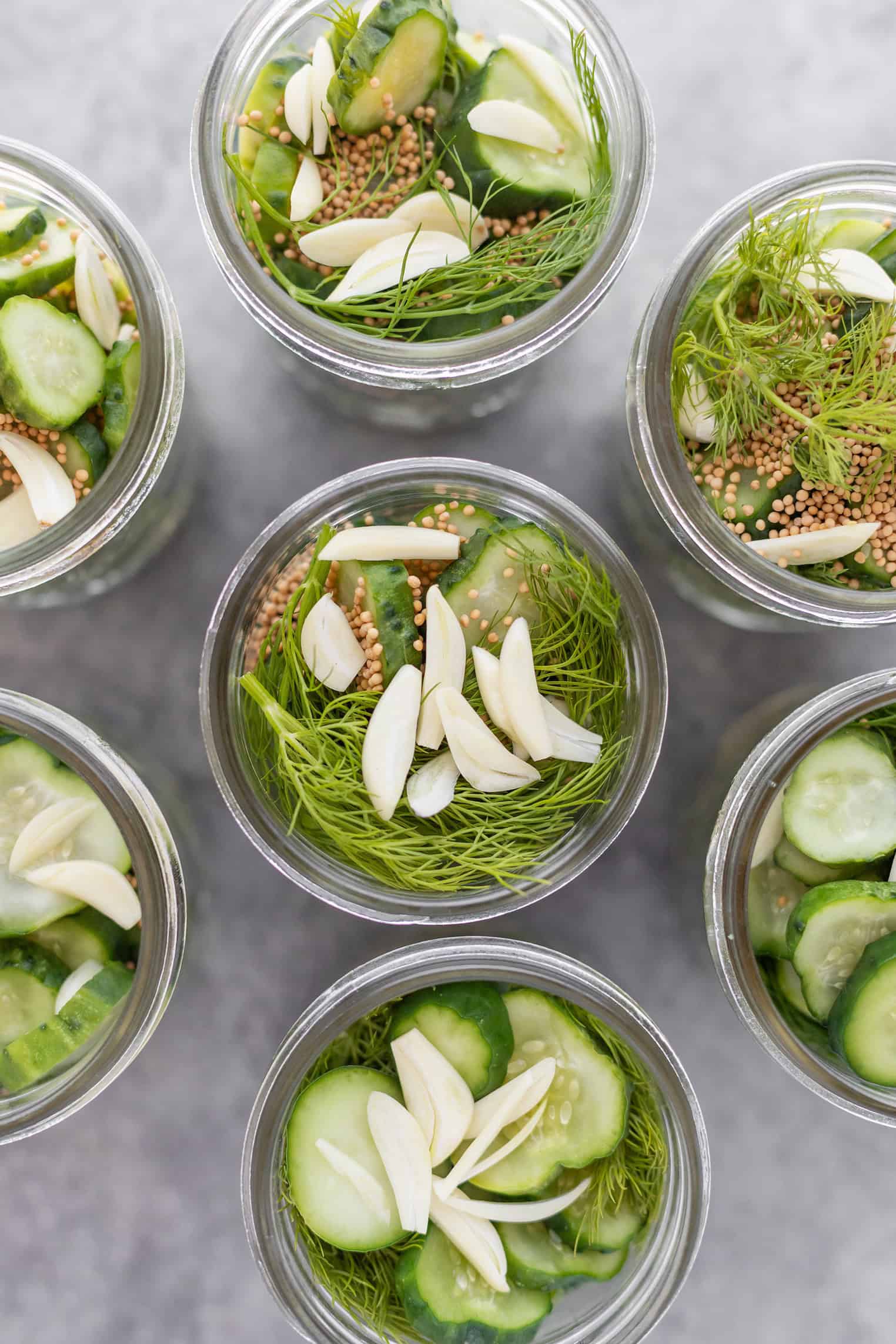
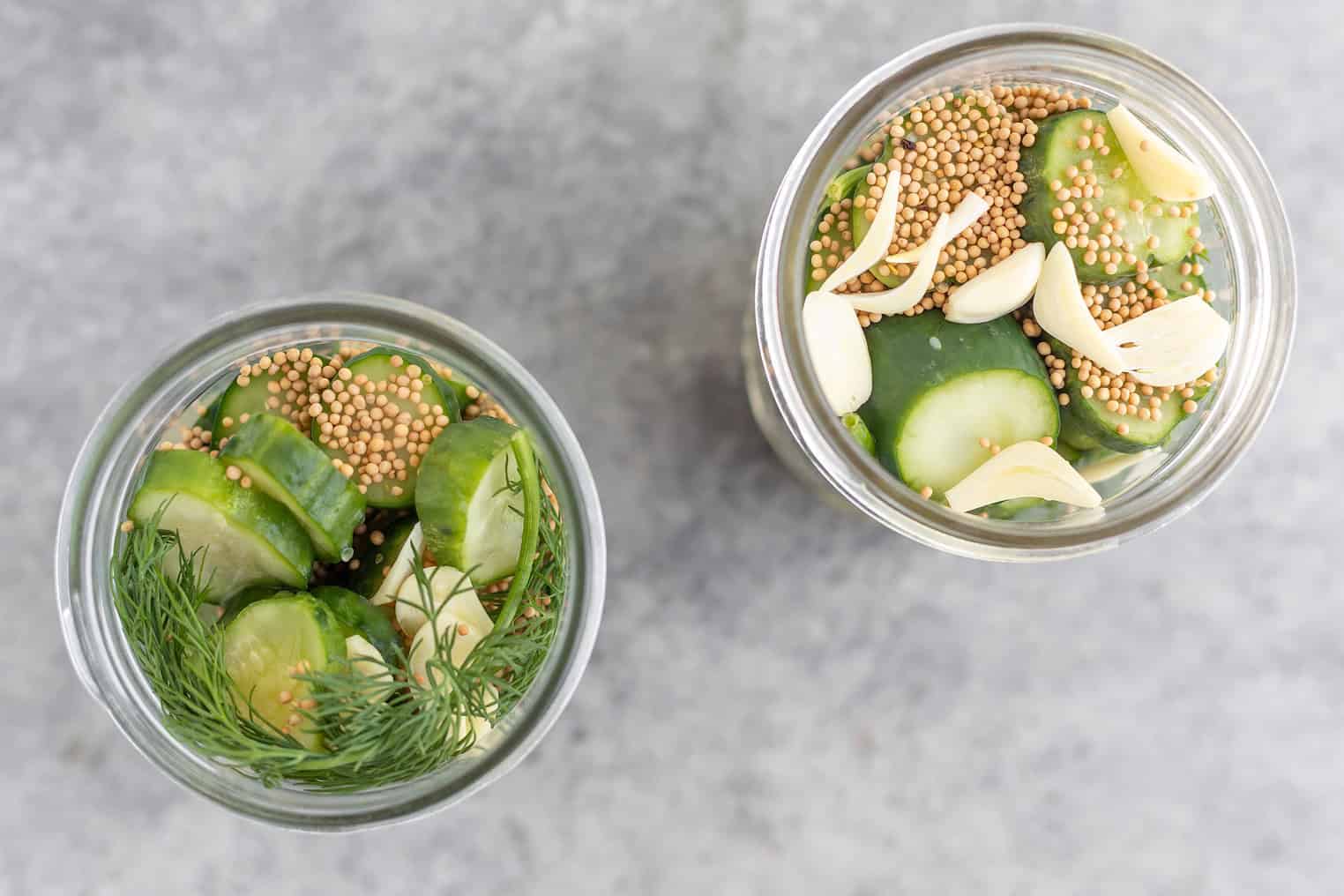
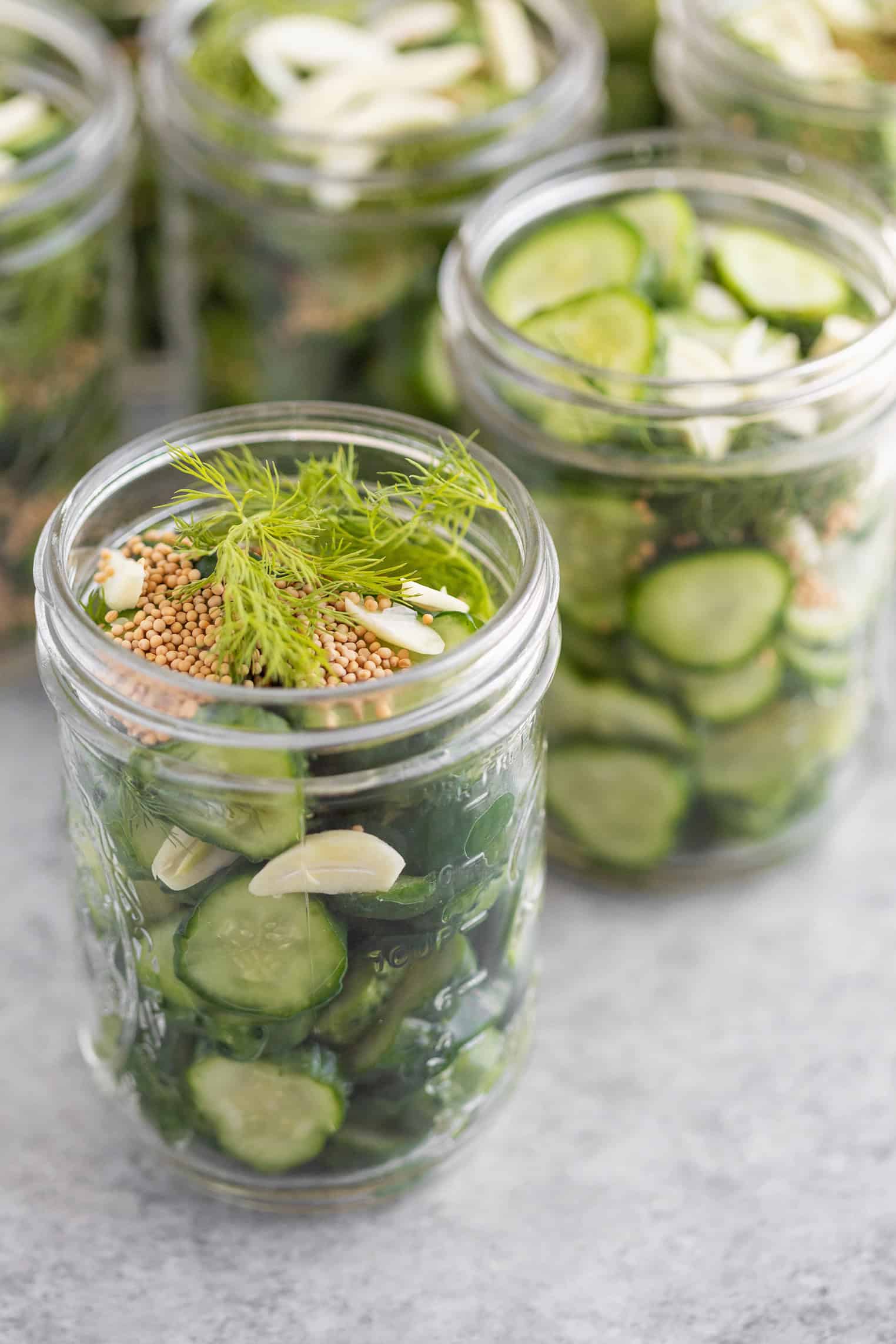
Bring the vinegar, sugar, pickling spices in a cheesecloth, and water to a boil. Place the cucumbers evenly among the jars, packing them down, then topping with fresh dill, sliced garlic and mustard seeds
Cover with Pickling Brine
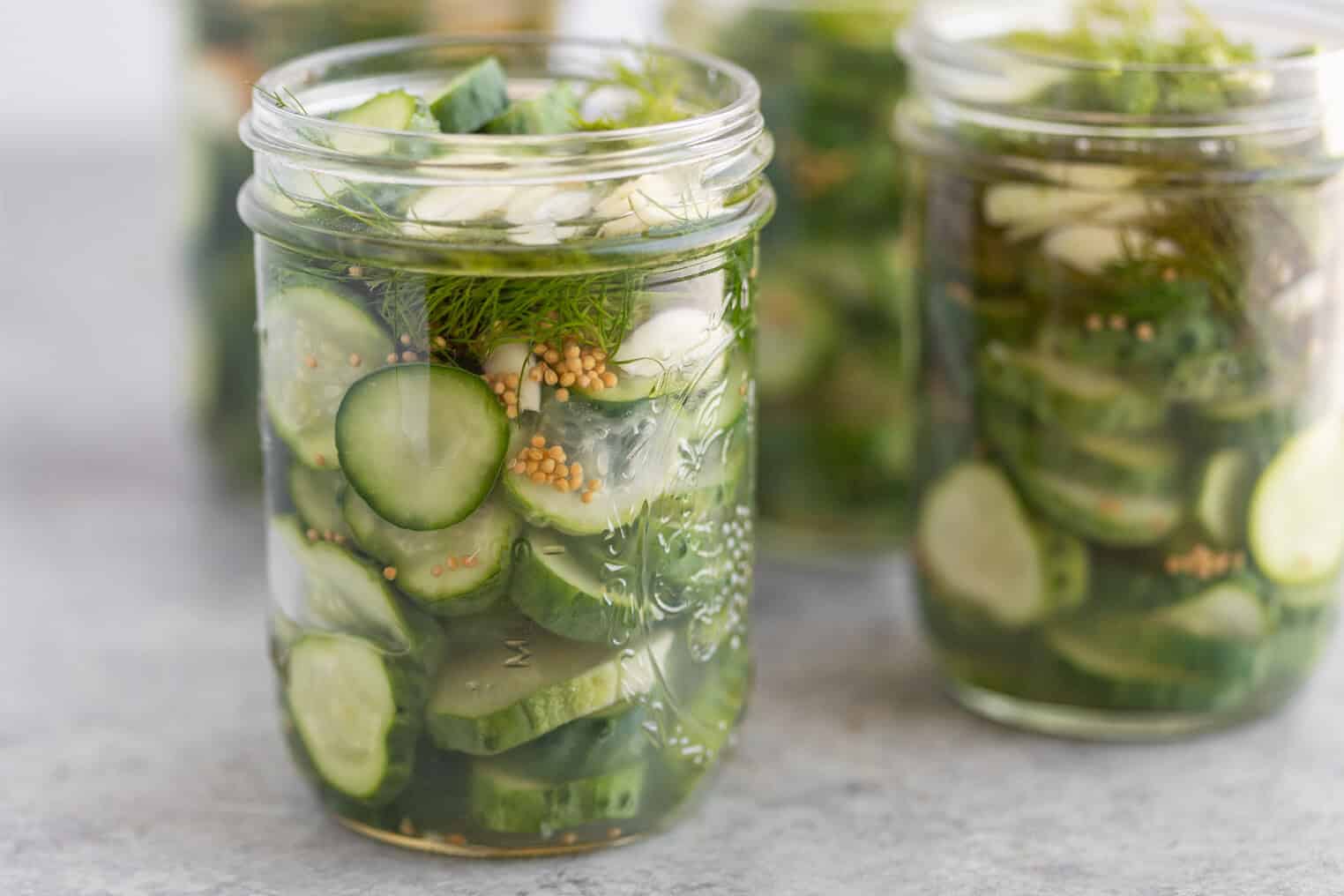
Cover with brine, leaving 1/2 inch headspace. If canning, cover with lids and process in a hot water bath canner for 10 minutes (see the full recipe card for altitude adjustments and more details)
Dill Pickle Brine (The Ratio)
This brine recipe will make enough for 7-9 pints, but before you cover your cucumbers in brine, you must soak them overnight in a salt-water solution. This isn’t just for flavor; the overnight brine helps to pull water out of the cucumbers so they don’t dilute the pickling brine or go limp in the jar. It’s not the same as the pickling brine!
A few things to consider about the brine:
- The Vinegar has to be 5% acidity: Most white distilled vinegar is 5%, but some specialty vinegars are 4%, and that’s not enough to safely water-bath can. Never use homemade vinegar, as you don’t know its acidity.
- Don’t adjust the water-to-vinegar ratio: The 6 cups vinegar to 8 cups water is what keeps the finished pickles below the pH threshold where anything dangerous can grow. Adding in more water or swapping in other liquids for the vinegar will change the safety of this recipe.
- The salt is flexible: The salt in the pickling brine is there for flavor, not safety, so it’s OK to reduce or omit if you prefer lower-sodium pickles. The salt in the overnight soak is different, and I don’t recommend changing that.
- The sugar is optional: A quarter cup across 7-9 pints isn’t making these pickles sweet; it just helps to round out the vinegar. As sugar is there for flavor and not safety, it’s OK to adjust.
- Apple cider works, but will make for cloudy liquid: You can use ACV vinegar, but it will make your brine cloudy, which will just change the appearance of the pickles instead of clearer, better-looking pickles.
Tips for Canning Success
If you have never canned before, rest assured that it’s much easier than you think! You really don’t need special equipment, though canning tongs (aka a jar lifter) and a funnel will make it easier.
From there, you’ll need a large pot with a rack. If you plan on canning often, then I recommend grabbing a specific canner, but you can also just put a steamer rack in the bottom of your stock pan. This helps the boiling water to fully circulate around the jar for a safe canning experience.
Your jars need to be cleaned as well, even if you just purchased them from the store. If you are using old mason jars, then you’ll need to purchase new rings and seals. Using old lids is unsafe as it may not provide a tight seal when canning.
Since you are water bath canning, your jars need to be sterilized first. I do this in my dishwasher using the “sanitizing” setting. Just place the jars and any canning equipment, like your jar lifter and funnel, in the dishwater without soap and hit this setting. I usually do this an hour or so before I start, so the jars are hot and ready to go when I am.
After you pour the pickling liquid into the prepared jars, wipe the seal, then cover with the lid and seal. Bring a large stock pot to a boil, then submerge your jars fully into the boiling water and set the timer for 10 minutes.
Remove (tongs are very helpful here!) and place on a dish towel or a cooling rack. Let sit for 12-24 hours, then check the seal. You will likely hear the jars pop as they cool; this is normal and a good thing. It’s a sign the seal is setting!
For any jars that didn’t seal, you can reprocess them or pop them into the fridge and enjoy them within a few weeks.
How to Keep Your Pickles Crunchy
No one wants soft, floppy pickles! Thankfully, there are a few ways to make sure you get crisp pickles.
- Trim the blossom end: The blossom end of the cucumber contains an enzyme that breaks down pectin, which is what keeps your pickles firm. Trim about 1/16th inch off the blossom end (the end opposite the stem; it’s the one without the little scar where it attached to the vine. If you’re unsure, trim both ends!) This is the easiest step to skip, but the most important.
- Type of cucumber: The type of cucumber does matter. Kirby cucumbers, or any variety labeled “pickling,” have thicker skins, denser flesh, and less water than English or Persian cucumbers. Slicing cucumbers are great for salads, but they have less heft to survive a hot brine.
- Fresh cucumbers: Cucumbers will start losing firmness the moment they are picked. If you can pickle them within a day of harvest, you’ll have crisper pickles. If you have pickles that have been sitting in the fridge for a few days, you can soak them in ice water for a few hours first to help them firm back up before you start.
- Don’t skip the overnight soak: The 12-hour brine soak draws moisture out of the cucumbers so they don’t dilute the pickling brine or collapse in the jar.
- Don’t overprocess: You just need 10 minutes in a water bath (but make any altitude adjustments). More time won’t make the cucumbers safer, but it will make the cucumbers softer.
I don’t add any firming agent to these pickles, but if you want extra insurance, you can add calcium chloride, sold as Ball Pickle Crisp or Mrs. Wages Xtra Crunch, to each jar according to the package directions.
It’s safety-neutral, which means it won’t affect the pH or processing time of this tested recipe. If you’ve had trouble with soft pickles before and want extra-crisp ones, you can add it. The one ingredient I don’t recommend adding is alum. It’s found in many older family recipes, but it doesn’t meaningfully improve the texture in a quick-process pickle like this and can leave an unpleasant aftertaste.
Frequently Asked Questions
Why are my pickles soft, and how do I make them crunchy?
The most common culprit is the blossom end, as cucumbers carry a softening enzyme there that breaks down pectin, which helps keep them firm. To prevent it, trim and discard the blossom end before packing. Beyond that: use true pickling cucumbers like Kirby’s, use them as soon after harvest as you can, don’t skip the overnight salt soak, and don’t process longer than the recipe calls for. If you want extra insurance, you can add calcium chloride (Ball Pickle Crisp) per the package directions. I don’t use it, but it’s safe to add to this tested recipe and won’t affect the pH.
How do I make these refrigerator pickles?
If you don’t want to can the pickles, just stick them in the fridge after pouring the brine over them. Or, you can use my tested Refrigerator Pickle recipe, specific for fridge pickles.
How many jars of pickles will this make?
This will make 7-9 pints of pickles, depending on how thick (or thin) you cut them and how tightly you pack them. This recipe has been tested for safety using pint jars. I do not recommend altering the size of the jar.
Is this recipe verified for safety?
Yes, this recipe has been pH tested and is safe to water-bath can. Many canning recipes are passed down or adapted, and the acidity of the finished product is assumed rather than measured. This is why I only recommend using tested canning recipes. (Be wary of chatbot-created canning recipes as well; those are rarely verified for safety)
Can I add additional spices?
It’s generally not recommended to alter any verified, tested recipe for safety when canning. That said, dried spices will not alter the pH much, especially if using a small amount. If making these as refrigerator pickles, then you have more flexibility in what you add. If you want a spicier dill pickle, you can add in red pepper flakes or black peppercorn.
How to store these dill pickles?
After they are canned properly and the seal is checked, store them on a shelf in the pantry for up to 1 year for best flavor and texture.
Where do you find pickling cucumbers?
You can often find them in grocery stores during the summer months (I’ve even seen them at Walmart!) or at farmers’ markets. If you have a local farm stand, call and ask if they have any. For my St. Louis friends, I grab them at Thies Farmer’s Market.
Can you use apple cider vinegar?
As long as the vinegar is a 5% acidity, you can use apple cider vinegar. Note that using ACV will make your pickling liquid cloudy; it’s a visual issue, not a safety one, but using distilled vinegar will make for a more appealing pickle.
What’s the difference between dill heads, dill weed, and dill seed?
A dill head is the flowering umbel at the top of a mature dill plant — the yellow, umbrella-shaped cluster. Dill heads have more flavor than dill weed and if you grow your own dill, then you can use dill heads. Dill weed is the feathery green leaf sold in the grocery store and can be used here, but I don’t recommend dill seed or dried dill.
Can I use a different jar size?
You can use smaller jars, like half-pints, with the same processing time. You cannot safely use jars larger than a pint. This recipe was tested for safety in pint jars, and larger jars affect how heat penetrates to the center, so the tested processing time no longer guarantees a safe result.
Should the overnight soak sit on the counter or in the fridge?
I let mine soak at room temperature, covered, for the full 12 hours. If your kitchen runs very warm, or if it’s easier logistically, you can place them in the fridge.
Do I have to wait before eating them?
I eat them the day I make them, and I also have jars from last summer that we’re still working through. If you want maximum flavor development, give them about three weeks before opening, so the garlic and dill have more time to infuse. But there’s no safety reason to wait.
What’s the 321 rule for pickles?
The “321 rule” is a rule of thumb for quick pickles. It’s a ratio of 3 parts to 2 parts to 1 part, usually described as vinegar, water, and sugar. I don’t use this ratio for safety– it’s often a memorable number from old family recipes, but it’s mostly a flavor guideline for pickles, not a safety standard for canning.
Shelf-stable pickles need verified acidity, and you can’t get that from this ratio. It’s not in any USDA or Cooperative Extension guidance, and there’s a reason for that.
For refrigerator pickles that live in the fridge and get eaten within a few weeks, you have room to experiment! Try my refrigerator pickle recipe for a base recipe that you can safelty adjust flavors.
For anything that is being water bath canned and shelf-stable, you must use a tested recipe. This one has been pH tested, which means the actual acidity of the finished product was measured and not estimated from a ratio.
More Canning Recipes
- Homemade Salsa for Canning
- Canned Hot Peppers in Oil
- Simple Tomato Sauce for Canning
- Canning Applesauce
- Candied Jalapeno Peppers
- Low-Sugar Strawberry Jam
If you make these quick dill pickles with garlic, make sure to come back to leave a comment and a rating. Seeing you make my recipes makes my day, and your feedback helps other readers!

Simple Canning Recipe for Dill Pickles
Equipment
Ingredients
For the Overnight Soak
- 8 lbs of 3- to 5-inch pickling cucumbers
- 3/4 cup canning or pickling salt
- 2 gallons water
For the Brine
- 2 quarts water
- 6 cups 5% acidity white vinegar
- 1/4 cup cane sugar
- 1/4 cup canning or pickling salt
- 2 tablespoons whole pickling spice, tied in a clean white cloth, like cheesecloth
For Packing the Pickles
- 7-9 teaspoons mustard seeds, 1 teaspoon per jar
- 7-9 sprigs fresh dill weed
- 7-9 garlic cloves, thinly sliced (1 sliced clove per jar)
- 7-9 sterilized pint jars
Instructions
- Wash cucumbers and slice into chips, around 1/8 to 1/4-inch thick, discarding the blossom end of each cucumber. Dissolve 3/4 cup salt in 2 gallons of water and pour over the cucumbers. Let stand for 12 hours, then drain and discard the soak.
- Combine the vinegar, sugar, and remaining 2 quarts water and 1/4 cup salt in a large pot, then add the pickling spices tied in a clean white cloth. Bring to a boil, stirring to dissolve the sugar and salt, then keep hot.
- While the mixture is boiling, fill sterilized jars with the prepared cucumbers. To each jar, add 1 teaspoon of mustard seed, 1 sprig of fresh dill, and 1 sliced garlic clove.
- Pour the boiling pickling solution, leaving ½-inch headspace. Depending on the thickness of your cucumber, you should get 7-9 pints. Wipe the rims clean, and seal with the lids and bands.
- Process in a water bath canner for 10 minutes.* Remove jars and let them sit undisturbed for 12-24 hours. Confirm each lid has sealed, then store jars in a cool, dark place. I like to wait about 3 weeks before opening so the flavor develops more!
These are great! Easy and perfect for all my garden cucumbers.
BRINE…..way too much for 7-9 pints. Is this a personally created recipe ??
Dill heads are not dill leaf
My fingers are crossed.
Hi– the brine is correct, but I had both the soaking and brine water levels combined so I just updated the recipe to be easier to follow. Two gallons water to soak the pickles, then two quarts (8 cups) for the brine.
Can I use smaller or larger jars? I have a variety of sizes of canning jars and was wondering if I can use them instead of buying more.
Hi Pam, you can’t use jars larger than pints for safe canning, but you can use smaller ones. If you don’t want to can and just use this as a refrigerator pickle, then I recommend my fridge pickle recipe: https://www.delishknowledge.com/refrigerator-pickles/
Can I use white sugar?
Yes
Don’t you need to add salt to the brine to make it self stable?
No, the vinegar is what makes it shelf stable, but you do use the salt to cover the pickles overnight.
Can I use pickle crisp in the recipe?
Yes
Do you leave the soaking cucumbers on the counter covered? Or do you put them in the fridge?
I let them soak at room temperature
So simple thank you! With this being my first time I was nervous. I am curious do you have a time frame for waiting to eat them? Do they get better over time or just eat right away too? Thank you for making this easy and enjoyable.
I eat them as soon as I make them– and have jars that I made last summer that we are still snacking on. I honestly don’t notice a difference in the ones I eat right when I make them and the ones I wait on.
Made these with the abundance of cucumbers from my garden. Will be gifting to friends and family.
will make tomorrow