


Low Sugar Peach Jam
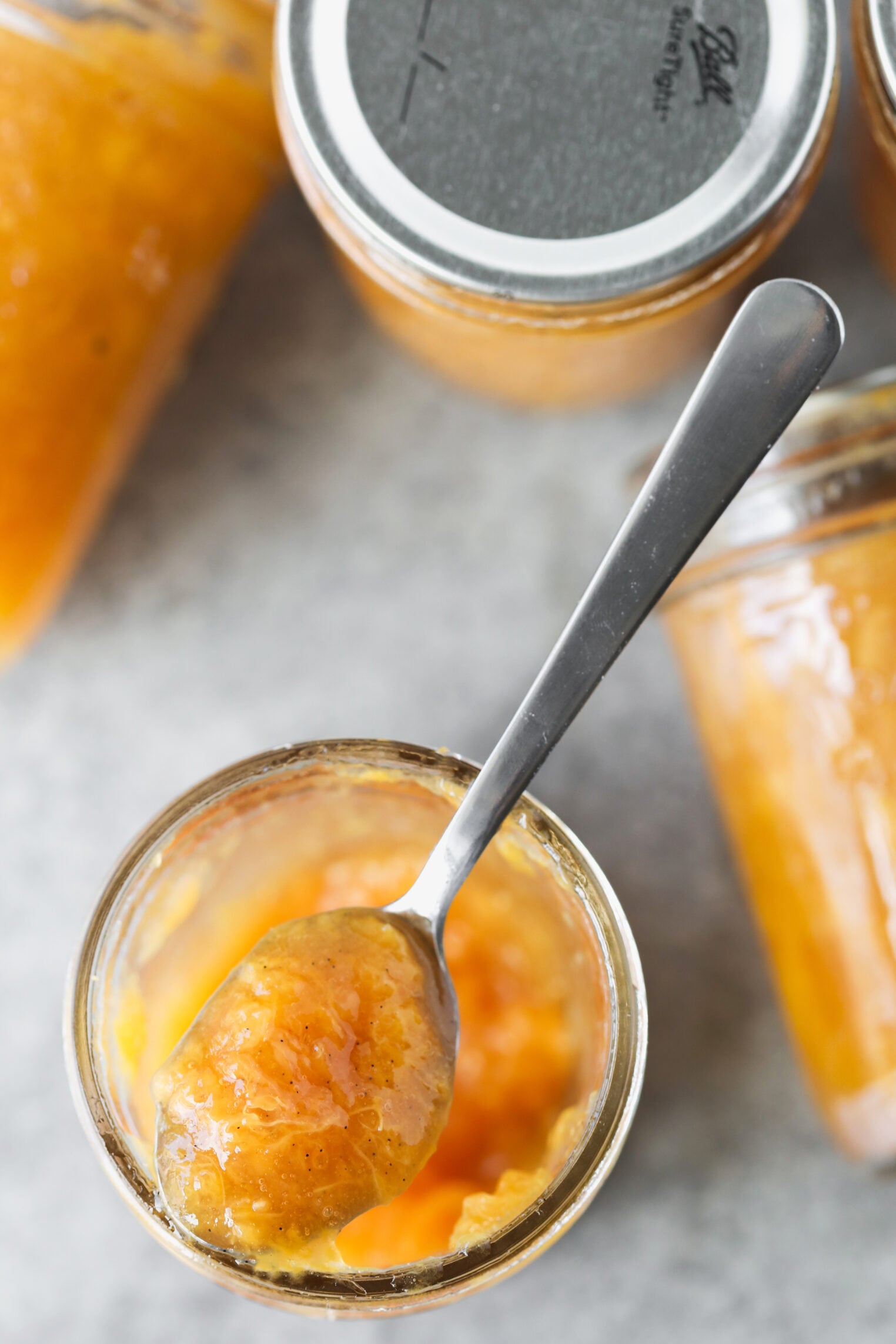
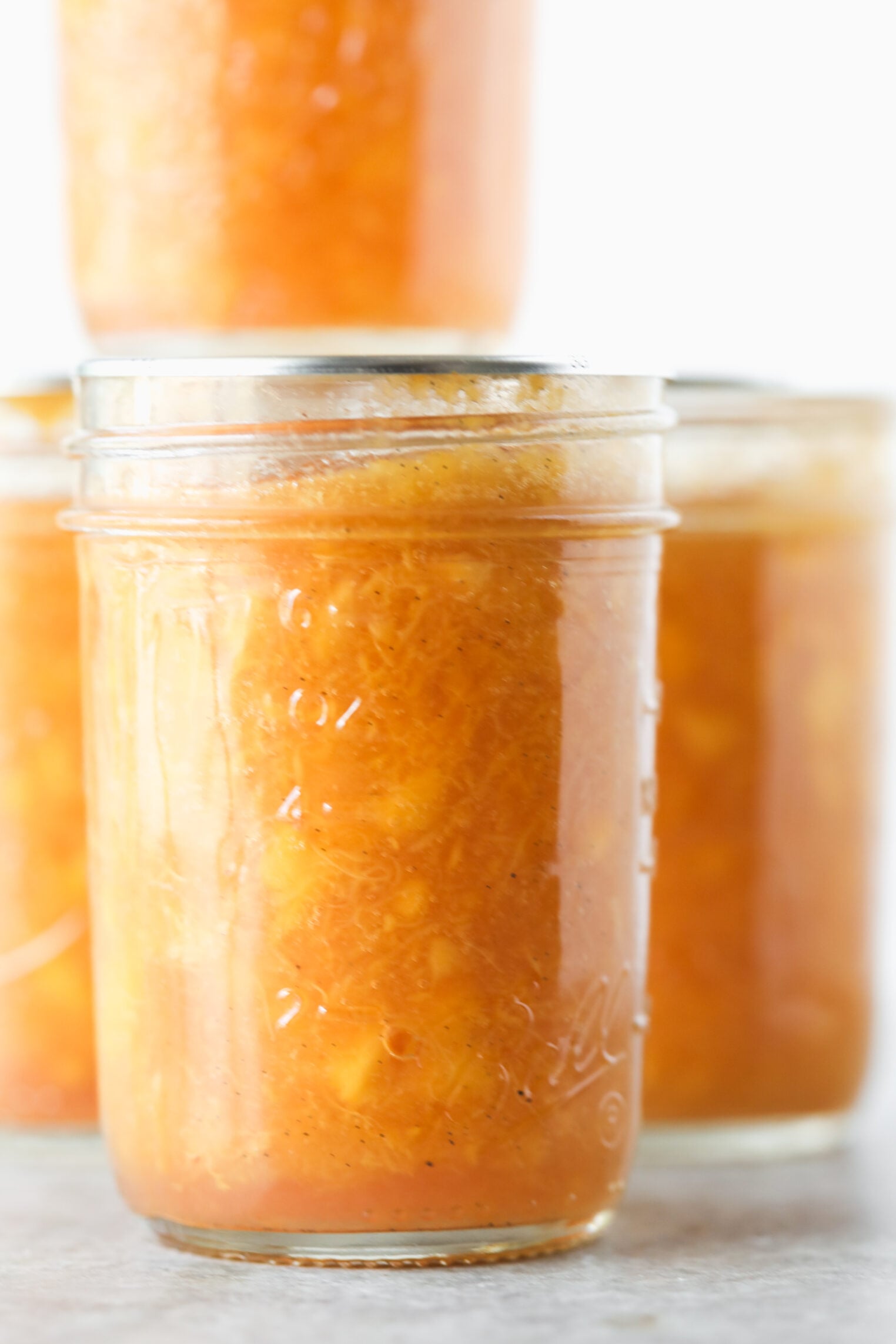
You only need one cup of sugar for the entire batch of this low-sugar peach jam– a fraction of the amount in other peach jam recipes, and it’s just as delicious!
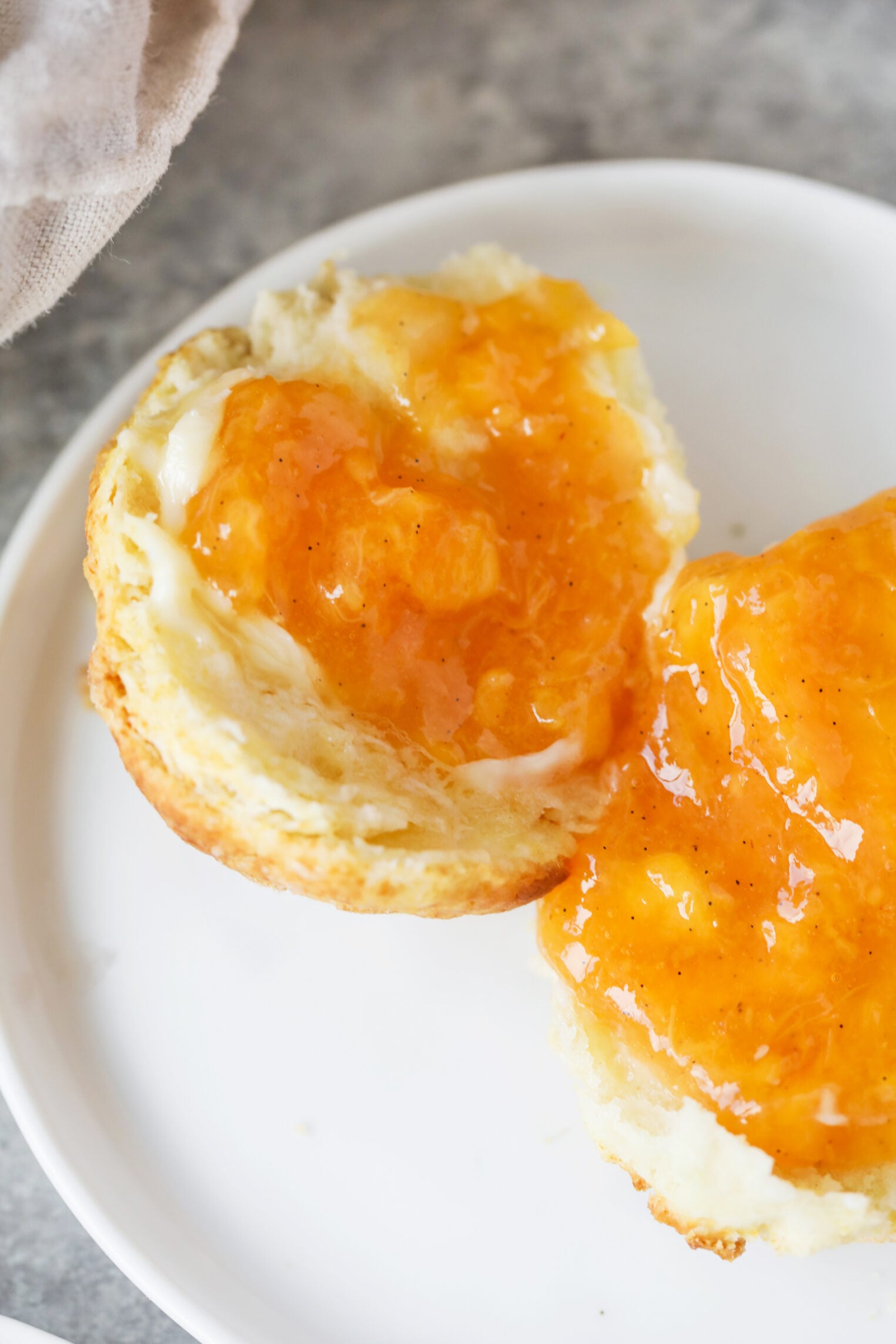
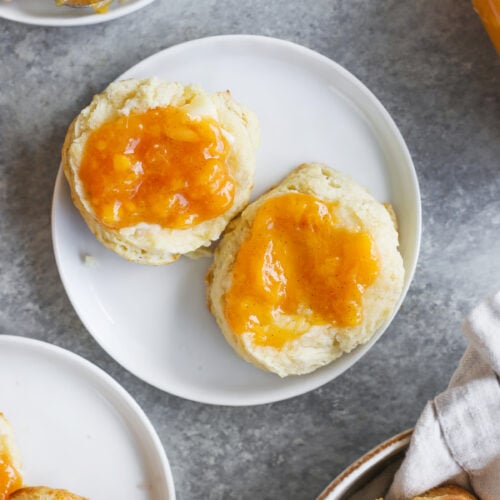
Perfectly sweet, this peach jam is made with just fresh peaches, lemon juice, pectin, vanilla, and cinnamon for a yummy peach jam that’s fantastic on biscuits, yogurt, toast, and more.
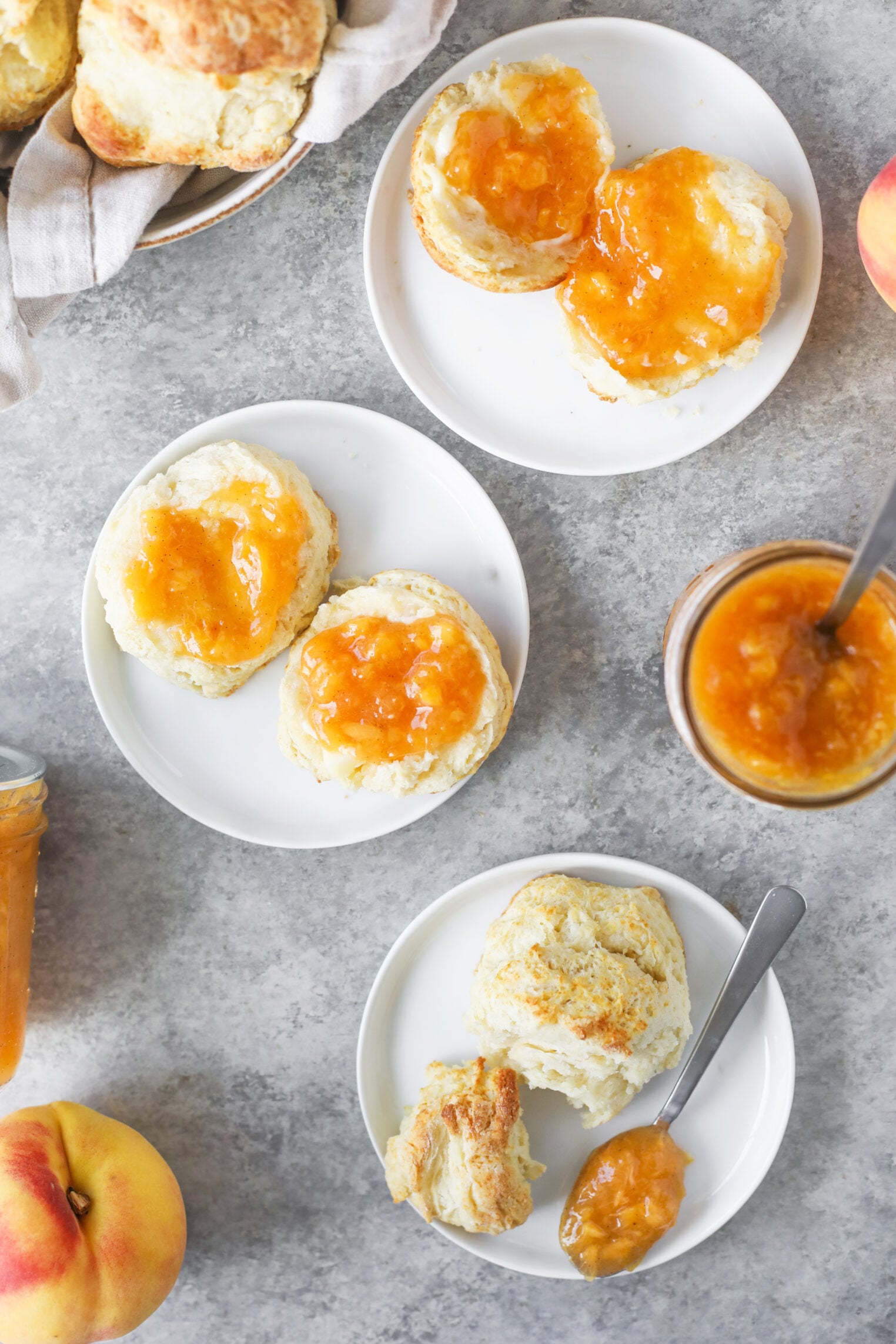
Coming in with another low-sugar jam for you, as after making my low-sugar strawberry jam and low-sugar blackberry jams earlier this summer, I wanted to create one for fresh peach season.
Most other jam recipes call for 4-6 cups of sugar, which I think is wild considering peaches are sweet enough! You don’t need all that sugar; just a single cup in the whole batch is enough to help set the pectin and create the best peach jam.
Homemade jam is also easier than you think. You’ll peel and crush the peaches, then boil them with water, lemon juice, spices, and pectin, then add the sugar. Put that into clean jars and boil in water for 10 minutes. Really, that’s it!
See below for step-by-step tips on making this low-sugar peach jam and how to water-bath can it, or head to the full recipe below.
Ingredient Notes
Note that this recipe is for yellow-fleshed peaches only, not white peaches! Some varieties of white-flesh peaches are higher in pH, so lower in acid, which makes them a potential low-acid food for canning.
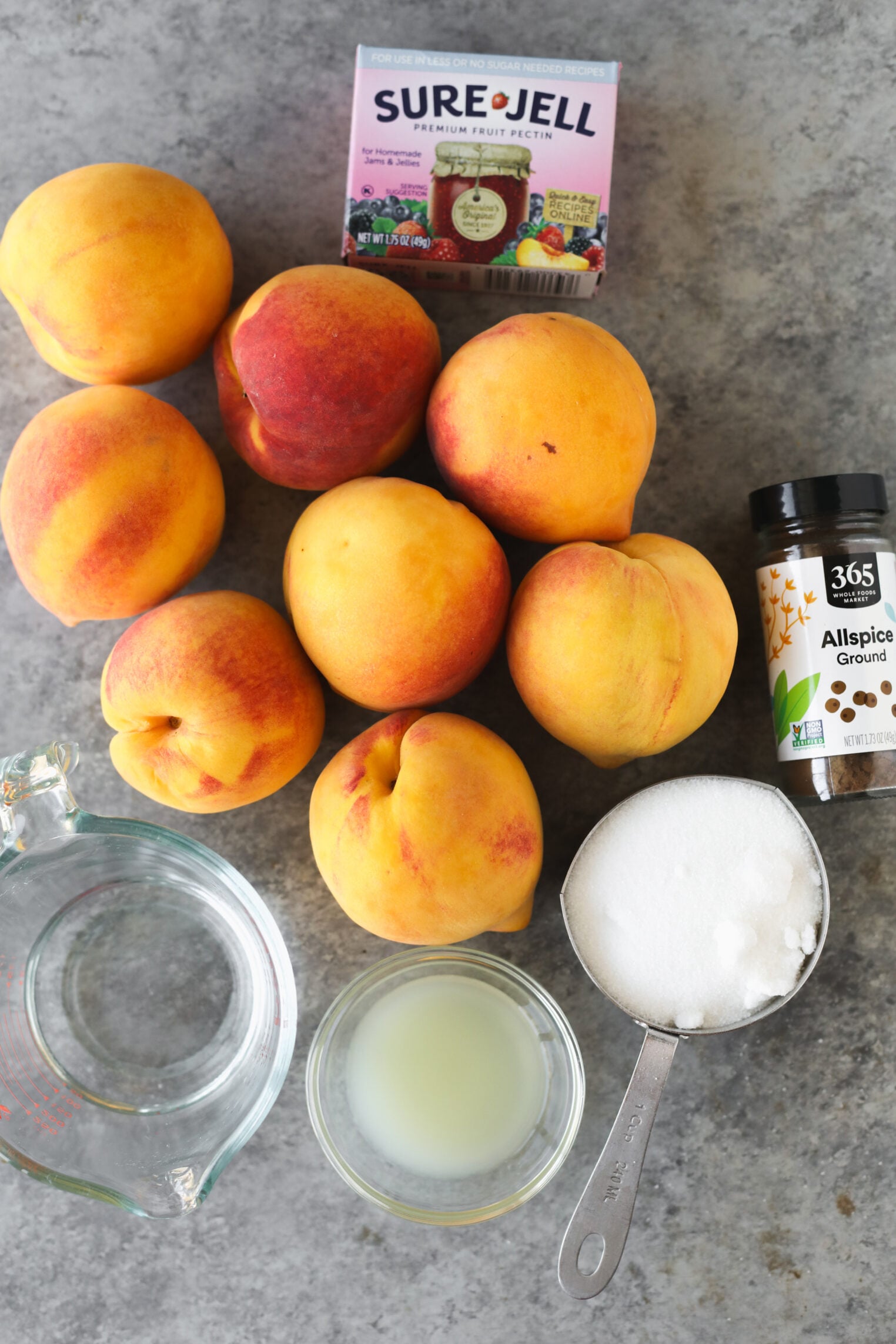
- Peaches: Use ripe, yellow-flesh peaches. Freestone varities are much easier to pit and that’s my go-to choice, but any kind of peach will work. You’ll need about 2 1/4 lbs., about 7 medium peaches, to get 4 crushed cups of peaches.
- Pectin: You need to use low-sugar pectin that’s specifically made for low-sugar jam. Regular pectin won’t work in this recipe as it needs enough sugar to properly gel.
- Sugar: Use granulated sugar or cane sugar; alternative sweeteners may work, but I haven’t tried them, and I can’t guarantee the results.
- Bottled Lemon Juice: Use bottled, not fresh lemon juice, as bottled lemon juice has been standardized to a set pH while fresh lemon juice can vary.
- Spices: This is what makes this peach jam the absolute best! A little vanilla plus cinnamon and allspice.
Bottled Lemon vs. Fresh
Bottled lemon juice is standardized under FDA regulation, as juice from concentrate must have an acidity of at least 4.5% by weight. Fresh lemon juice has a variable acidity, as acidity shifts with the type of lemon, growing conditions, soil, rootstock, and how ripe the lemon is.
How to Make this Peach Jam
Prep the Peaches
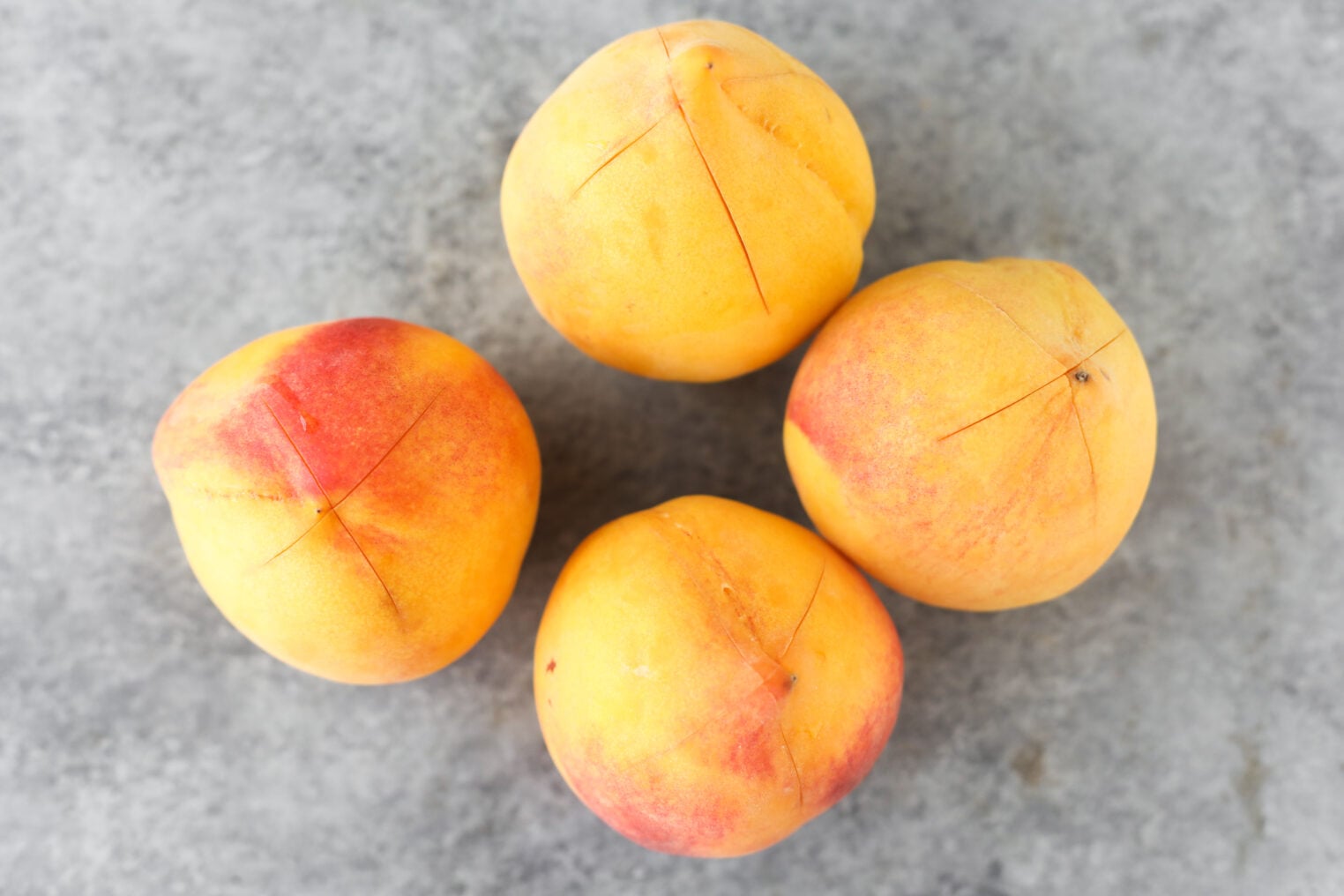
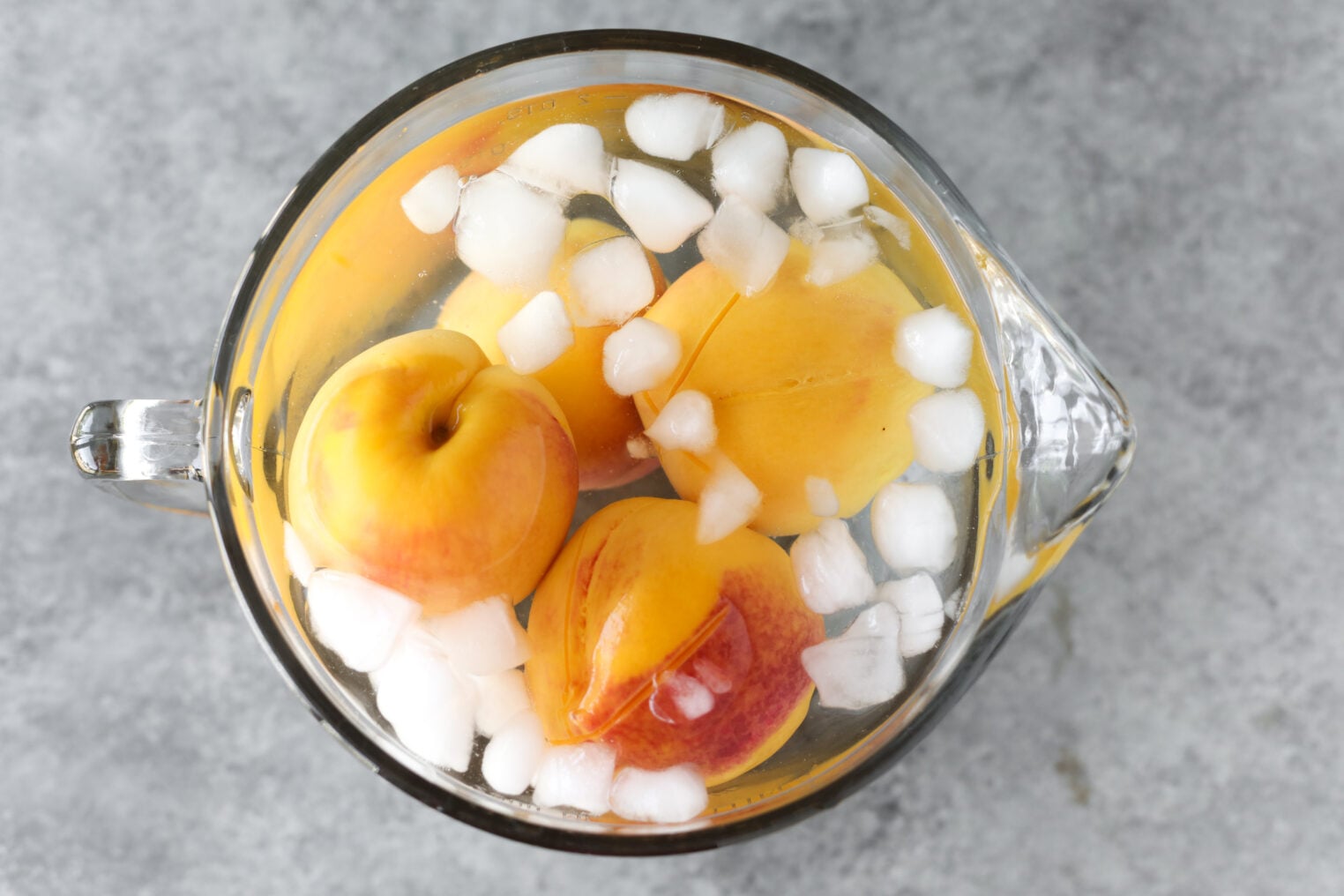
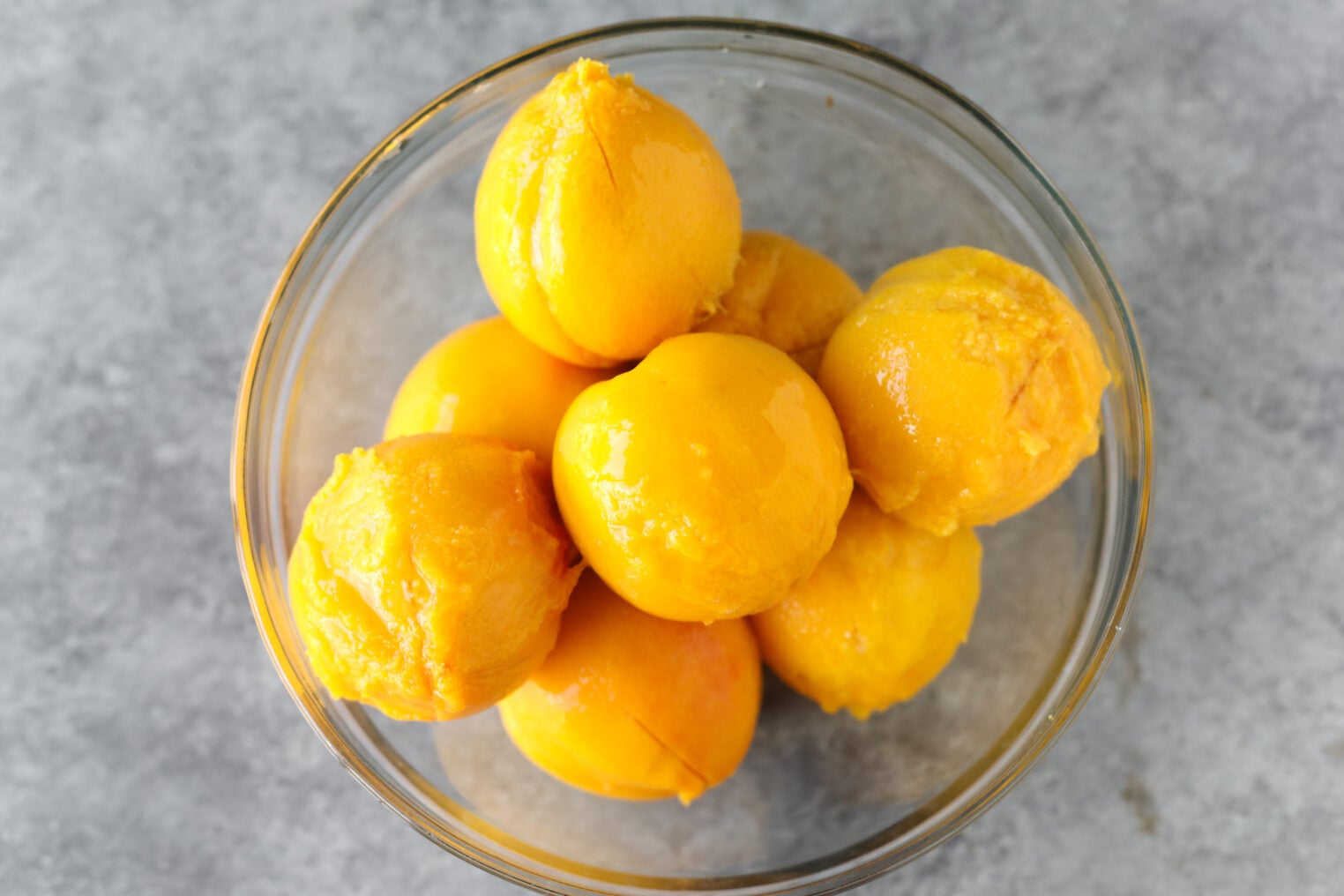
Cut a shallow X in the bottom of each peach and drop them into boiling water for about 60 seconds, then straight into a bowl of ice water. The skins will slip right off. Halve, pit, and roughly crush.
Crush the peaches
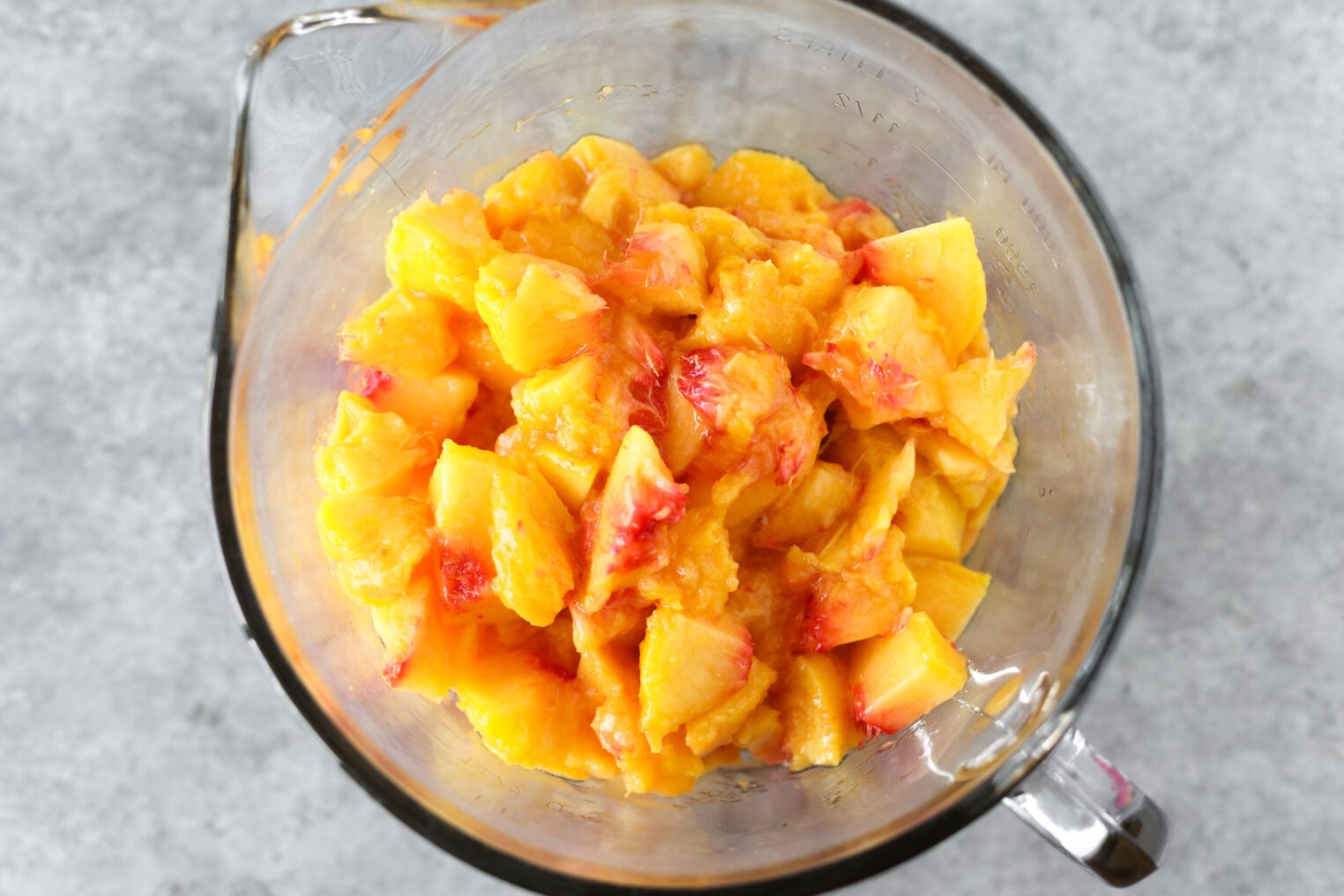
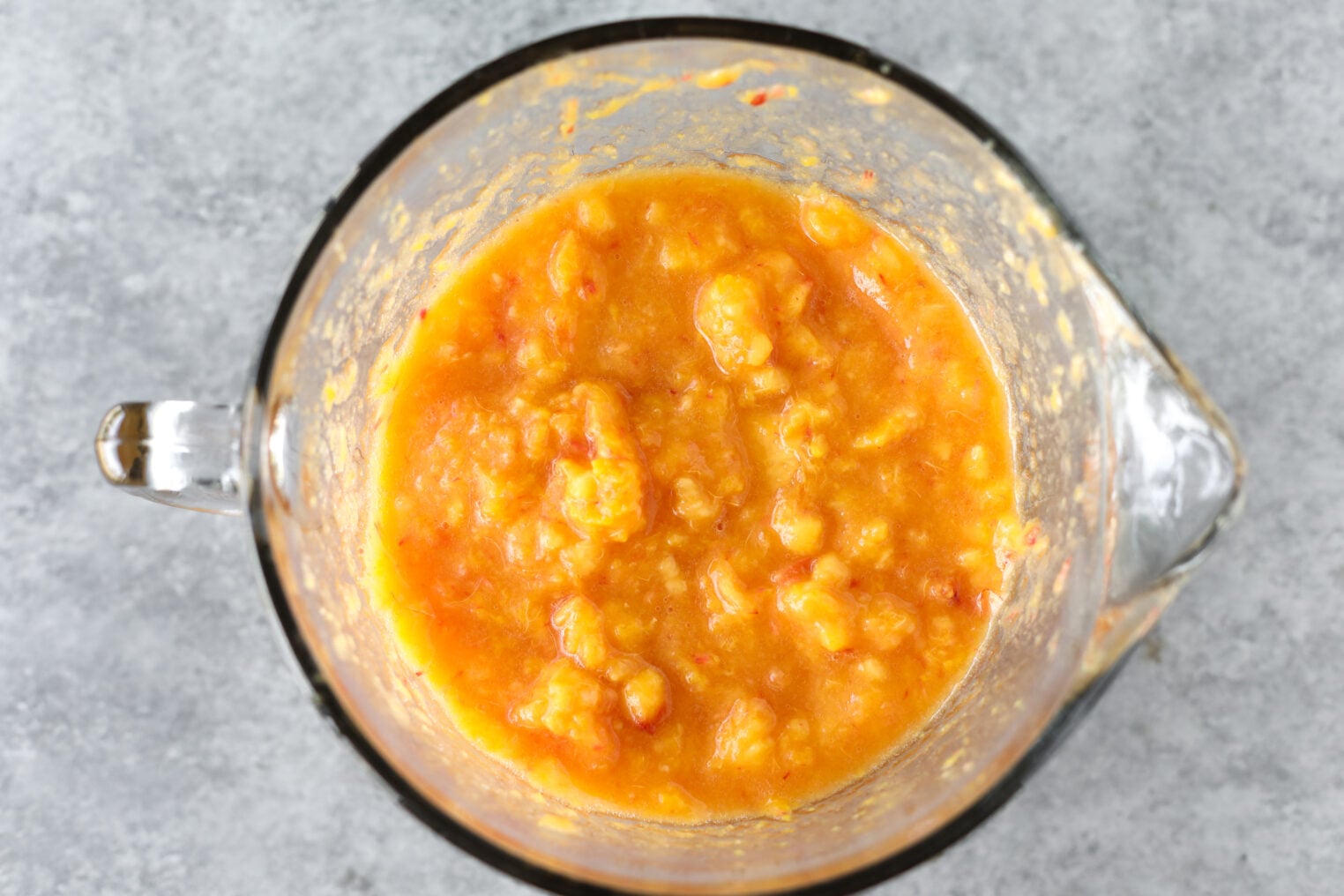
Mash with a potato masher or a wooden spoon to whatever texture you like; I leave mine slightly chunky. Measure out exactly 4 cups.
Cook the Peaches
Place the peaches, water, bottled lemon juice, cinnamon, and allspice in a large stockpot. Stir in the pectin and heat on high until it comes to a full rolling boil that cannot be stirred down.
Boil the mixture hard for 1 minute, stirring the whole time so the bottom doesn’t scorch.
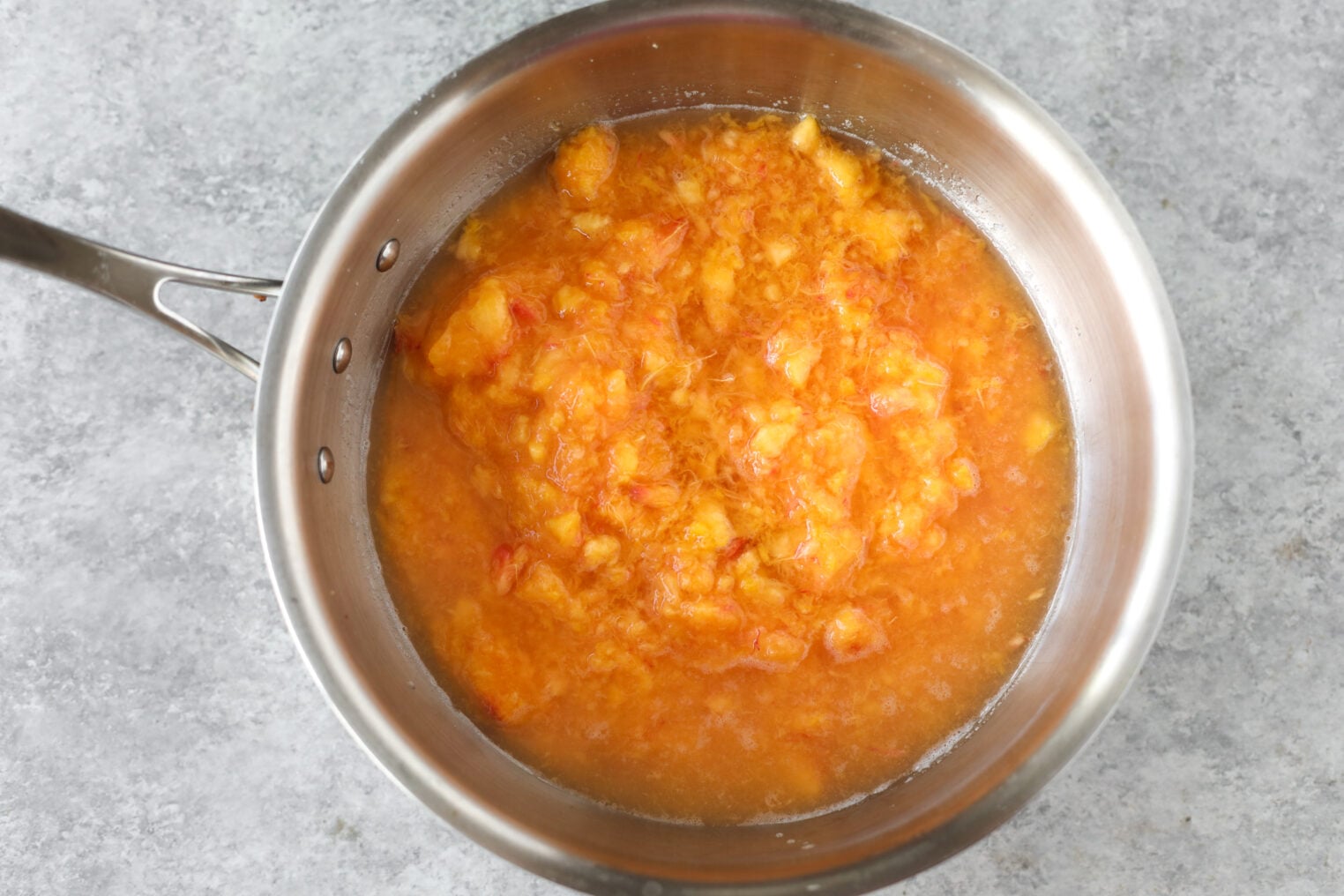
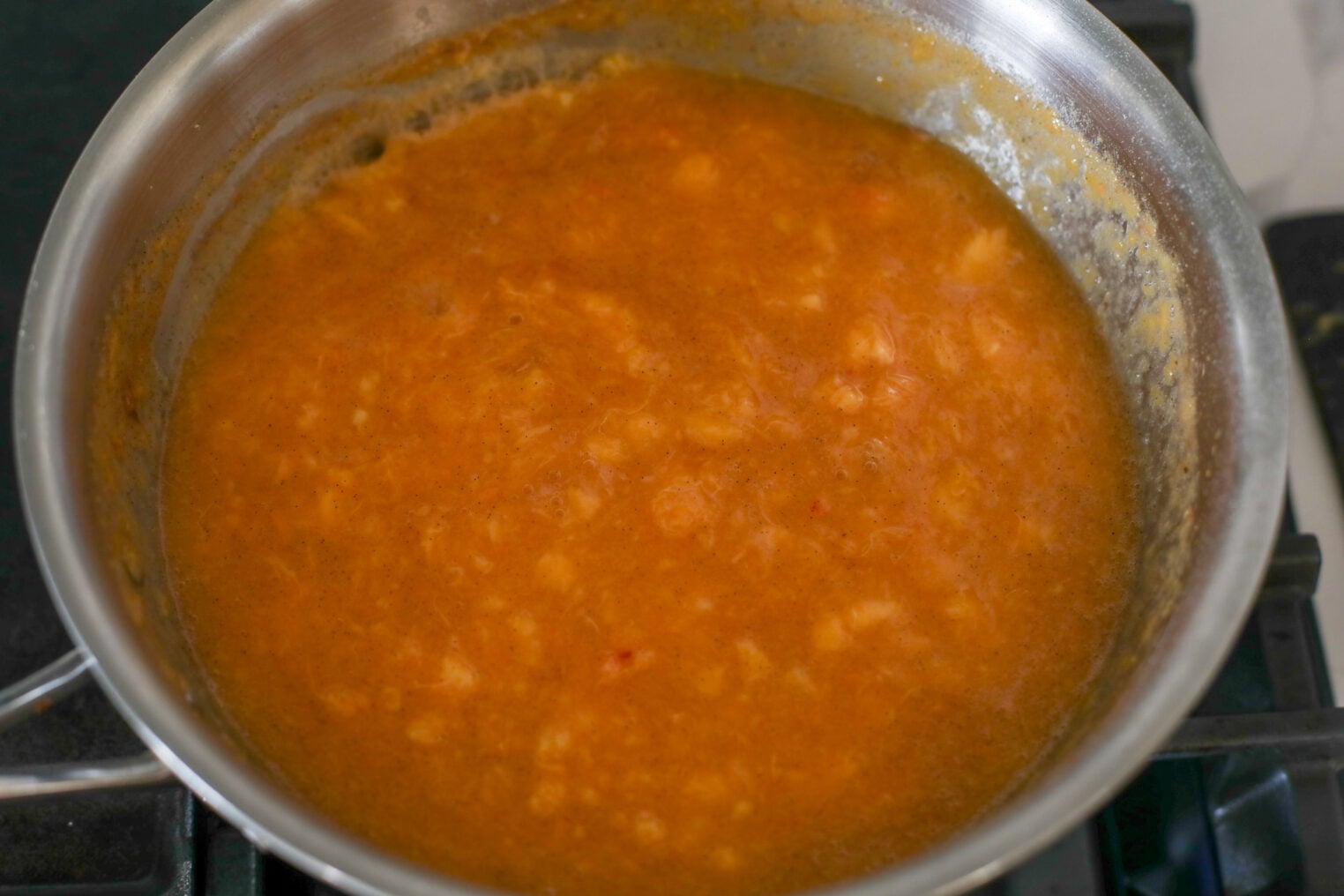
Add the Sugar
Add the sugar and return to a full rolling boil over medium-high heat. Boil for 1 minute, stirring constantly, then remove from heat. Stir in the vanilla so the flavor doesn’t cook off.
Water Bath Can
Pour the jam into clean jars. From here, you can eat it right away, freeze for up to 6 months, or water bath can it. To can, follow the directions below.
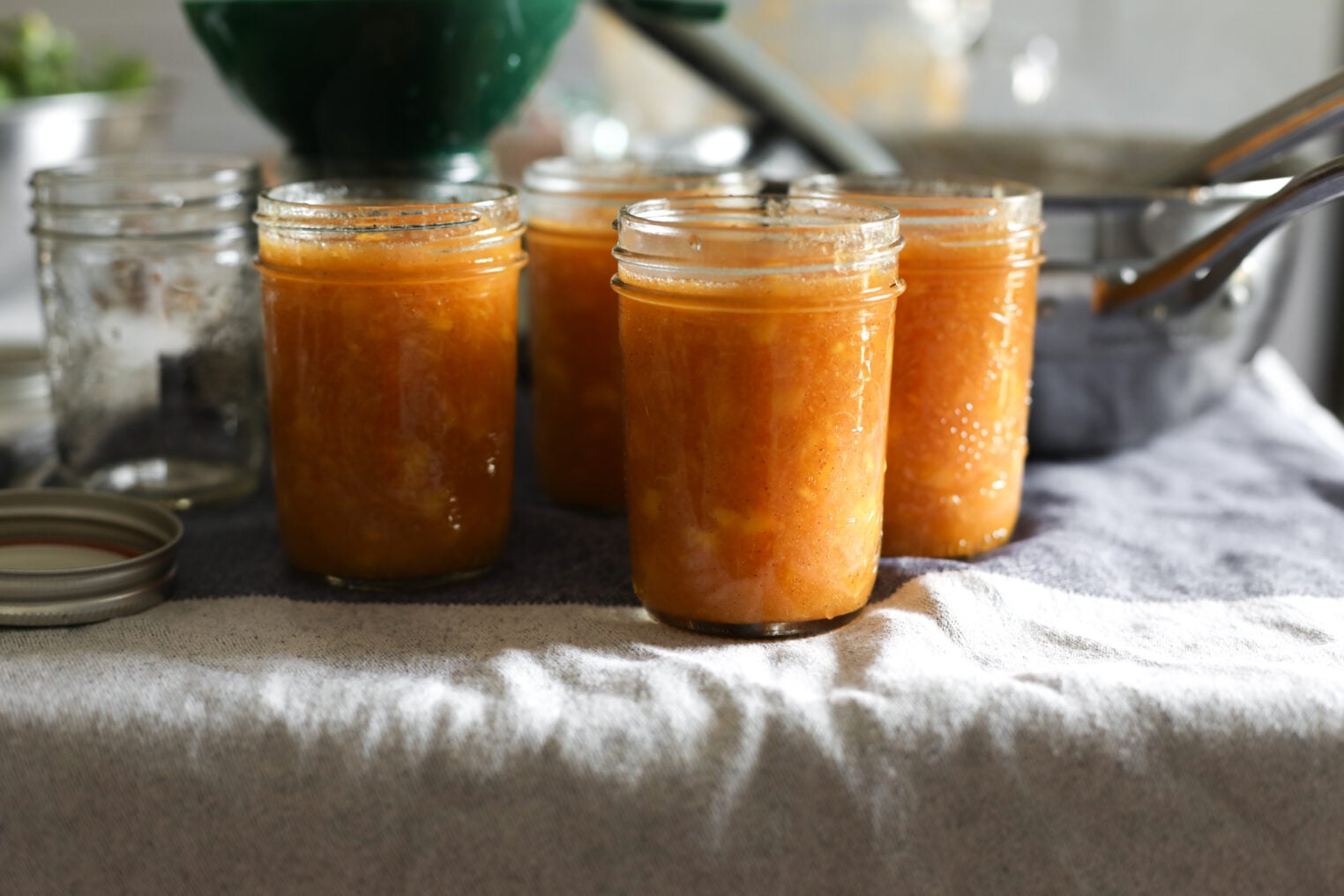
How to Can Using a Water Bath Canner
Wash the jars, lids, and bands in hot, soapy water. You need to do this even with new jars, as they aren’t sterile out of the box, and packaging debris and dust are still there.
You can also warm your jars in the dishwasher on the sterile setting. Ladle the hot jam into hot jars, leaving 1/4″ headspace. Slide a bubble remover or a thin spatula around the inside to release any air pockets, then wipe the rim with a clean, damp towel. Jam is sticky, and anything on the rim can prevent the jar from sealing!
Center the lid and screw on the band to fingertip tight.
Place the jars in a boiling water bath canner and boil, fully submerged, for 10 minutes, adjusting for altitude. Turn off the heat and let the jars sit for 5 minutes before removing them.
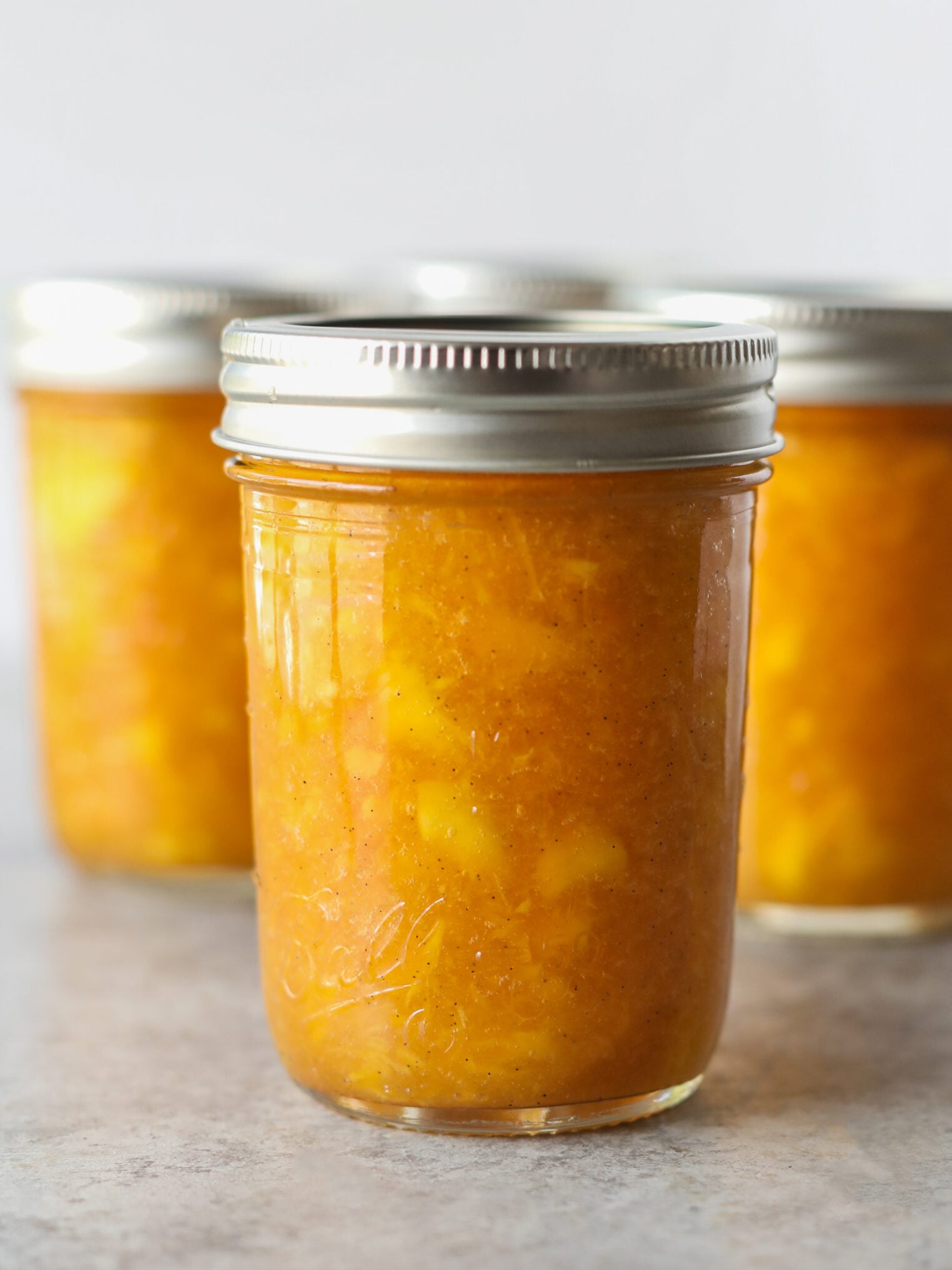
Cool the jars for 12 to 24 hours undisturbed, then check the seals– a sealed lid will not flex when you press the center. If any jars didn’t seal, reprocess them or just place them in the fridge to enjoy!
PS- If you need a more in-depth tutorial on water bath canning, I’ve got a full guide!
Altitude Adjustment
Above 1,000 feet, water boils below 212 degrees F, so lower temperatures are less effective and processing time must be increased.
| Altitude | Process Time |
|---|---|
| 0-1,000 feet | 10 minutes |
| 1,001-3,000 feet | 15 minutes |
| 3,001-6,000 feet | 20 minutes |
| 6,001-8,000 feet | 25 minutes |
| 8,001-10,000 feet | 30 minutes |
Expert Tips for Success
- You must use low-sugar pectin: Low-sugar pectin is made from low-methoxyl pectin, which gels by bonding with calcium ions instead of depending on sugar and acid the way regular pectin does. If you try to make this with regular pectin, then it won’t gel and will become peach syrup.
- Keep the sugar: I highly recommend keeping the sugar as is and not reducing it further. If you reduce the sugar, you will likely get a runnier jam. Sugar in jam also helps to bind water so microorganisms can’t use it.
- The set will take time: This peach jam will thicken considerably as it sets over 12 to 24 hours after the jars come out of the canner. If the jam is still loose after two days, then you can reprocess it or stick it in the fridge to enjoy as a yummy peach syrup on ice cream or yogurt.
- Don’t double: I don’t recommend doubling this recipe, as heating times and temperatures change when you double jam recipes, and doubling is one of the most common reasons jam doesn’t set. Instead, I recommend running two batches back-to-back.
- Measure the Fruit Exactly: Measure the peaches after crushing, not chopping.
Safe Substitutions
When it comes to canning recipes, there is very little wiggle room as you need to ensure that the pH of the final product is safe for water bath canning.
Here’s what’s safe and what’s not:
Safe to Change
- Spices: You can swap the cinnamon and allspice for cardamom, ginger, nutmeg, or remove them completely. Oregon State Extension guidance says dried spices and herbs are safe in the amounts you’d use in jam.
- Nectarines instead of peaches: You can use nectarines interchangeably in tested jam recipes, or a mix of both as long as you keep the 4 cups crushed total.
- Frozen: You can use frozen unsweetened fruit.
- Almond Extract: A half teaspoon is great with peaches and helps to play up the stone-fruit flavor notes.
- Smaller jars: Quarter-pint jars are fine; process for the half-pint time.
Not safe to change:
- White flesh peaches: See the caution note above. No tested jam recipes use them.
- Fresh lemon juice in place of bottled: The acidity in fresh lemon juice isn’t standardized, so you must use bottled.
- Reducing the lemon: The lemon isn’t there for flavor; it’s for safety, and you can’t omit or reduce it.
- Regular pectin: This low-sugar peach jam must have low-sugar pectin instead of regular.
- Large jars: This applies to all water bath canning recipes; never use a jar larger than the recipe specifies.
- Fresh herbs: I don’t recommend fresh herbs, fresh ginger, or anything else. Dried spices are safe, but fresh herbs are more questionable in amounts that shift the pH.
Ways to Enjoy this Jam
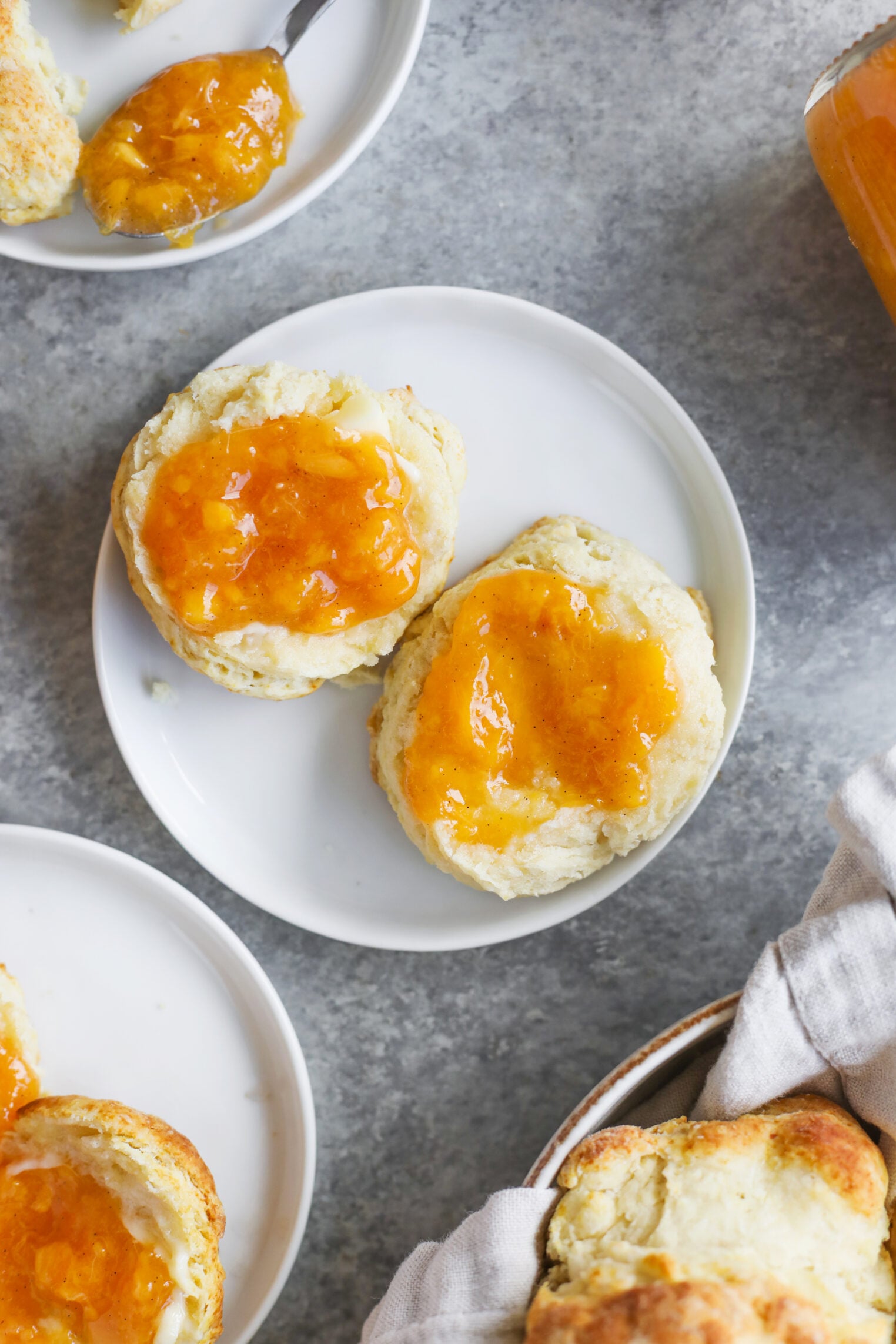
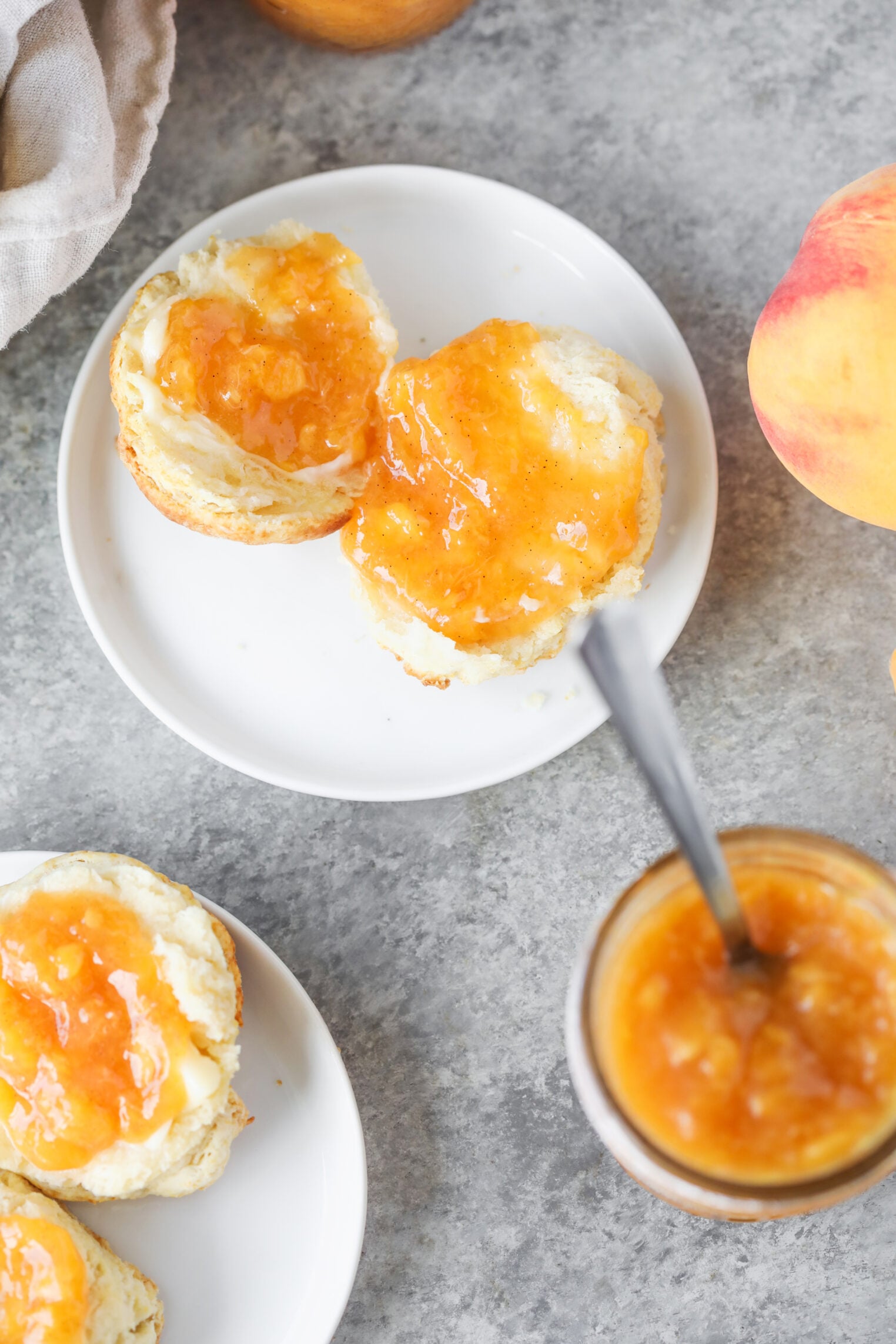
On my overnight sourdough waffles or with whole wheat waffles. It’s also fantastic spooned over yogurt with toasted almonds or stirred into my Instant Pot oatmeal.
This peach jam is also great on a cheese board, especially with something sharp and aged, or spread on brie. I also love it like apricot jam, thinned with a splash of vinegar and used as a glaze for roasting vegetables or tofu.
Equipment
You’ll need a large pot that will hold your jars, a funnel for filling, a jar lifter, and a bubble remover. I like this set for everything at once, though you really don’t need special equipment. The must-haves are a large pot and a jar lifter.
You can find low-sugar pectin in most grocery stores or online. Regular pectin won’t work here, so make sure you’re grabbing the low-sugar one.
Frequently Asked Questions
Why do you put lemon juice in peach jam?
The lemon juice adds the acid that makes this peach jam safe for water bath canning and helps the pectin set.
Can I use white peaches in this recipe?
No. Some white-flesh peach varieties are higher in pH, which makes them low-acid for canning purposes.
Will my jam thicken as it cools?
Low-sugar pectin often keeps setting for 24 to 48 hours after canning. Be patient!
What happens if I cook the jam too long?
You’ll get a stiff gel rather than a soft, spreadable jam. Stick to just the 1-minute boil.
How long does homemade peach jam last?
Sealed jars keep in a cool, dark place for up to a year. Because this jam is lower in sugar than a traditional recipe, I’d aim to use it within about six months for the best color and flavor — less sugar means more available water, which can shorten shelf life. Once opened, refrigerate and use within about three weeks.
Can I make this into peach jelly?
Yes; blend the peaches and strain out the pulp before measuring your 4 cups, then follow the recipe the same way.
If you make this low-sugar peach jam, make sure to come back to leave a comment and a rating. Your feedback helps other readers, and seeing you make my recipes makes my day!

Low Sugar Peach Jam
Ingredients
- 4 cups crushed ripe peaches, pitted and peeled (about 2 1/4 lbs. or ~7 medium peaches)
- 1/3 cup water
- 3 Tablespoons Low or No-Sugar Needed Pectin*
- 2 Tablespoons bottled lemon juice**
- 1 cup sugar
- ½ teaspoon cinnamon or allspice
- 1 teaspoon vanilla paste or vanilla extract
Instructions
- Prepare your boiling-water canner while you prep the jam and the jars. Heat clean jars in simmering water until ready to use; wash lids in warm soapy water and set aside with the bands.
- Peel your peaches by slicing an “X” at the bottom of the peach, placing in boiling water for 30-45 seconds, then transferring to an ice bath. The skins will slip off easily; peel the peaches and remove the stems and pits.
- Crush peaches by roughly chopping them, then using a pastry cutter or potato masher to crush them.
- Combine crushed peaches, lemon juice, and water in a large saucepan. Gradually stir in pectin, taking care that it doesn't lump, and bring mixture to a full rolling boil that cannot be stirred down. Boil hard for 1 minute, stirring constantly. Add sugar and return to a full rolling boil for 1 minute, stirring constantly. Remove from heat and stir in the vanilla. Skim any foam if necessary.
- Ladle the peach jam into a hot jar, leaving a ¼ inch headspace. Remove air bubbles and wipe the rim of your jar with a clean cloth so the lid will seal. Center the lid on the jar and apply band; adjust to fingertip tight.
- Repeat with the rest of the jam.
- Place the jars in the boiling water canner and cook for 10 minutes, adjusting for altitude. Turn off the heat and let the jars stand for 5 minutes. Carefully remove the jars and cool on the counter for 12-24 hours.
Notes
** Bottled lemon juice has a standard pH and must be used over fresh. After the jam sits for 12-24 hours (it will thicken as it sets), check lids for seal; they should not flex when the center is pressed. Place any that haven’t sealed into the fridge, or reprocess. Remove the bands and store! CAUTION: Do not use this process to can white-flesh peaches. Some varieties of white-flesh peaches are higher in pH (and lower in acid), which makes them a low-acid food for canning purposes and not safe in this recipe. If you are new to water bath canning, I’ve got a full tutorial here that walks you through how to do it with photos and all of the FAQs.
Nutrition
More Canning Recipes:
- The Best Homemade Low Sugar Strawberry Jam
- Low Sugar Blackberry Jam
- Best Homemade Salsa for Canning
- Garlic Dill Pickles
- Candied Jalapenos
Wonderful peach flavor and a lovely consistency. I’m already planning to make another batch when peaches are in season.
Very tasty and nicely balanced. The allspice is unexpected and really what makes the jam I did both cinnamon and allspice
A wonderful homemade peach jam. Love that this is low sugar
This is going straight into my yearly canning rotation. Beautiful color, lovely texture, and incredible peach flavor.
Great recipe for anyone who prefers a less-sweet spread. The peach flavor is rich and natural.
Sweet enough to feel like jam but not so sweet that it masks the fruit
Easy to make and full of fresh peach flavor. Made biscuits to go alongside as recommended by you and it was such a yummy weekend treat
I’ve been looking for a lower-sugar jam that still tastes homemade, and this one is fantastic. The peaches are definitely the star.
Perfect for anyone who wants homemade pickled jalapeños without an overly complicated recipe. We’ve been putting them on everything.